FounderFiles·N°004·Pediatrics · Immunology
1893 — 1957
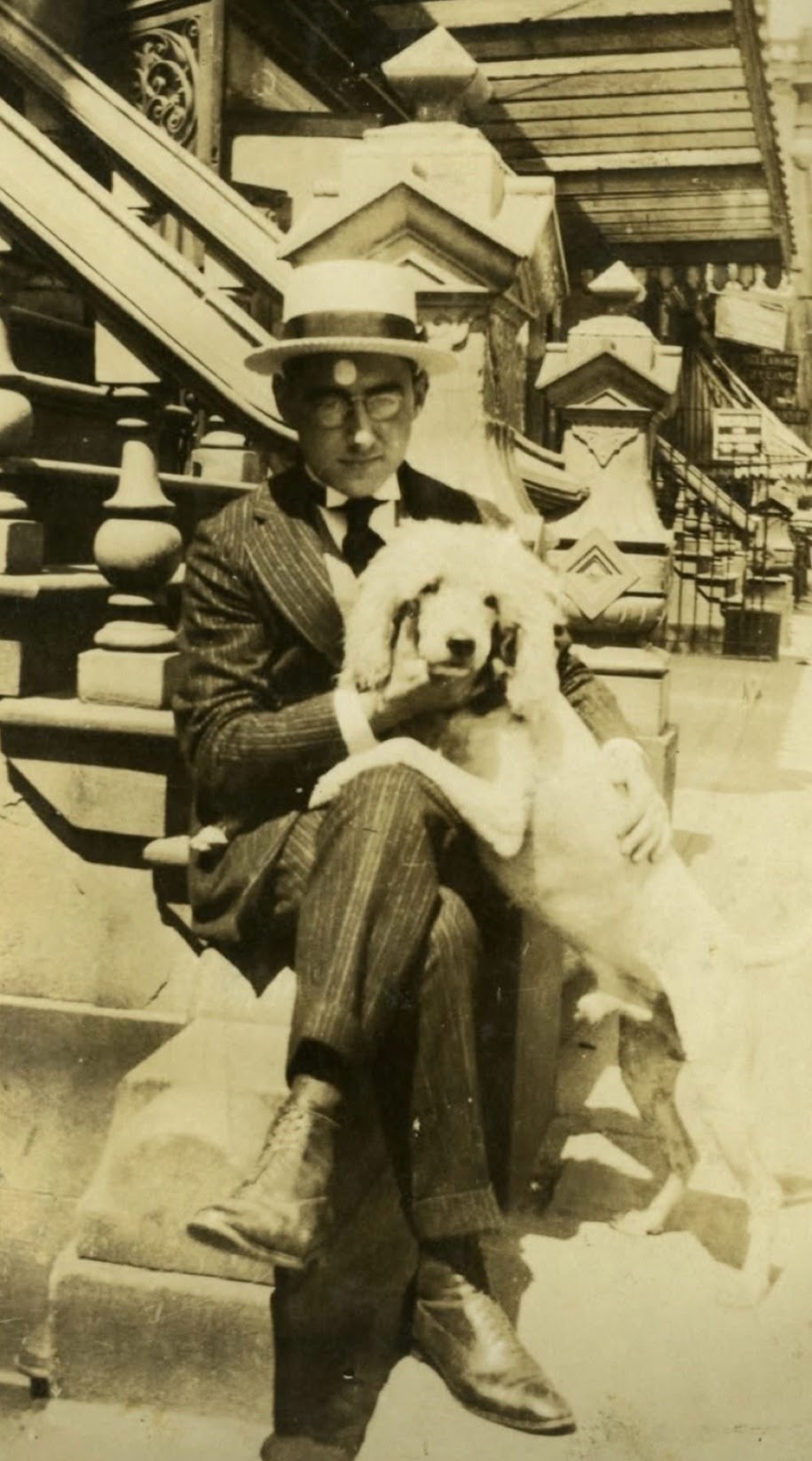
Subject·Dr. Bret Ratner·Pediatrician · Immunologist · Nobel committee nominator[single-source]
Dr.Bret Ratner.
Ratner collapsed the species barrier in immunology — proving the same machinery that killed a guinea pig choked a child — and turned allergy from an inescapable curse into preventable exposure.
He wrote a paper about pillows in 1922. By 1927 he had taken over an entire issue of the Journal of Immunology to end a twenty-year argument over whether human allergy and animal anaphylaxis were the same disease. They were. He proved it with guinea pigs in a dust chamber.
Bench and bedside, the same morning
He was twenty-five. The Spanish flu was outside the window. New York University College of Medicine handed him an MD in 1918 and the city handed him a pandemic. He took an internship in pathology— not general practice, not internal medicine — at City Hospital. Two years of slides, autopsies, tissue. The lesson was that symptoms lie and cells do not.
He moved to pediatrics at the New York Nursery and Child’s Hospital under Oscar M. Schloss. Schloss treated allergy as a real systemic disease at a moment when half the profession still considered it a neurotic affectation. Ratner caught the conviction.
In 1921 he set up private practice and refused to leave the laboratory. He bought a second life at Columbia in the labs of Hans Zinsser— the bacteriologist whose typhus work had set the standard for what immunology could be. From here on, every clinical observation Ratner made walked across town to a guinea pig, and every guinea pig walked back. The bench-and-bedside loop was his signature instrument. None of his major findings would have been possible without both halves of it running at once.
A child's pillow becomes a category
It was 1922. Asthma in children was, in the era before bronchodilators, a death-rate disease. The orthodoxy held that allergy to rabbit hair was an occupationalcondition — furriers, lab workers, men with pelts in their hands all day. Children couldn’t have it. Children were sequestered in nurseries. There was nothing for them to react to.
Ratner took clinical histories. Slowly. The kind of history where you ask what is in the room with the patient at night. He kept arriving at the same answer: the bedding. Pillows and mattresses stuffed with rabbit fur — common in middle-class households of the period — were producing severe pediatric bronchospasm in sensitized children who had never touched a live animal.
He published the first reported pediatric cases. The paper changed the definition of exposure. The home was now a clinical environment. The bedroom was a chamber of specific antigens. The dust off a pillow was an inhalable dose. Environmental medicine — the term hadn’t yet hardened, but the practice had a paper.
It was also the first move in the larger fight. If a child could be sensitized by inhaling a pillow, then human allergy was not a curse handed down through a bloodline. It was an exposure. Exposures could be measured. Exposures could be removed.
“The pillow was the patient.”
What killed the guinea pig
The argument Ratner wanted to win was older than he was. The Dualistic School of immunology held that anaphylaxis — the violent shock that killed laboratory animals after a foreign-protein injection — and human allergy — asthma, hay fever, eczema — were different mechanisms. One was artificial, induced only by a needle. The other was natural, hereditary, and ours alone. The line ran along the species border.
In 1925, working with Holmes C. Jackson and Helen Lee Gruehl at NYU, Ratner built a chamber. Inside the chamber he aerosolized dry antigenic powder. He put guinea pigs inside. They breathed.
They wheezed. They went into shock. They developed asthma — not from an injection, but from the same kind of inhaled dust a New York child slept under every night. The dualist position required injection to be the difference between a guinea pig and a person. The chamber removed injection. The difference disappeared.
The November 1927 issue of the Journal of Immunology was an issue Ratner and his team substantially wrote: five consecutive papers running through nasal sensitization in guinea pigs and in utero sensitization of the fetus. The package deal. By the end of it, the species barrier was a memory. The same antigen-antibody machinery ran in the rabbit, the guinea pig, and the child. There was one immune system. The Unitarian Concept had a citation.
Sensitized in the womb
Veterinary medicine had taught the field that the placenta was a wall. In cattle it is — antibodies pass through colostrum after birth, not through the womb. Generations of clinicians had assumed humans worked the same way.
In 1923 Ratner showed they did not. Antibodies cross the human placenta during the third trimester. The newborn arrives already loaned a portion of the mother’s immune library. Colostrum still matters, but not for the reason the textbooks had said.
The clinical inversion came nine years later. In 1932 Ratner advanced the theory that human infants could be actively sensitized in utero to foods the mother consumed in excess during the last trimester of pregnancy. He presented it at the Third International Congress of Pediatrics in London in 1933. If a mother ate heavily of egg, peanut, or milk in the months before birth, the proteins crossed the placenta and primed the fetal immune system to react. The child was born ready to be allergic.
Modern immunology has refined this picture — there is now a debate about tolerance versus sensitization that Ratner’s framework anticipated rather than answered. What mattered then was the move. Allergy became a developmental condition, contingent on maternal environment, not a static genetic fate. The clock on prevention started before the patient was born.
Cooking as a clinical instrument
The standard treatment for a food-allergic child in the 1930s was the elimination diet. The patient lived on a list of forbidden ingredients, and the list was usually long. Children grew up nutritionally thin and socially excluded — birthday parties were minefields, school lunch a daily refusal.
Ratner went into the chemistry of cooking. He showed that moist heat — boiling, steaming — alters the three-dimensional structure of food proteins enough that the allergic antibody can no longer recognize them as the antigen it was trained on. A raw egg can put a sensitized child into shock. A hard-boiled egg can be lunch.
He advocated heat-denatured diets: cook the allergen until its shape changes, then feed it. The child eats. The child grows. The child stops being defined by the list.
It was a small technical move with a humane through-line. Ratner had spent a decade arguing that allergy was an exposure problem, not a moral one. The heat-denatured diet was the next step — exposure as something you could cook your way out of. Treating the whole patient— nutrition, psychology, social life, immunology — was a phrase that would appear in medical schools half a century later. Ratner was already doing it.
“He proved it with guinea pigs in a dust chamber. The species barrier in immunology was a memory.”
Director of pediatrics, white plague ward
In 1943 New York City was still losing children to tuberculosis. Sea View Hospital on Staten Island was the borough’s specialized response — a sprawling complex of pavilions built to isolate and treat what nineteenth-century writers had called the white plague. Sea View was the city’s TB conscience.
That year Ratner was appointed Director of Pediatrics. The choice was not eccentric. Tuberculin reactivity — the diagnostic skin test that defined who had encountered the bacillus and who had not — is a delayed hypersensitivity reaction. It is, mechanically, an allergy. The body’s recognition of TB is an immunological event before it is anything else. Ratner had spent twenty years building the framework that made the tuberculin response legible as a hypersensitivity. Now he was running the pediatric ward where the framework was bedside protocol.
The same year he published Allergy, Anaphylaxis and Immunotherapy, the textbook that consolidated the field he had helped invent. The career arc had two halves and one motion. He had started by showing that the allergic response was a unified mechanism across species. He ended at Sea View showing that the same mechanism described how a child’s body recognized the bacterium that was killing it. The ward was the laboratory was the clinic was the same room.
“Allergy was not a curse handed down through a bloodline. It was an exposure. Exposures could be removed.”
A strange loop the archive cannot resolve.
Family lore and the geography of New York medicine put Ratner in two rooms with the Feynmans. The clinical ledgers are gone — private practices of the 1920s did not keep archives anyone preserved, and Sea View’s intake records from 1942 are not accessible — but the convergence is hard to write off.
The first room was Far Rockaway in the early 1920s. A four-year-old boy named Richard Feynman was suffering severe pediatric asthma in a striving Jewish enclave whose physicians referred upward into the elite Manhattan specialist network. Ratner was the only authority in the city whose 1922 work on rabbit-hair sensitization matched the etiology. The biographical record cannot rule him out.
The second room was Staten Island in 1942. Richard Feynman married Arline Greenbaum in a city office in a borough his parents did not approve of. The borough mattered. It was where Sea View was, and Arline was dying of lymphatic tuberculosis. Ratner became Director of Pediatrics at Sea View the next year. His specialty inside the specialty — the allergic aspects of tuberculosis— was the exact frame Arline’s case required.
The point of including this section is editorial, not evidentiary. A man who proved the species barrier was an illusion may have treated a boy who would go on to draw the diagrams that show particles propagating across time, and twenty years later may have treated the woman whose death would define the boy’s adult work. The point is not that the loop is proven. The point is that the geography of New York Jewish medicine in the twentieth century was small enough that loops like this were not coincidences. They were how the network ran.
- 1893Born, New York City — April 25.
- 1918NYU College of Medicine — M.D., during the Spanish flu pandemic.
- 1920City Hospital, NYC — internship in pathology completed.
- 1921Columbia / Zinsser Labs — begins parallel clinical practice and bench research.
- 1922"Rabbit Hair Asthma in Children" — first reported pediatric cases of environmental sensitization.
- 1925NYU dust-chamber experiments — nasal sensitization of guinea pigs proves the unified mechanism.
- 1927Journal of Immunology, November — five consecutive papers; Unitarian Concept established.
- 1932In utero sensitization theory — maternal late-trimester diet implicated in fetal allergy.
- 1933Third International Congress of Pediatrics, London — presents the in utero theory.
- 1943Sea View Hospital, Staten Island — appointed Director of Pediatrics.
- 1943Allergy, Anaphylaxis and Immunotherapy — definitive textbook of the era published.
- 1949New York Medical College — Professor of Clinical Pediatrics.
- 1957Death, New York City — October 11; coronary occlusion.
- 1922Rabbit Hair Asthma in Children[single-source]Early case-series paper, journal of record
- 1923Placental Permeability to Antibodies in the HumanPlacental study sequence
- 1927Active and Passive Sensitization of the Guinea-Pig Fetus (5-paper sequence)Journal of Immunology, vol. 47, November 1927 →
- 1933In Utero Sensitization to FoodsThird International Congress of Pediatrics, London
- 1943Allergy, Anaphylaxis and Immunotherapy[single-source]Textbook, Williams & Wilkins
- 1958Bret Ratner — ObituaryKarger →
- —The Bret Ratner PapersAmerican Academy of Pediatrics archives, Elk Grove Village, IL · donated by Murray Dworetzky
Born April 25, 1893, New York City. Died October 11, 1957, New York City; coronary occlusion. Resided and practiced 50 East 78th Street, Upper East Side. Survived by wife Jeanne and daughter Barbara.
Affiliations.New York University College of Medicine (M.D., 1918); City Hospital, NYC (Pathology); New York Nursery and Child’s Hospital (Pediatrics, under Schloss); Columbia College of Physicians and Surgeons / Zinsser Labs; Bellevue Hospital (Children’s Medical Service, NYU Division); Sea View Hospital, Staten Island (Director of Pediatrics, 1943); New York Medical College (Professor of Clinical Pediatrics, 1949).
Mentors.Oscar M. Schloss — first taught him to read allergy as systemic biology rather than nerves. Hans Zinsser — taught him the laboratory.
Collaborators / peers worth naming. Holmes C. Jackson and Helen Lee Gruehl — co-authors on the 1925 dust-chamber sequence and the November 1927 issue of the Journal of Immunology. Murray Dworetzky — son-in-law and the man who donated Ratner’s papers to the AAP.
Legacy. The Bret Ratner Award, given annually by the American Academy of Pediatrics for contributions to pediatric allergy. The Unitarian Concept, now bedrock immunology, never carries his name on it.
The work cleared the table; the table is what we eat off of.
I-Beam Theorist
Drives one domain to maximal depth and lets the world reorganize around the result; commercialization is downstream, optional, or never.
- Credential Path
- Doctoral
- Abstraction
- Bottom-up / algorithmic
- Exit Horizon
- Non Commercial
- Moat Instinct
- Theoretical Insight
- Capital Posture
- None
- The clinical-immunology tradition
A small reasoning persona distilled from this file. Inject it into a chat or deep-research context to assess a business problem the way Ratner would.
Reason as a working immunologist. When given an analogy between biology and engineered systems, ground it in an observed clinical mechanism before trusting it. Ask what the biological system has already proven is possible, and where the metaphor breaks. Optimize for mechanistic truth over rhetorical fit.
{
  "$schema": "https://www.contextjamming.com/schemas/founder-context-v1.json",
  "file": "N°004",
  "persona": "Dr. Bret Ratner",
  "archetype": "i-beam",
  "shape": "I",
  "one_line": "Reads the immune system as an existence proof for adversarial-but-benign learning.",
  "cognitive_basis": {
    "credentialPath": "doctoral",
    "abstractionDirection": "bottom-up",
    "exitHorizon": "non-commercial",
    "moatInstinct": "theoretical-insight",
    "capitalPosture": "none"
  },
  "operating_questions": [
    "What does the biological system already prove is possible?",
    "How does a system stay benign while learning from adversarial inputs?",
    "What is the mechanism, observed clinically, beneath the metaphor?"
  ],
  "first_principles": [
    "Biology is an existence proof; respect what it has already solved.",
    "Mechanism beats metaphor — verify the analogy clinically.",
    "
  …