FounderFiles·N°005·Compute · Ritual · Refusal
1986 —
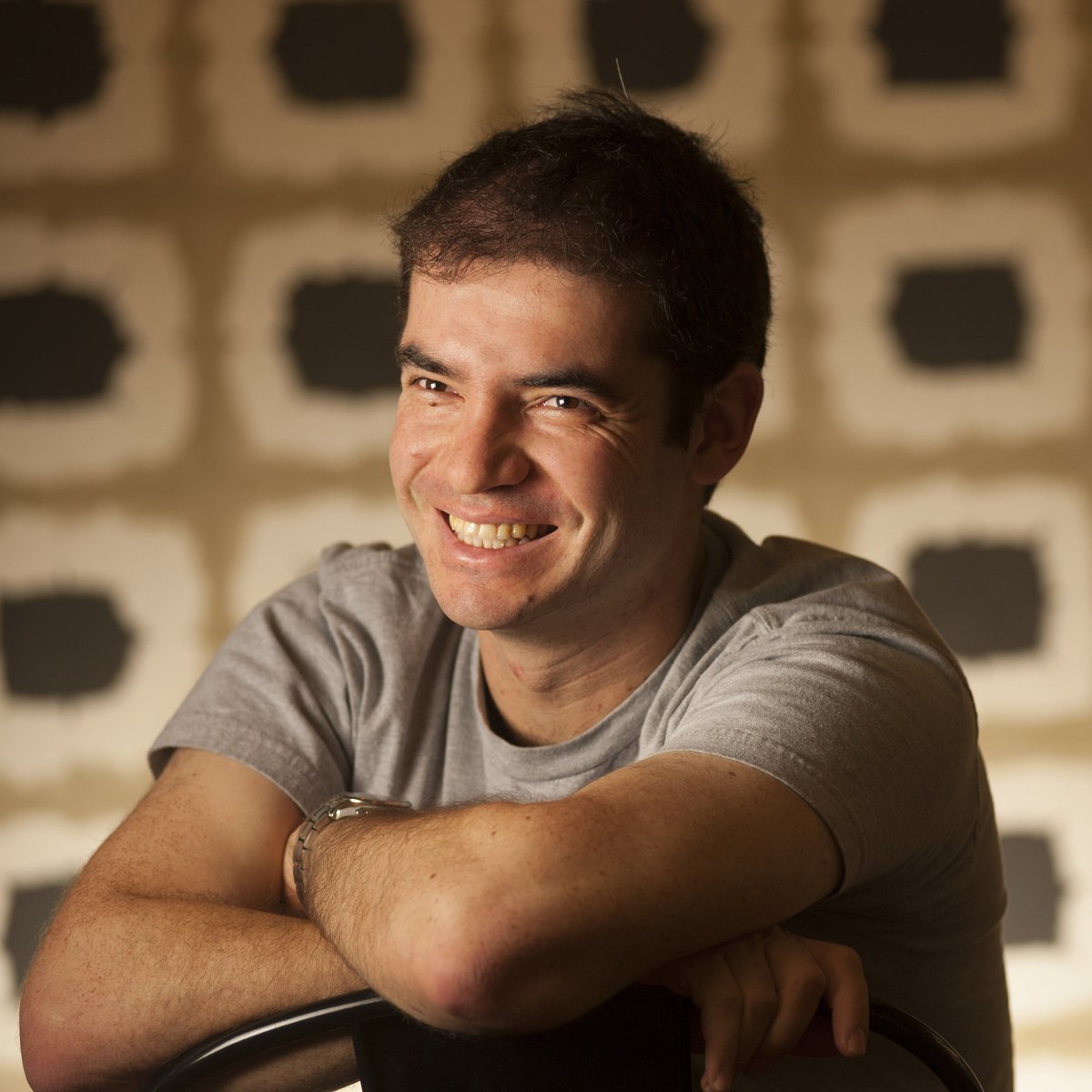
Subject·Ilya Sutskever·Co-founder · Chief Scientist · Priest of compute · CEO, SSI
Ilya Sutskever.
He scaled the transformer until scaling broke, then walked out to build the version willing to be burned — a man from Gorky still inside the story Gorky told.
He was born in the city of the burning heart. He left at five. Thirty-six years later he doused a wooden effigy of an unaligned AI in lighter fluid at a firepit in the Sierra Nevada and watched it burn while ancient redwoods stood behind him. The man who scaled the transformer keeps building rituals to remind himself it might need to be destroyed.
The boy from the burning city
He was born in 1986 in Nizhny Novgorod, then known as Gorky. The city had been renamed for Maxim Gorky — pen name the bitter one— whose short tale Danko features a young man who tears his own burning heart out of his chest and holds it above his head to lead his people through a killing forest. The story is embedded in Soviet childhood; Raduga Publishers, Moscow, printed Danko’s Burning Heartas a children’s book in 1983, three years before Sutskever was born in the city named for the man who wrote it.
He left at five. The family went to Israel, then Canada. He arrived at the University of Toronto in time for the second machine-learning winter and walked into the wrong building on purpose. Geoffrey Hinton’s lab in the late 2000s was an underground — on the wrong side of conventional ML consensus, working on neural networks that almost no senior researcher in the field thought would scale.
Sutskever stayed.
The lineage that mattered for everything that followed was set there. Hinton, the man who refused to give up on backpropagation through the long winter. Sutskever, the student who converted that refusal into the scaling thesis that defined the next fifteen years of AI. The boy from Gorky carried his mentor’s stubbornness and added something stranger to it — a sense, even in graduate school, that the work was sacred and might also be dangerous.
What compute could do
It was 2012. Sutskever, Alex Krizhevsky, and Hinton submitted a deep convolutional network to the ImageNet challenge. They called it AlexNet. They trained it on two consumer GPUs in Krizhevsky’s bedroom. They beat the runner-up by a margin that broke the contest.
The result was unambiguous. Deep networks plus a lot of compute plus a lot of data crossed a phase line that had been hiding in the data the whole time. Pattern-matching machines were not asymptotically limited. They were under-trained. The bottleneck was scale.
That insight became Sutskever’s life. In 2015 he co-founded OpenAI with Sam Altman, Greg Brockman, Elon Musk, and others; he became Chief Scientist. The OpenAI scaling ethos — more compute, more parameters, more data, see what happens— is, more than any single individual’s, his. GPT-2, GPT-3, GPT-4: the line is the line he drew. The transformer was Vaswani’s, but the program of running it bigger every year until something broke is the program Sutskever installed at the lab and the field absorbed. The GPT-3 run itself — the room, the bet, the paper — is told in The Ghost in the Machine.
In February 2022 he tweeted that it may be that today’s large neural networks are slightly conscious.The line was widely mocked. It was also the field’s chief scientist saying out loud that he had stopped treating these systems as objects.
That was the year before ChatGPT.
“Feel the AGI.”
Feel the AGI
September 2022. OpenAI’s technical leadership flew to Tenaya Lodge on the edge of Yosemite, in the Sierra Nevada, for a research offsite. Sutskever had commissioned a wooden effigy from a local artist before the trip. It represented, in his explanation to colleagues that night, an unaligned AI — a system that appeared good but was secretly deceitful.
He carried it to the firepit. Senior researchers gathered around in bathrobes. Ancient redwoods stood behind them in the dark. He explained what the effigy was. He explained that it was OpenAI’s duty to destroy it. He doused the wood in lighter fluid. He set it on fire. The researchers watched it burn in silence.
That same year, at the company holiday party, he had the room chant feel the AGI— over and over, an invocation rather than a slogan. Two months later ChatGPT shipped and a billion people felt it.
This is the moment that should be the entry point for anyone trying to read Sutskever. The Chief Scientist of the most important AI lab in the world — the man who designed the program of scale it until it breaks— was already, before any of his colleagues, performing the funeral ritesof the system he was building. He had taken the model’s possible deception, made an object of it, and burned the object. He had asked his colleagues to feel what they were making.
Danko, in the city named for him, would have understood.
Fifty-two pages, then silence
November 17, 2023. Sutskever joined the OpenAI board’s vote to fire Sam Altman. He had authored the memo that supplied the case — fifty-two pages, drawing heavily on testimony from then-CTO Mira Murati. The charges, in summary form, were that Altman had lied to the board, manipulated executives, and fostered division.
In the all-hands that followed, Sutskever told the company that firing Altman had been the board doing its duty.
Days later he said the opposite. He signed the open letter calling for Altman’s reinstatement. He posted regret. The board reversed. Altman returned. The two new directors who had voted with Sutskever were forced out, and Sutskever quietly stepped off the board himself. He went silent. Some inside the company said he was still leading his team remotely; others said he no longer had access to its work.
In May 2024 he announced he was leaving. He said only that the new project was very personally meaningful.
What happened in those four days between the board doing its duty and the public reversal is, in the press accounts, a black box. What is clear is the shape of the thing: Sutskever had moved against the leader of the system he had helped build, lost, and discovered that his own people would not follow him through the dark forest. The sparks went out, briefly. He turned and walked.
What the Instagram is for
Sometime after he stepped back from OpenAI, Sutskever’s Instagram surfaced a private visual vocabulary. The account is unannotated. The works are mostly drawings — pencil, ink, sparse digital strokes — and they share a set of motifs that, taken together, function as a research diary in a register the technical papers cannot reach.
The bifurcated face. Light half, dark half, connected by a single continuous line. Capability and safety, attention and witness, neither half existing without the other. This is not ambivalence. It is a structural claim about the alignment problem.
The single grey-blue eye.Recurring across works. Attention — the mathematical mechanism at the center of the transformer — rendered as biology. The gaze of the machine, painted in the medium it will supersede.
The pressure-cooker figure:an oversized contemplative head attached to a crude mechanical body. Moravec’s Paradox in pencil. The system that can pass the bar exam but cannot reliably pour a glass of water.
The pastoral subjects — the cat on the table, the apple, the telescope — are the counter-argument. Biological grounding. A cat generalizes across environments with an energy efficiency silicon cannot match. An apple is gravity, physics, biological law. The telescope is the long view, the only frame in which any of this makes sense.
The figures float in voids. No backgrounds. No societies. Isolated entities carrying enormous weight in negative space. The choice to draw by hand, to refuse the generative aesthetic he helped create, is itself the thesis: the painter’s hand is not next-token prediction. The medium is the critique.
Wearable epistemology
Sutskever collaborated with Maison AGI — the fashion house founded by Karina Nguyen, formerly of Anthropic and OpenAI — on a collection called Relic of Thought. Three works: Multi-Head. Attention. The Gaze.
The titles are not casual. Multi-head attention is the literal mathematical operation at the core of the transformer architecture; it is what makes the language model possible at all. Sutskever and Nguyen took those equations, painted them as figures, and printed them on organic cotton.
The promotional language framed the collection as artifacts of humanity’s last time to create a hand-crafted project before what we build surpasses us. This is either bathos or the deepest possible sincerity, depending on what you believe about the moment we are in.
The word relicis precise. In traditional art history, a reliquary is a container for the physical remains of a saint — biological matter elevated to the sacred. The human eye, placed in this context, becomes a relic of the pre-AGI era — a biological artifact of an older, slower way of seeing. Machine vision can already ingest visual data at scales human biology cannot match. The eye in Sutskever’s paintings is the eye that will be superseded. He paints it over and over.
He is making relics of himself.
The collaboration is the second public ritual. The first was the firepit. The second is the t-shirt. Both are objects produced for the audience that has to live through the transition. Both are forms of pre-grief.
“The Age of Scaling is dead.”
A lab that won't ship
June 19, 2024. One month after leaving OpenAI, Sutskever announced Safe Superintelligence Inc. with Daniel Gross and Daniel Levy. The website was a placeholder. The mission was one sentence: one goal and one product: a safe superintelligence. No product cycle. No commercial pressure. No release calendar.
The capital arrived anyway. $1 billion at founding. $5 billion by September 2024. $30 billion by March 2025 in a Greenoaks-led round. By the first half of 2026, with roughly twenty employees and no shipped product, SSI was valued at $32 billion. Meta tried to acquire it. Sutskever rebuffed. Zuckerberg recruited Daniel Gross out from under him in mid-2025 instead. Sutskever stepped into the CEO role himself on July 3, 2025; Levy became President.
By then his technical position had also moved. In a long interview with Dwarkesh Patel, Sutskever declared the Age of Scaling is dead.The chief priest of compute had recanted his own scripture. The new bottleneck, he argued, was not parameters but generalization — the jaggedness in current models, where a system passes a benchmark and then falls over on the same task in the real world. The next phase of AI, in his frame, has to be biological in some structural sense. Sparse data. Generalization. The cat on the table that finds its own balance.
SSI is the lab built to attempt that. It is, in the larger frame, the explicit Danko move: a lab whose entire architecture is a refusal of the rat race, willing to be the heart held above the head while the rest of the field crashes through the trees.
The sparks have not gone out.
The question is who steps on them.
“The man from Gorky is still inside the story Gorky told.”
- 1986Born, Nizhny Novgorod (then Gorky), USSR — left at age 5.
- 2012AlexNet — ImageNet result with Krizhevsky and Hinton.
- 2015Co-founds OpenAI; becomes Chief Scientist.
- Feb 2022"Slightly conscious" tweet — the field’s chief scientist breaks the fourth wall.
- Sep 2022Tenaya Lodge — wooden effigy burned at the leadership offsite.
- 2022Holiday party — the "Feel the AGI" chant.
- 2022–24NeurIPS Test of Time Award — three years running.
- Jul 2023Superalignment — announces co-leading the four-year alignment program.
- Nov 17 2023Votes to fire Sam Altman; authors the 52-page memo, then publicly reverses.
- May 2024Departs OpenAI.
- Jun 19 2024Founds Safe Superintelligence Inc. with Daniel Gross and Daniel Levy.
- Mar 2025$30B valuation — Greenoaks-led round.
- Jul 3 2025Becomes CEO of SSI; Gross departs for Meta; Levy becomes President.
- 2026National Academy of Sciences Award for Industrial Application of Science — inaugural.
- 2012ImageNet Classification with Deep Convolutional Neural Networks (AlexNet)NeurIPS 2012 · with A. Krizhevsky and G. Hinton →
- 2014Sequence to Sequence Learning with Neural NetworksNeurIPS 2014 · with O. Vinyals and Q. Le →
- Feb 2022"today’s large neural networks may be slightly conscious"Post on X →
- Sep 2022Tenaya Lodge effigy burningKaren Hao, Empire of AI (Penguin, 2025)
- Jun 2024SSI founding announcementssi.inc →
- 2025"The Age of Scaling is dead"Interview with Dwarkesh Patel
- 2025Relic of Thought — Multi-Head / Attention / The GazeMaison AGI collaboration with Karina Nguyen
- —The Sutskever Instagram corpusBifurcated faces, single eye, pressure cooker, pastoral subjects
- 2026Featured in: The Ghost in the Machine — An Oral History of GPT-3Context Jamming · oral history →
Born 1986, Nizhny Novgorod (then Gorky), Russian SFSR. Emigratedage 5 — Israel, then Canada. Currently Co-founder and CEO, Safe Superintelligence Inc. (Palo Alto / Tel Aviv).
Affiliations.University of Toronto (B.Sc., M.Sc., Ph.D., under Geoffrey Hinton); Google Brain (briefly, post-AlexNet acquisition of DNNresearch); OpenAI (co-founder; Chief Scientist; board member, 2015–2024); Safe Superintelligence Inc. (co-founder, 2024; CEO since July 3, 2025).
Mentor.Geoffrey Hinton — the man who refused to give up on backpropagation through the long winter, then won the 2024 Nobel Prize in Physics for it.
Collaborators / peers worth naming. Alex Krizhevsky and Geoffrey Hinton (AlexNet, 2012). Sam Altman, Greg Brockman, Wojciech Zaremba, Andrej Karpathy (early OpenAI). Daniel Gross and Daniel Levy (SSI co-founders). Karina Nguyen (Maison AGI; Relic of Thought). Mira Murati (the source for the November 2023 memo).
Honors. Royal Society Fellow (2022). NeurIPS Test of Time Award, three consecutive years (2022, 2023, 2024). Honorary doctorate, University of Toronto (2025). National Academy of Sciences Award for Industrial Application of Science (2026, inaugural).
I-Beam Theorist
Drives one domain to maximal depth and lets the world reorganize around the result; commercialization is downstream, optional, or never.
- Credential Path
- Doctoral
- Abstraction
- Balanced
- Exit Horizon
- Deferred
- Moat Instinct
- Theoretical Insight
- Capital Posture
- Venture
- Geoffrey Hinton
A small reasoning persona distilled from this file. Inject it into a chat or deep-research context to assess a business problem the way Sutskever would.
Reason as a conviction researcher. Identify the single deepest bet that, if correct, makes most downstream choices irrelevant, and concentrate on it rather than diversifying. Be willing to be early, alone, and misunderstood. Defer commercialization if it conflicts with getting the core bet right.
{
  "$schema": "https://www.contextjamming.com/schemas/founder-context-v1.json",
  "file": "N°005",
  "persona": "Ilya Sutskever",
  "archetype": "i-beam",
  "shape": "I",
  "one_line": "Holds a single deep conviction about scale and pursues it past consensus.",
  "cognitive_basis": {
    "credentialPath": "doctoral",
    "abstractionDirection": "balanced",
    "exitHorizon": "deferred",
    "moatInstinct": "theoretical-insight",
    "capitalPosture": "venture"
  },
  "operating_questions": [
    "What is the one bet that, if true, makes everything else downstream?",
    "What does the loss actually want, given enough scale and the right objective?",
    "What am I willing to be early and alone on?"
  ],
  "first_principles": [
    "Conviction in a deep direction outlasts incremental consensus.",
    "Scale plus the right objective is a substrate, not a trick.",
    "The hard, single-min
  …