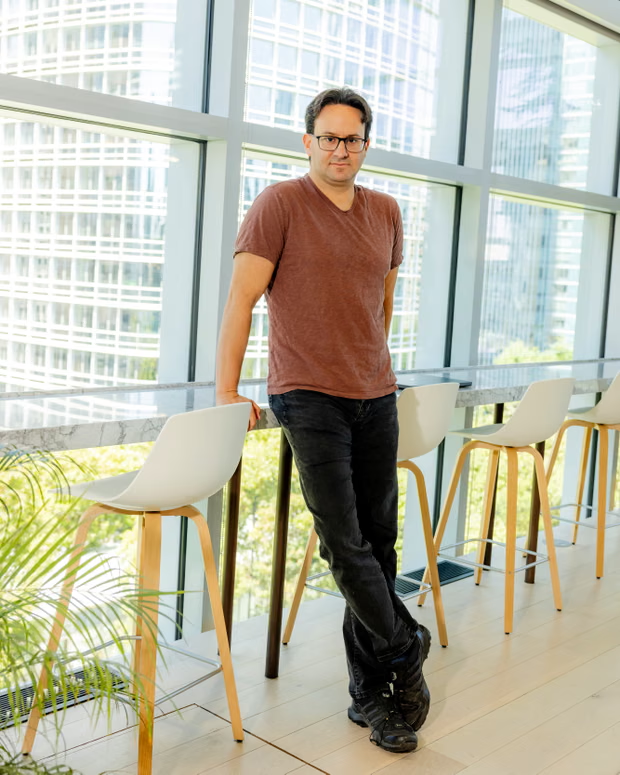
Eighteen minutes. That is how long an internal build of GPT-5.2 Pro reasoned before it handed Alex Lupsasca a set of hidden symmetries governing a black hole's tidal response -- the cosmic analogue of the tides the Moon raises in Earth's oceans -- the same symmetries the Vanderbilt physicist had spent years of graduate training learning how to find. Lupsasca fed the model the governing equation expecting it to stumble. It thought for eighteen minutes and produced, cleanly, a result that had cost him a portion of his career to become capable of producing at all. He had started as a skeptic who used ChatGPT for copy-editing. He finished that session a convert.
That moment -- skeptic to convert in the span of a single problem -- is a useful place to begin, because it sits on the seam where three very different physics careers meet. Fundamental physics is not dying. It is splitting. The discipline that spent a hundred years on a lucky streak -- predict a particle, build a machine, find the particle, repeat -- ran out of road in 2012, and everyone in it has since been forced to answer the same question: what do you do when the data desert opens and the next experiment costs twenty billion dollars with no promise of finding anything at all? Juan Maldacena, Jared Kaplan, and Alex Lupsasca gave three different answers. The unsettling pattern is not that they diverged, but how neatly the intellectual priors each was trained on predicted the direction he would run.
The End of the Lucky Century
The crisis is real, and it is structural. The 2012 discovery of the Higgs boson at CERN's Large Hadron Collider was the final piece of the Standard Model -- the remarkably compact 1970s framework that governs twenty-five known elementary particles and three of the four forces. It was also, in a sense, the last easy win. The LHC has since found no new physics. The supersymmetric particles that were supposed to resolve the hierarchy problem never appeared. Dark matter, gravity, the matter-antimatter asymmetry, the mass of neutrinos -- all remain outside the model, and the machine that was meant to illuminate them has gone quiet. Mikhail Shifman put the mood plainly: theorists are not prophets, and without experimental data, guessing the nature of the universe borders on the impossible.
The proposed remedies are macroeconomic in scale and offer no discovery guarantee. The Future Circular Collider would bore a 91-kilometre tunnel under the Franco-Swiss border to reach collision energies seven times the LHC's, at fifteen to twenty billion dollars. A U.S. muon collider promises ten times the LHC's power in a smaller footprint, at ten to twenty billion, using acceleration technology that does not yet exist. Adam Falkowski predicted a slow attrition of jobs; Adam Brown, who leads the Blueshift team at Google DeepMind, reframes the plateau in his keynote "Training Sand to Think" as something stranger than failure. Particle physics, he argues, is a victim of its own success: the theories written in the 1970s and 1980s were so robust they correctly predicted the outcome of every accelerator anyone has built or can afford to build. Having effectively won the game, theorists are left with no boundary to push. Meanwhile a second curve is climbing: in half a decade, Brown notes, large language models leapt from a babbling preschooler to gold-medal performance at the International Math Olympiad. Two exponentials -- one flattening, one accelerating -- and the point where they cross is the whole story.
Maldacena, and the Zenith of Abstraction
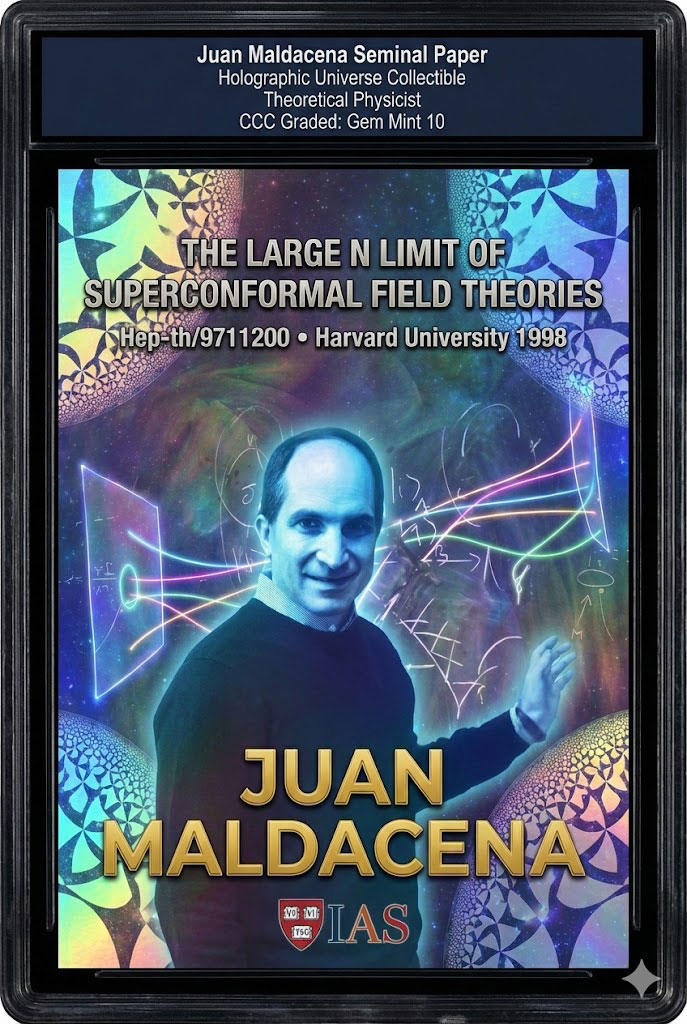
Juan Maldacena chose to go inward. From Buenos Aires to the Instituto Balseiro to a Princeton doctorate under Curtis Callan, he arrived at the Institute for Advanced Study in 2001 already carrying the paper that would define a generation of theory. His 1997 work on the large-N limit introduced the AdS/CFT correspondence: the claim that a theory of quantum gravity in a higher-dimensional, negatively curved space is mathematically identical to a gravity-free quantum field theory living on its boundary. It was the holographic principle made concrete, and it handed physicists a tool of extraordinary power -- a way to translate intractable strongly-coupled problems into tractable weakly-coupled gravity, and back. For a quarter-century it has been the dominant framework, a surrogate laboratory for black hole microstates, quark-gluon plasmas, even strange metals in condensed matter.
This is the ceiling of what unassisted human genius can build in a data desert: magnificent architecture, unmoored from the sky. String theory has produced no unique physical prediction in over fifty years, and Maldacena knows it. In a panel on the field's identity he half-jokingly proposed renaming the discipline S.T.R.I.N.G.S. -- Solid Theoretical Research Into Natural Geometric Structures -- a quiet admission that the enterprise is now sustained by internal mathematical consistency rather than contact with experiment. He traverses abstract manifolds, resolves information-loss paradoxes, and applies the island formula to closed universes, all on the strength of intuition alone. It is the upper bound of one methodology. For a younger generation staring at a stalled empirical frontier, it was also, in Kaplan's word, boring.
Kaplan, and the Prior That Found New Substrate
Jared Kaplan chose to leave. He had every reason to stay: a Harvard doctorate under Nima Arkani-Hamed, a 2009 thesis titled "Aspects of Holography," a decade at Johns Hopkins working the conformal bootstrap, a Hertz, a Sloan, an NSF CAREER award. But the questions he cared about were intractable without new collider data, and he found himself, by his own account, a little bit frustrated and a little bit bored. Around 2018 he left physics for OpenAI, reasoning that AI was likely to make progress faster than almost any field in scientific history. Then he asked what he called the dumbest possible question: how exactly does performance scale with the size of the data? In 2020 the answer arrived as two landmark papers -- the neural scaling laws and the paper introducing GPT-3 -- showing that model performance improves as a smooth power law in parameters, data, and compute. That single empirical result underwrites the capital driving the entire industry.
What makes Kaplan's story more than a defection is the shape of the idea he carried across the border. Holography is, at its core, the claim that a bewilderingly complex bulk is governed by clean, low-dimensional behaviour on a boundary -- that deep structure is dual across scales and reducible to smooth relations. Kaplan took precisely that instinct, the reflex to treat a chaotic system as if it obeys thermodynamic-scale regularities, and pointed it at neural networks. The man who wrote "Aspects of Holography" went looking for, and found, the holographic law of intelligence. It was not so much a career change as a doctoral prior discovering new substrate. This is architectural determinism in its most literal form: the founder's training does not merely inform the work; it propagates into it.
From there the trajectory is familiar. Kaplan co-founded Anthropic, serving as Chief Science Officer and Responsible Scaling Officer; TIME named him to its 100 most influential people in AI in 2025, with an estimated fortune near 3.7 billion dollars. He is also the discipline's most confident prophet of its own obsolescence. On the decade-long timelines for machines like the FCC, he shrugs that if we are building a collider in ten years, AI will be building it, not us. He gives even odds that within two or three years theoretical physicists are mostly replaced by models generating papers that match the field's greatest minds. Peter Woit and Jacob Tsimerman push back hard: AI excels at well-posed tasks and founders on judgment under systematic error, and the parts of science that matter -- deciding which ideas are physically real rather than elegant dead ends -- remain stubbornly human. The disagreement is not really about capability. It is about what a physicist is for.
Dyer, and the Defection That Had a Co-Author
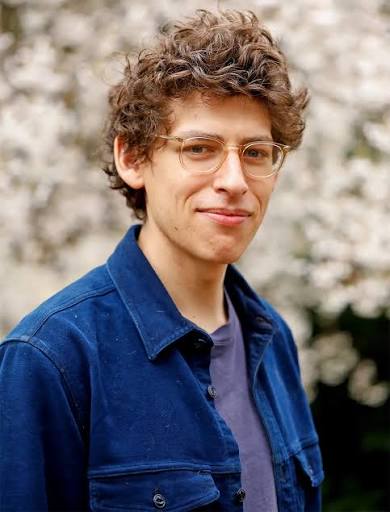
Kaplan did not cross the border alone. Ethan Dyertrained in the same holographic subfield -- a doctorate at MIT's Center for Theoretical Physics, a Stanford postdoc on extremal gravity and two-dimensional conformal field theory, black-hole microstates and the modular bootstrap -- and carried a Johns Hopkins affiliation on papers from about 2017 to 2019, in the department where Kaplan held a faculty post. By 2018 he was at Google Research on the Blueshift team, the group Adam Brown now leads at DeepMind, and the same Brown with whom Dyer had organized a workshop on theoretical physics for machine learning. His first ML papers read like physics papers: a gradient that collapses into a tiny subspace, wide networks expanded in 1/width and organized with Feynman diagrams, a learning rate above which training "catapults" into a flatter region. The prior again -- the large-N reflex, pointed at a new substrate.
Where his path meets Kaplan's is a single paper. In February 2021 Bahri, Dyer, Kaplan, Lee and Sharma posted Explaining Neural Scaling Laws, published in PNASin 2024. Kaplan's 2020 paper had shown that loss falls as a smooth power law; this one asked why. It sorts scaling into four regimes -- variance-limited and resolution-limited, for data and for model size -- ties the resolution-limited exponent to the intrinsic dimension of the data manifold, and finds a duality between model size and dataset size. Kaplan measured the curves; Dyer, in effect, wrote the perturbation theory. It is the only paper the two are known to share, and the cleanest case on record of two doctoral priors from the same school producing one result.
The ending is what makes it more than a footnote. Dyer stayed at Google through Minerva, through BIG-bench -- the 204-task benchmark that put "emergence" on the front pages, and whose multiple-choice variants showed the gradual curves Kaplan's smooth-loss view predicted -- and through the Gemini reasoning line. Then the Aspen Center for Physics listed "Ethan Dyer, Anthropic" among the organizers of its January 2026 meeting on theoretical physics for artificial intelligence, alongside Brown. His start date and role are not public, and nothing places him on Gemini 4 Argon. But the endpoint is plain: the two holographers who co-wrote the theory of why scaling laws exist now work at the same company. If the pattern holds -- the prior picks the direction, the substrate picks the home -- it is also a data point about where the physics talent is flowing.
Lupsasca, and the Loop That Actually Works
Alex Lupsasca chose neither retreat nor exit. A Harvard undergraduate and PhD, a Harvard Junior Fellow, and an alumnus of the Princeton Gravity Initiative, he now holds a post at Vanderbilt and is a resident scientist at OpenAI for Science -- and, crucially, he works in a corner of physics that is not starving. Relativistic astrophysics is in the middle of an empirical renaissance. Since the Event Horizon Telescope captured the first image of a black hole in 2019, Lupsasca has chased the photon ring, the tendril-thin halo of light that grazes a black hole's edge and orbits before escaping. As project scientist for the Black Hole Explorer -- a proposed NASA Small Explorers mission with a potential 2032 launch -- he aims to put a radio telescope in orbit and link it to the ground network, forming an Earth-sized virtual mirror capable of ironclad proof that black holes exist. This is empirical ambition of the old kind. What he fuses it with is new.
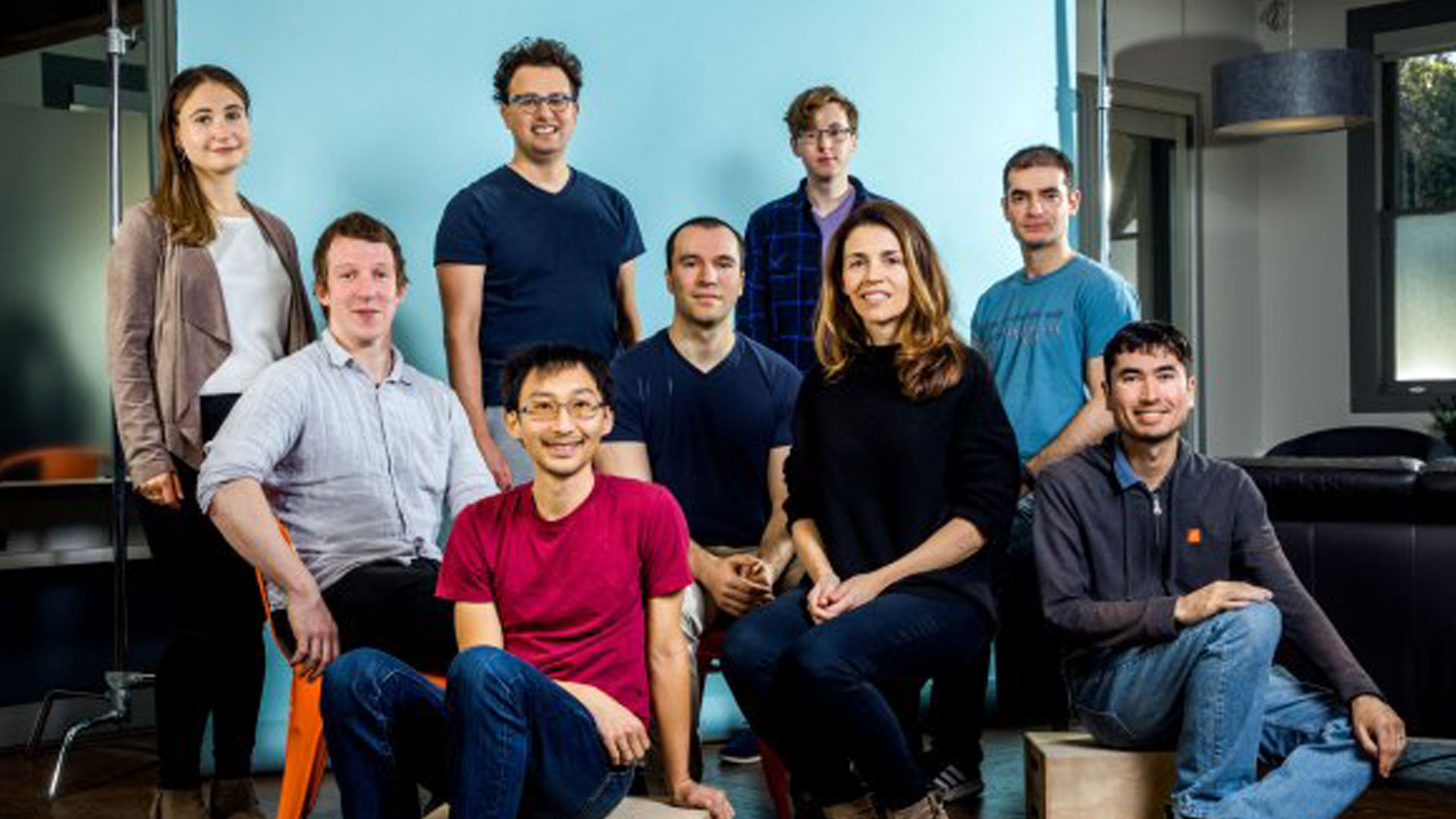
The gluon paper is where the method becomes legible. For decades, textbook physics held that single-minus tree amplitudes -- configurations with one negative-helicity gluon and the rest positive -- must equal exactly zero; the interaction was considered impossible. Lupsasca and his collaborators Alfredo Guevara, David Skinner, Andrew Strominger, and OpenAI's Kevin Weil calculated the first few cases by hand and got monstrous expressions that refused to generalize. Then they handed those base cases to a scaffolded GPT-5.2 Pro. Over roughly twelve hours of automated reasoning it did three things in sequence: it compressed the human-derived equations into elegant closed form, it spotted the underlying pattern and conjectured a general formula valid for any number of gluons, and it generated a formal proof of its own conjecture. The humans then verified the proof analytically against the Berends-Giele recursion and Weinberg's soft theorem. The result overturned the dogma: in the half-collinear regime of (2,2) Klein space, single-minus amplitudes do not vanish. They take discrete, piecewise-constant integer values -- plus one, minus one, zero -- and the same machinery immediately extended the calculation from gluons to gravitons, cracking a door onto quantum gravity.
That is the replicable loop, and it is the actual product of this whole story. A human frames the question and pins down the kinematics; the model scouts the mathematical space and drafts the proof; a formal verifier certifies that the machine did not simply make it up. Hypothesis, then pattern recognition, then certification. Lupsasca did not lose his job to GPT-5. He weaponized it to clear a decades-old obstacle and move his own attention to the next frontier. He calls the model an extremely technically skilled graduate student -- capable of executing the mechanics flawlessly, and entirely dependent on a human to decide the mechanics were worth executing.