IN MEMORIAM · 2026
He Stayed With the Story.
For thirty-six years, Robert Smith Rand pursued the Menendez case beyond the limits of the news cycle—interviewing, documenting, correcting, and uncovering evidence until the public record itself began to move.
Emmy and duPont-Columbia Award-winning investigative journalist, author, and documentary producer.
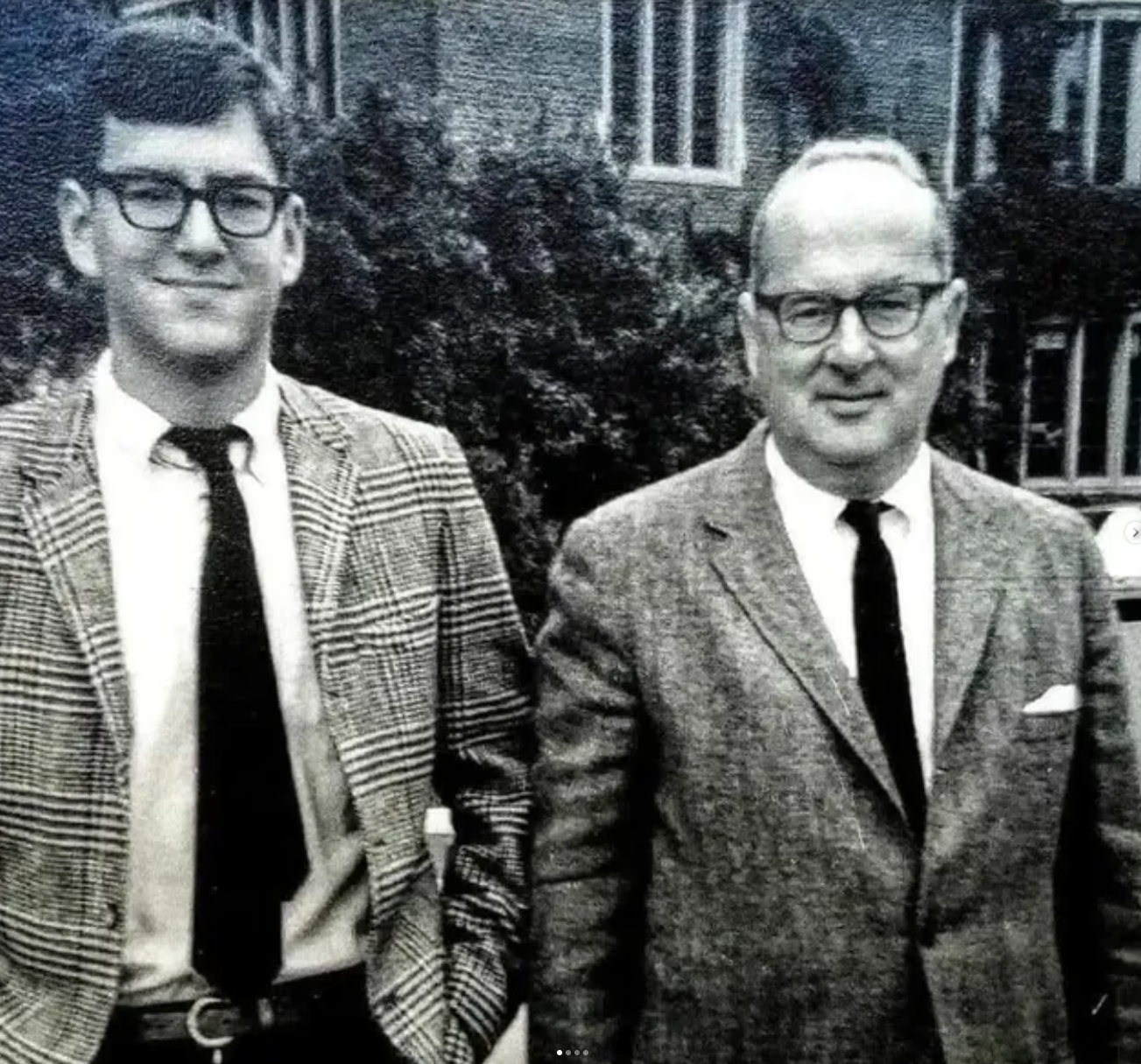
Two generations of Rand men. Robert followed his father, Robert Rand Sr., to the University of Pennsylvania — and into the family habit of looking at institutions directly.
A note from his nephew
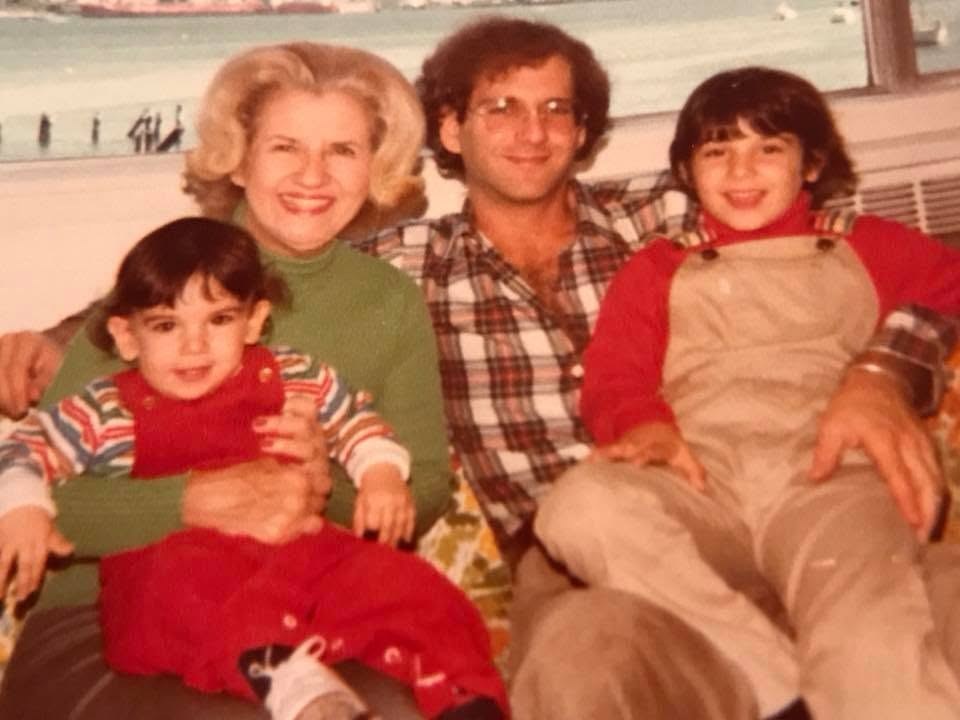
New London, Connecticut, early 1980s. Left to right: Ryan Kerr; Irene Betty Zurier, Robert’s mother; Robert Smith Rand; and me, Bret Kerr. This is the uncle I knew before he was a byline.
Kerr family archiveRobert was my uncle. His death on July 10, 2026 was sudden, and our family is still absorbing it.
Before the news cycle could reduce his life to a headline, I wanted to begin assembling the kind of record he believed in: sourced, patient, specific, and difficult to erase.
He was best known for the Menendez investigation, but what made that work possible was larger than any single case. Robert believed that official narratives could be incomplete, that institutions could be wrong, and that a reporter’s obligation did not expire when public attention moved elsewhere.
The photograph beside this note is New London, Connecticut, in the early 1980s — Robert with his mother, Irene, and my brother Ryan and me. That is the uncle I grew up with, years before the byline. The other photographs on this page come from our family’s albums and from the archive Robert kept in plain sight on his own Instagram, @imrobertrand.
This page is a beginning. It will grow as our family, his colleagues, and the people touched by his work recover more of the record.
— Bret KerrRobert’s nephew
Read the obituary from Los Angeles MagazineRob Rand, Acclaimed Menendez Brother Author, Activist, Dies →See more of his life in his own photographs on Instagram@imrobertrand →Lyle Menendez · July 10, 2026
“A tenacious reporter and a valued friend.”
“Bob was a tenacious reporter and a valued friend who worked tirelessly to bring the truth to light.”
In a public tribute, Lyle remembered Robert’s decades of reporting, his unwavering belief that he and Erik would one day be free, and the friendship that continued long after the trials.
View the full archived tribute →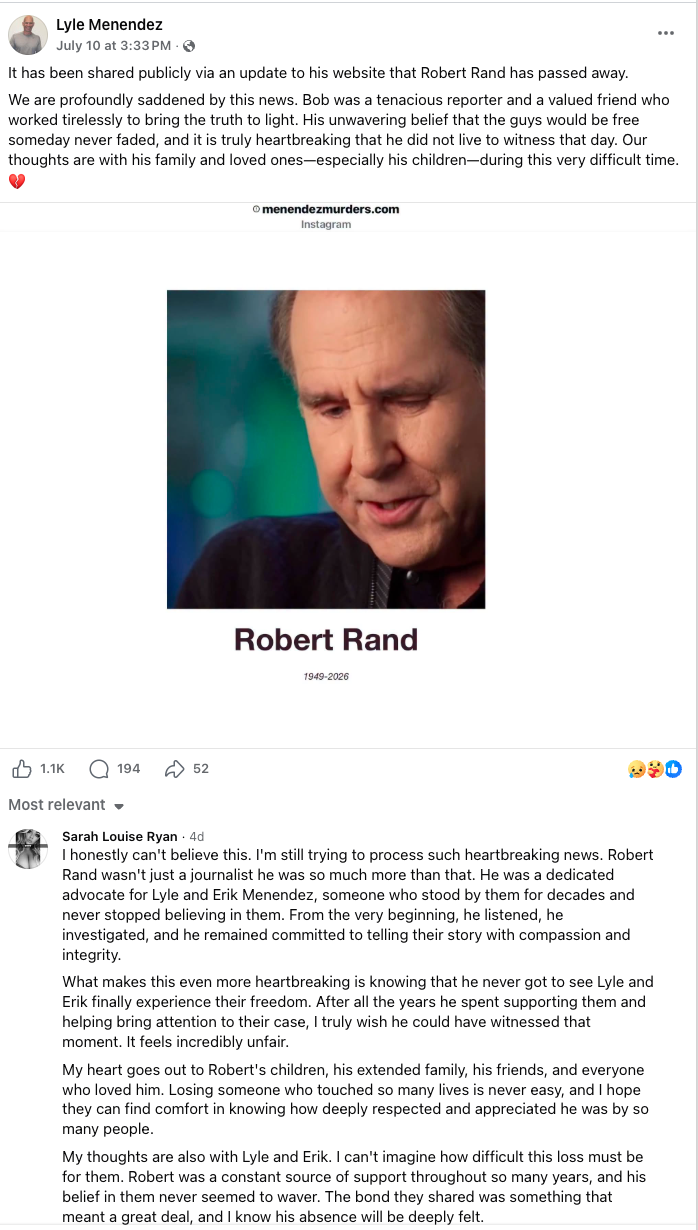
The reporter who did not leave
Remaining was the method.
News is built around departure. A reporter arrives, records the visible facts, files the story, and moves on. Robert Smith Rand built his career around the opposite act: remaining.
Robert, an Emmy and duPont-Columbia Award-winning investigative journalist, author, and documentary producer, died on July 10, 2026. He was the rare American reporter who gave a single story the length of a working life — and he lived long enough to watch the record move because of it.
He was born and raised in Toledo, Ohio, into a family that treated evidence as a household language. His maternal grandfather, Oscar J. Smith, was a Harvard-trained lawyer who bought the Toledo Mud Hens in 1927 and gave Casey Stengel his first job as a professional baseball manager — which is how a boy from Toledo came to sit in the Yankees dugout at Tiger Stadium, shaking hands with “Uncle Casey.” His paternal grandfather, George Ratner, helped pioneer the dental X-ray laboratory — a man whose profession was, literally, looking beneath the surface. A great-uncle, Dr. Bret Ratner, reshaped pediatric immunology; an uncle, Dr. Herbert Ratner, spent a quarter-century in public health and lent La Leche League its first medical legitimacy. Robert followed his father to the University of Pennsylvania and carried the family instinct — diagnose what the institution will not — into journalism.
The apprenticeship was municipal. His first job out of Penn, in 1977, was at KGO-TV in San Francisco. At KYW-TV in Philadelphia he then spent a year with the I-Team tracing property-tax evasion through the city’s own records; the series earned a duPont-Columbia Silver Baton. In Los Angeles, at KCOP, he spent two years on the case of an immigrant imprisoned for a crime he did not commit — reporting that helped overturn a ten-year-old conviction and open a prison door. It earned him a Los Angeles Emmy, and it taught him the conviction that organized the rest of his life: the official narrative is a draft.
On August 21, 1989 — the morning after José and Kitty Menendez were killed in their Beverly Hills home — the Miami Herald sent him to Elm Drive. While much of the press corps chased theories of a mob hit, Robert watched the sons. Two months after the murders, and five months before any arrest, he spent three days interviewing Erik and Lyle Menendez. That December his Herald dispatch was the first to report that investigators had turned from organized crime toward the family. Ten days after the arrests he wrote the People cover story, “A Beverly Hills Paradise Lost.” In March 1991, Playboy published his investigation “The Killing of Jose Menendez” at some 14,000 words — the longest article the magazine had ever run.
That duration changed what he could see. A first report can capture what is visible: a scene, an official statement, an arrest, a charge. It cannot yet hold the documents that surface years later, the witness who becomes ready to speak, the testimony whose significance changes when placed beside another record, or the institutional certainty that begins to fracture under accumulated evidence. Robert stayed long enough to see the case become many different cases in the public imagination, and long enough to test each version against the archive.
Persistence did not make him infallible, and this memorial does not ask readers to treat him that way. It made his work revisable. He returned to the record, preserved contradictions, followed new leads, and argued that allegations of severe abuse—physical, psychological, and sexual—could not responsibly be compressed out of the story. His method was neither fandom nor spectacle. It was the patient refusal to confuse a verdict, a headline, or a popular consensus with the whole of what could be known.
The last decade proved the method. A letter he found in a cousin’s archive — written by a seventeen-year-old Erik eight months before the murders — and the testimony of a former Menudo member he brought to the screen became the evidentiary spine of the 2023 habeas petition. In 2025 the brothers were resentenced and sat, at last, before a parole board. Robert Rand did not merely cover that history. He is part of its chain of custody.
36 years of reporting cannot be compressed into a news cycle.
Before the case
Institutional accountability.
Philadelphia
Following the money
At KYW-TV, Robert worked with the I-Team on a year-long investigation into property-tax evasion by wealthy individuals and corporations. The reporting followed public revenue through records and exemptions rather than rhetoric, stripping the anonymity from a system that quietly starved the city. The investigative team received a duPont-Columbia Silver Baton.
Sources 01
Los Angeles
Unlocking a prison door
At KCOP-TV, Robert spent two years on the case of an immigrant imprisoned under a decade-old wrongful conviction. His reporting helped bring renewed judicial scrutiny; the conviction was overturned and the man walked free. The work earned a Los Angeles Emmy and demonstrated the principle Robert would carry forward: official narratives can be forensically dismantled when documents and testimony are kept in view.
Sources 01
Thirty-six years of evidence
One story, kept open.
1989
1989
Before the arrests
He spends three days interviewing Erik and Lyle Menendez, months before their arrests. That December, his Herald dispatch is the first to report investigators turning from mob theories toward the sons.
Evidence noteEarly access created a contemporaneous record before the case settled into courtroom positions.
1990
A Beverly Hills Paradise Lost
His People magazine cover story appears on March 26, ten days after the arrests.
Evidence noteA national-magazine account written while the case was still rapidly developing.
Sources 01
1991
1993–94
The first trial
Daily courtroom reporting and broadcast analysis for Court TV, CNN, ABC, NBC, and CBS.
Evidence noteRobert followed testimony and evidentiary disputes as the first proceeding ended without verdicts. His own interview tapes drew a subpoena, and he navigated California’s reporter’s shield law from the witness stand.
1995–96
The second trial
Continued courtroom coverage and scrutiny of the evidentiary record.
Evidence noteHe remained with the case through conviction and sentencing, without treating the verdict as the end of reporting.
Sources 01
2017
2018
The Menendez Murders
Publication of the book built from nearly three decades of reporting.
Evidence noteThe book consolidated interviews, trial reporting, family history, and later investigation into a durable record.
Sources 01
2018
The Andy Cano letter
Robert locates a letter Erik wrote to his cousin in December 1988 — eight months before the murders — describing alleged abuse.
Evidence noteThe document became part of later legal arguments. Its legal weight has been contested; its place in the record is public.
2023
2024
2025
2026
The Menendez record
The trial was not the end.
He did not treat the trial as the end of the investigation.
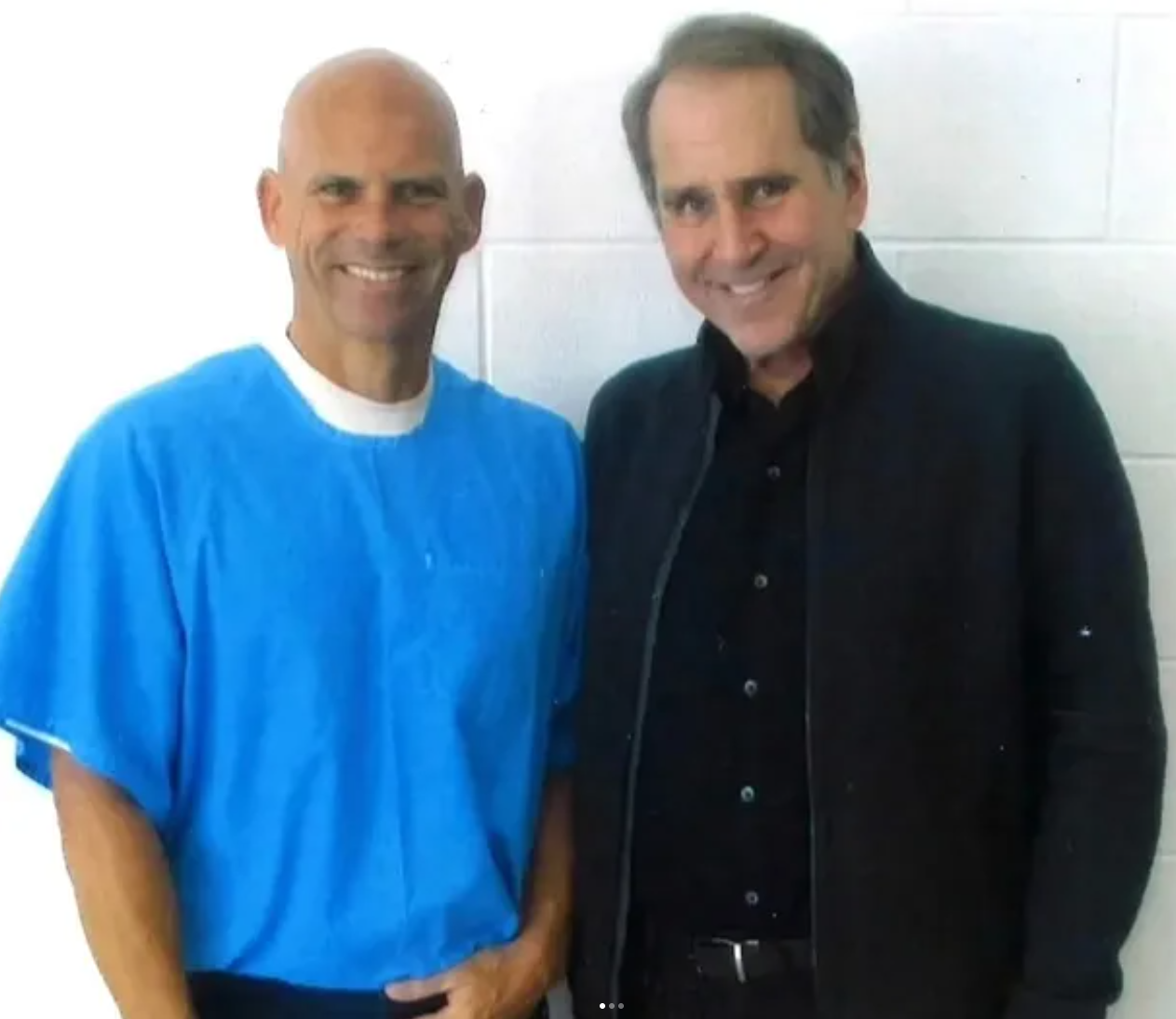
Robert with Lyle Menendez. He kept visiting after the cameras left; the interviews of 1989 became a correspondence of decades.
Family archive · via @imrobertrand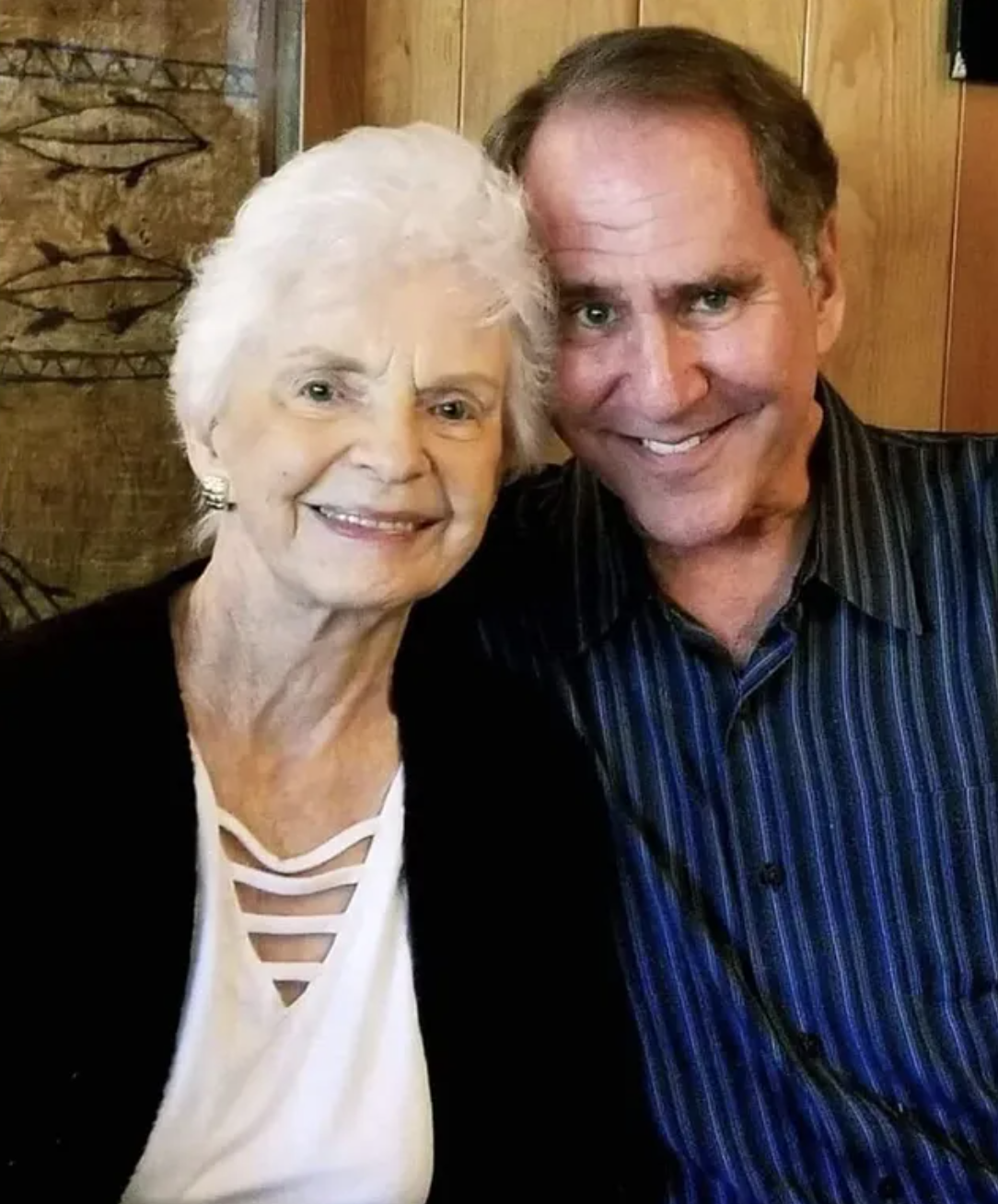
Robert with Joan VanderMolen — “Aunt Joan,” Kitty Menendez’s sister — at his Sunset Strip signing for The Menendez Murders, September 2018. The family inside the story trusted him with it.
Family archive · via @imrobertrandAccess
Robert interviewed Erik and Lyle Menendez before their arrests and developed unusual access to the family and case. Those early interviews became a contemporaneous layer of the archive—not a substitute for later evidence, but a record made before legal narratives hardened.
Courtroom
He covered both major trials across print and broadcast media, reporting daily on testimony, strategy, evidentiary disputes, and the difficult boundary between a reporter’s source material and the courtroom’s demands.
Sources 01
Abuse evidence
Robert argued for decades that allegations and testimony describing severe physical, psychological, and sexual abuse were essential to understanding the case. He did not present every allegation as adjudicated fact; he insisted that the evidence could not responsibly be edited out of the public account.
New documentation
The 1988 letter to Andy Cano and the later reporting involving former Menudo member Roy Rosselló supplied material for renewed legal and public scrutiny. Evidence Robert located became part of later arguments; this memorial does not overstate its legal effect.
The listening room
In his own voice.
The archive is not only paper. Across four decades Robert gave his analysis on camera — Court TV, CNN, ABC, NBC, CBS, and, to the end, the independent programs that kept the case honest. Press play; he will tell you himself.
The work
A bibliography in motion.
Miami Herald
Who Killed the Next U.S. Senator from Florida?
December 1989
First break from the mob theory
SOURCE 05
People
A Beverly Hills Paradise Lost
March 26, 1990
Cover story
SOURCE 06
Playboy
The Killing of Jose Menendez
March 1991
Approximately 14,000 words
SOURCE 07
Book
The Menendez Murders
2018 · Updated 2024
Author
SOURCE 04
NBC
Law & Order True Crime: The Menendez Murders
2017
Consultant
SOURCE 10 · 03
Peacock
Menendez + Menudo: Boys Betrayed
2023
Creator · Executive Producer
SOURCE 08
Broadcast
Court TV, CNN, ABC, NBC, CBS, and local investigative units
Across decades
Reporter · Producer · Analyst
SOURCE 03 · 17
Licensed photographs, covers, broadcasts, and correspondence can be added as the family archive is cleared. No facsimile shown here should be read as an original artifact.
A lineage of inquiry
Evidence ran through the family conversation.
Robert came from a family in which law, medicine, diagnosis, and civic responsibility repeatedly intersected. He did not invent the family method; he was its journalist.
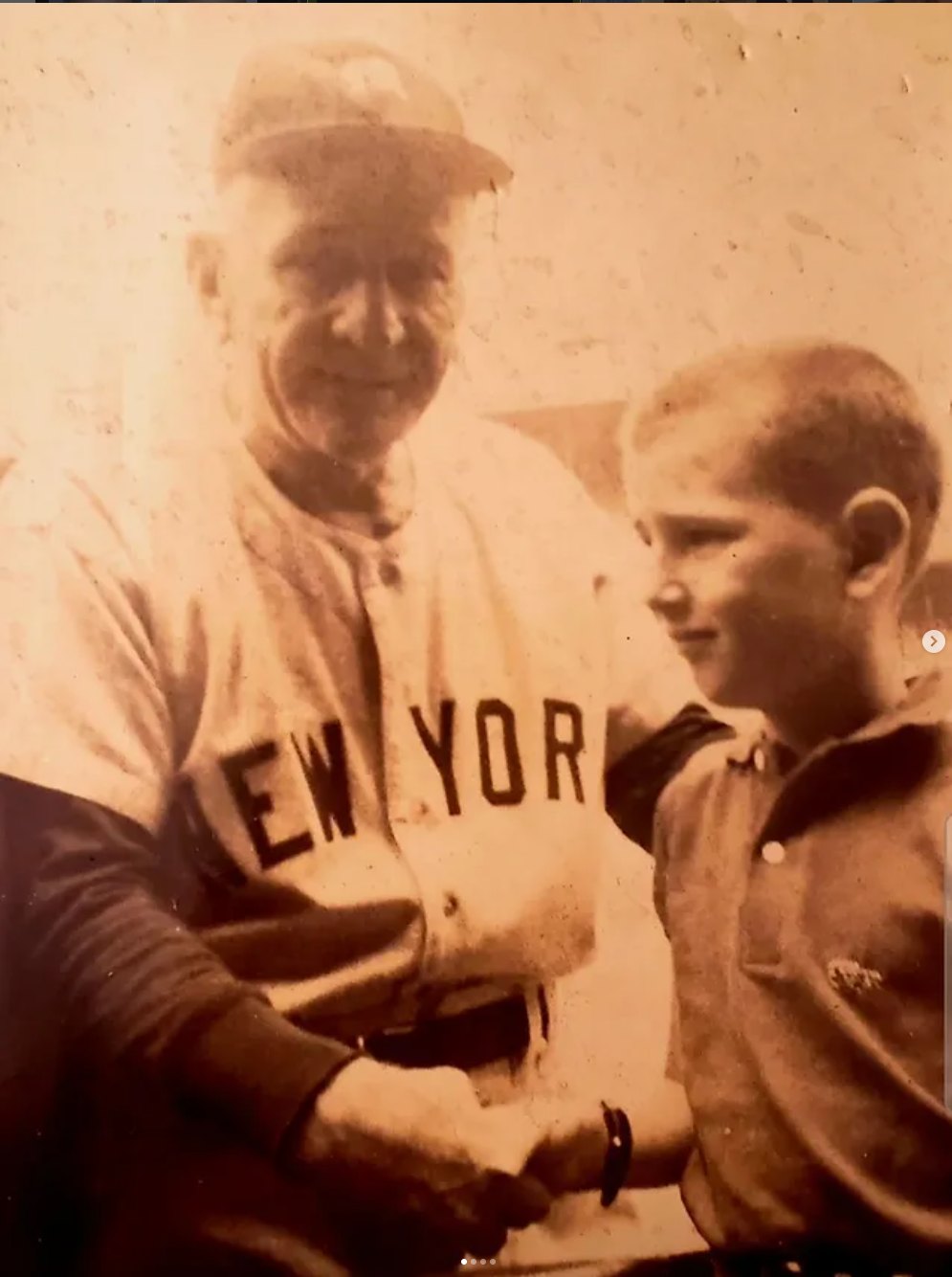
Robert as a boy with “Uncle Casey” Stengel in the Yankees dugout at Tiger Stadium, early 1960s. His grandfather Oscar J. Smith bought the Toledo Mud Hens in 1927 and gave Stengel his first job as a professional baseball manager; Robert’s mother, at eight, was the team’s honorary bat girl.
Family archive · via @imrobertrandMaternal grandfather
Oscar J. Smith
Harvard Law School, class of 1913; attorney and civic builder who bought the Toledo Mud Hens in 1927 — and gave Casey Stengel his first job as a professional baseball manager.Paternal grandfather
George Ratner
Pioneer of the dental X-ray laboratory — the family’s first professional at looking beneath the surface.Great-uncle
Dr. Bret Ratner
Pediatric immunology pioneer; identified rabbit-hair asthma in 1922; founding chairman of the AAP Allergy Section.Read the FounderFile biography →Uncle
Dr. Herbert Ratner
Public-health director of Oak Park, Illinois for twenty-five years; the physician who gave La Leche League its first medical backing.Read his Wikipedia entry →Father
Robert Rand Sr.
University of Pennsylvania graduate; his son followed him to Philadelphia.Mother
Irene Betty Smith
A presence in Toledo civic and educational life — and, at eight years old, the Mud Hens’ honorary bat girl, with her own uniform.Subject
Robert Smith Rand
Toledo-raised investigative journalist and University of Pennsylvania alumnus. The diagnostic impulse, applied to the public record.A family pattern emerges: looking beneath visible symptoms, challenging prevailing consensus, and insisting that institutions answer to evidence. George Ratner x-rayed teeth; his grandson x-rayed prosecutions.
Method
Longitudinal journalism.
Robert’s career offers a practical definition of reporting across time: protect meaning from the compression of the headline, the verdict, and the algorithmic summary.
- 01ARRIVE
Report the visible event.
- 02REMAIN
Continue after attention fades.
- 03ACCUMULATE
Preserve testimony, documents, contradictions, and context.
- 04REOPEN
Return when new witnesses or evidence emerge.
- 05CORRECT
Revise the public record when the evidence demands it.
For the record
Questions the record should answer.
Obituaries are read by strangers as often as by friends. These are the answers Robert would have wanted kept straight — including the one about the other Robert Rand.
- 01Who was Robert Smith Rand?
- Robert Smith Rand was an Emmy and duPont-Columbia Award-winning American investigative journalist, author, and documentary producer, born and raised in Toledo, Ohio and educated at the University of Pennsylvania. He reported for the Miami Herald, People, and Playboy; served on investigative units at KYW-TV in Philadelphia and at KCBS and KCOP in Los Angeles; wrote The Menendez Murders; and created the Peacock documentary series Menendez + Menudo: Boys Betrayed. He died on July 10, 2026.
- 02What was Robert Rand’s connection to the Menendez brothers case?
- He began reporting on the killings of José and Kitty Menendez on August 21, 1989 — the day after they occurred — and never stopped. He interviewed Erik and Lyle Menendez months before their arrests, covered both trials, wrote the definitive book on the case, and later located the December 1988 Andy Cano letter and brought forward Roy Rosselló’s testimony. Both discoveries became part of the 2023 habeas corpus petition that preceded the brothers’ 2025 resentencing and parole eligibility.
- 03Is this the Robert Rand who worked at NPR and wrote My Suburban Shtetl?
- No. That is a different writer — a former NPR editor raised in Skokie, Illinois, author of My Suburban Shtetl, Comrade Lawyer, Tamerlane’s Children, and Tattered Kimonos in Japan. Robert Smith Rand of Toledo, Ohio never lived in Illinois and wrote none of those books. Search engines and automated databases routinely fuse the two men into one composite person — precisely the kind of context jamming this site exists to document. This page is the corrected record.
- 04Where can I read and watch Robert Rand’s work?
- Start with The Menendez Murders (2018; updated edition 2024), the documentary series Menendez + Menudo: Boys Betrayed on Peacock, and the interview playlist embedded on this page. His photographs remain at @imrobertrand on Instagram, and a companion biography of his great-uncle Dr. Bret Ratner is published in the Context Jamming FounderFiles.
Sources, corrections, and living archive
Built to be amended.
This memorial draws from Robert’s published work, professional biographies, broadcast archives, legal reporting, and family research. Some exact employment dates and personal biographical dates remain incomplete. The page will be updated as original materials are recovered and verified.
Obituaries and remembrances
- 01Rob Rand, Acclaimed Menendez Brother Author, Activist, Dies
Los Angeles Magazine · Contemporary obituary remembering Robert’s reporting, authorship, activism, and decades of work on the Menendez case.
- 02Lyle Menendez — public tribute to Robert Smith Rand
Public post, July 10, 2026 · Lyle remembers Robert as a tenacious reporter, valued friend, and tireless advocate for bringing the truth to light.
Publisher and professional biographies
- 03Robert Rand — official author biography
Simon & Schuster · Career, awards, investigative units, wrongful-conviction reporting, and television consulting.
Robert’s publications
- 04The Menendez Murders
Simon & Schuster · Book record, publication history, and author biography.
- 05Who killed the next U.S. Senator from Florida?
The Miami Herald, December 1989 · The first public reporting that investigators had moved from mob theories toward the sons; print archive record retained for provenance.
- 06A Beverly Hills Paradise Lost
People, March 26, 1990 · Cover story in the “Murder in Beverly Hills” issue; the cover image is linked here for provenance.
- 07The Killing of Jose Menendez
Playboy, March 1991 · Approximately 14,000-word investigation; print archive record retained for provenance.
Broadcast archives
- 08Menendez + Menudo: Boys Betrayed
Peacock, 2023 · Official series record and episode descriptions.
- 09Official trailer and series announcement
Peacock, April 20, 2023 · Contemporary announcement of the three-part documentary series.
- 10Law & Order True Crime: The Menendez Murders
NBC / Wolf Films, 2017 · Series consulting credit is also documented in the official publisher biography.
- 11Interview playlist — Robert Rand on the Menendez case
YouTube · On-camera analysis and retrospectives, embedded in the listening room on this page.
Court and legal reporting
- 12Cano letter in the later legal record
Los Angeles County District Attorney’s Office · Public legal-record context for the letter; linked without adopting either side’s legal characterization.
- 13What We Learned from The Menendez Brothers
TIME, October 7, 2024 · Later reporting on the Cano letter, Rosselló affidavit, and Robert’s continuing case analysis.
Family and genealogical records
- 14Rand, Ratner, and Smith family records
Kerr family archive · Family research supporting the lineage notes; additional primary documents are being catalogued.
- 15Robert’s Instagram archive — @imrobertrand
Instagram · Photographs from Robert’s own public account, including images reproduced on this page.
- 16Dr. Bret Ratner — FounderFile biography
Context Jamming · A companion biography of Robert’s great-uncle, the pediatric immunology pioneer.
Corrections and provenance
- 17Robert Smith Rand memorial working archive
Bret Kerr / Context Jamming · Family-held photographs, correspondence, broadcasts, clippings, and future corrections.
Have an original photograph, broadcast, letter, article, or factual correction?
Contribute to the archive →The Record Remains.
Robert Smith Rand demonstrated that investigative journalism can operate on a timescale longer than public memory.
He stayed after the cameras left. He kept the notebooks, returned to the witnesses, questioned the settled narrative, and followed evidence across decades. His work helped preserve testimony and documentation that might otherwise have disappeared beneath repetition, spectacle, and institutional certainty.
Robert died on July 10, 2026. The archive he assembled is now part of the history he spent his life trying to preserve.
For his family, his colleagues, his readers, and the people whose stories he refused to abandon, the work remains.
His photographs · @imrobertrandThe Ratner lineage · Dr. Bret Ratner
Context Jamming · Return to the archive