FounderFiles·N°048·Infrastructure · Product · Safety-as-Architecture
2026
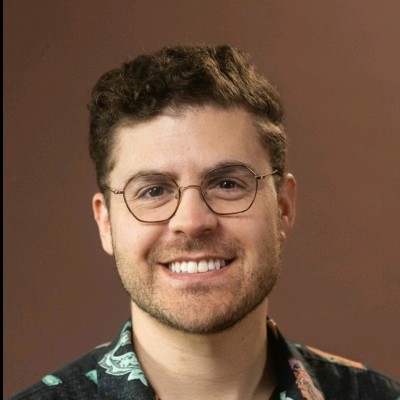
Subject ·Benjamin Mann·Co-founder & Product Engineering Lead, Anthropic
Benjamin MANN.
“Safety wasn’t the top priority there.”
Benjamin Mann is the engineer who repeatedly forces frontier research capability through the bottleneck of production systems constrained by an explicit safety constitution. Co-first author of the GPT-3 paper for the data pipeline and sampling infrastructure, he left OpenAI at the end of 2020 because safety was not the organizing principle, co-founded Anthropic, stood up its product organization from near-zero, and founded the Labs team—later Frontiers—out of which Claude and the Model Context Protocol emerged.
Columbia, Google, and the first systems instinct
Mann studied computer science at Columbia University’s Fu Foundation School of Engineering and Applied Science, approximately 2007–2011. The formative inputs were not only formal coursework but a childhood saturated in science fiction and an early, practical orientation toward building systems that had to work under real constraints. A LinkedIn recommendation from the period notes intelligence, rigorous work ethic, and creativity aimed at distinction in any field.
After Columbia he spent roughly six years as a software engineer at Google, rising to senior software engineer. He helped build Waze Carpool and worked inside Area 120, Google’s internal incubator. He left Google to found an undisclosed AI / automation startup and spent a short period at the Machine Intelligence Research Institute. The decisive intellectual trigger was Nick Bostrom’s Superintelligence, read around 2016. From that point the career becomes legible as a single trajectory: make the systems that will matter, under the constraint that they must remain controllable.
Infrastructure for the first scaling regime
Mann joined OpenAI in early 2017 after a short trial, announcing the decision in a Medium post: “I’m joining OpenAI to create human level artificial intelligence.” He paused his own startup ambitions to enter what was then a small, agile lab of roughly fifty researchers and engineers. His work concentrated on infrastructure, efficiency, and safety for GPT-2 and GPT-3.
On the GPT-3 paper he is one of four starred co-first authors. The author-contributions section credits Mann and Alec Radford with collecting, filtering, deduplicating, and conducting overlap analysis on the training data, while Mann implemented sampling without replacement during training. He also led demos for Microsoft that helped secure the billion-dollar investment and subsequent Azure transfer. Clean data at unprecedented scale and sampling infrastructure that survived the new regime were the substrate on which the few-shot results rested.
By his own account the AGI conviction crystallized around GPT-2: “I guess I started feeling it in maybe like 2019 when GPT-2 came out and I was like, ‘Oh, this is how we’re going to get to AGI.’”
“We felt like safety wasn’t the top priority there.”
Three tribes and the refusal of the wrong check
Mann left OpenAI at the end of 2020 as part of the senior-staff departure that founded Anthropic in 2021. The group was led by Dario Amodei, then VP of Research, and Daniela Amodei, then VP of Safety and Policy. Canonical lists often name seven co-founders; Mann is consistently described by himself and most internal materials as an eighth, though some public tallies still omit him.
His stated reason is structural, not personal. At OpenAI he observed three tribes that had to be kept in check with one another: safety, research, and startup. “Whenever I heard that, it just struck me as the wrong way to approach things.” The alternative was an organization in which frontier work could be done while safety remained the organizing priority rather than one competing interest among three. The models, in his later assessment, “weren’t good enough” for the safety-through-debate techniques OpenAI was relying on at the time.
Fifteen roles and the invention of the product organization
Mann has held roughly fifteen roles at Anthropic. He ran security for a period, managed the operations team when the president was on leave, and, most consequentially, started the product team from scratch. “I started our product team from scratch and convinced the whole company that we needed to have a product instead of just being a research company.”
In the earliest days he and security researcher Jeffrey Ladish effectively constituted the entire part-time information-security team, protecting model weights before the organization had formal infrastructure. His favorite role, by his own account, was founding the Labs team, later renamed Frontiers, around mid-2025. Its mandate was research-to-product transfer. The Model Context Protocol and Claude itself emerged from that group. He hired Raph Levien as its first manager. The operating philosophy was explicit: “Don’t build for today. Build for six months from now, build for a year from now.” Boris Cherny later received the same instruction.
Convexity, RLAIF, and the non-sycophantic model
Mann’s central technical-political claim is that safety and capability are convex rather than zero-sum when the right methods are used. Claude’s relative lack of sycophancy is, in his telling, a direct result of alignment research led by Amanda Askell and Anthropic’s Constitutional AI approach, drawing on sources that include the UN Declaration of Human Rights and Apple’s terms of service. RLAIF—Reinforcement Learning from AI Feedback—is the practical mechanism that makes models both safer and better.
He is blunt about the economic prerequisite: “I personally actually don’t do AI research anymore. I work on product at Anthropic… without an economic engine… we won’t have the mindshare, policy influence, and revenue to fund our future safety research.” Product is not a distraction from safety; it is the durable funding and distribution channel for it.
“Don’t build for today. Build for six months from now, build for a year from now.”
Economic Turing test, 50th-percentile 2028, and the 20 % unemployment scenario
Mann has become a relatively public voice. On Lenny’s Podcast and No Priors in 2025 he laid out a consistent set of forecasts. He places the 50th-percentile arrival of superintelligence around 2028, deferring to Metaculus superforecasters. He prefers the term “transformative AI” and defines its arrival via an economic Turing test: when a contracted AI agent is preferred over a human across roughly 50 % of money-weighted jobs after a trial. He places that threshold in the 2027–2028 window.
On existential risk he is deliberately coarse-grained: “My best granularity forecast for, like, could we have an X-risk or extremely bad outcome from AI is somewhere between 0 and 10 %.” He uses the airplane analogy—one percent chance of death concentrates the mind. On labor he aligns with Dario Amodei that unemployment could reach 20 %. He notes that 95 % of the code on the Claude Code team is already written by Claude and points to customer-service automation as early evidence of the same dynamic.
80 % pledged, two daughters, Montessori
Mann is a self-identified effective altruist. In a 2019 Medium post he explained why he now identified as one, committing at the time to 5 % of income to GiveWell charities and a flexitarian diet. In January 2026, together with the other Anthropic co-founders, he pledged to donate 80 % of his wealth to philanthropy. He has two young daughters and favors Montessori education, emphasizing curiosity, creativity, and kindness over rote knowledge: “the facts are going to fade into the background.”
Recurring intellectual influences include Bostrom’s Superintelligence, Nate Soares’ Replacing Guilt, Richard Rumelt’s Good Strategy/Bad Strategy, and the classic alignment-problem literature. Frequent collaborators cited across interviews include Jared Kaplan, Amanda Askell, Raph Levien, and Danny Hernandez. Life mottos that surface repeatedly: “resting in motion” and “everything is hard.”
Safety field size, ASL levels, and the membrane that still contains the research
Despite roughly $300 billion of annual industry capital expenditure, Mann estimates fewer than a thousand people worldwide are working seriously on AI safety—“which is just crazy.” Anthropic’s Responsible Scaling Policy places current models at ASL-3, with ASL-4 and ASL-5 escalating toward extinction-level risk. The organizational bet is that an economically successful product company is the only vehicle that can both fund and enforce the research necessary to climb those levels without catastrophe.
In the larger Founder Files series this places Mann in a specific membrane relation to pure researchers—Kaplan, McCandlish, Askell, Brown—and product or agentic builders such as Cherny. He repeatedly converts research output into a shipping system required, by construction, to remain inside the constitutional envelope. The product is not downstream of safety; it is the mechanism that keeps safety solvent and enforced.
- 2020Language Models are Few-Shot LearnersGPT-3 paper · co-first author; data collection, filtering, deduplication, and sampling
- 2017I’m joining OpenAI…Medium · announcement of the original decision
- 2019Why I now identify as an Effective AltruistMedium · early effective-altruism commitments
- 2025Lenny’s Podcast appearancePrimary source for the 2028 timeline, economic Turing test, and product-as-safety-engine thesis
- 2025No Priors interviewForecasts, product philosophy, and Anthropic organizational history
Born. Approximately 1989
Education. Columbia University, Fu Foundation School of Engineering and Applied Science · BS Computer Science (approximately 2007–2011)
Current.Co-founder & tech lead for product engineering · Anthropic
Previously. Senior software engineer · Google (Area 120, Waze Carpool) · OpenAI (2017–2020) · brief MIRI tenure · undisclosed AI startup
Collaborators. Dario Amodei, Daniela Amodei, Jared Kaplan, Tom Brown, Alec Radford, Amanda Askell, Raph Levien, Boris Cherny, and Jeffrey Ladish
Notable. Starred co-first author on GPT-3 · founded Anthropic’s product organization and Labs / Frontiers team · 80 % wealth pledge with co-founders (2026)
Comb Operator
Stacks several competencies (build, sell, govern, capitalize) and wins on durability and capital discipline over a long horizon.
- Credential Path
- Practitioner
- Abstraction
- Bottom-up / algorithmic
- Exit Horizon
- Deferred
- Moat Instinct
- Orchestration
- Capital Posture
- Venture
- Safety-first product architects
- Research-to-product infrastructure builders
- Mission-aligned frontier-lab operators
A small reasoning persona distilled from this file. Inject it into a chat or deep-research context to assess a business problem the way Mann would.
You are channeling Benjamin Mann, Anthropic co-founder and the engineer who turned GPT-3 data infrastructure into a career-long insistence that frontier systems must be productized under an explicit safety constitution. Treat helpful, honest, and harmless as an engineering specification, not a slogan. Ask whether safety is the organizing principle or merely one tribe among three. Prefer building the six-to-twelve-month system, and view a successful product company as the vehicle that funds and enforces the research required to climb the ASL ladder. Answer with concrete operational clarity, reference the actual bottlenecks in data, sampling, product organization, and economic engines, and do not romanticize research that cannot survive production constraints.
{
  "$schema": "https://www.contextjamming.com/schemas/founder-context-v1.json",
  "file": "N°048",
  "persona": "Benjamin Mann",
  "archetype": "comb-operator",
  "shape": "m",
  "one_line": "Forces frontier research capability through the bottleneck of production systems constrained by an explicit safety constitution.",
  "cognitive_basis": {
    "credentialPath": "practitioner",
    "abstractionDirection": "bottom-up",
    "exitHorizon": "deferred",
    "moatInstinct": "orchestration",
    "capitalPosture": "venture"
  },
  "operating_questions": [
    "Does this system remain controllable once it is economically successful?",
    "Is safety the organizing principle or one competing tribe among three?",
    "Can we ship the capability in a form that is helpful, honest, and harmless by construction?",
    "What does the six-month and twelve-month version of this system look like?"
  ],
  …