FounderFiles·N°046·Scaling · Compute · Diplomacy
2026
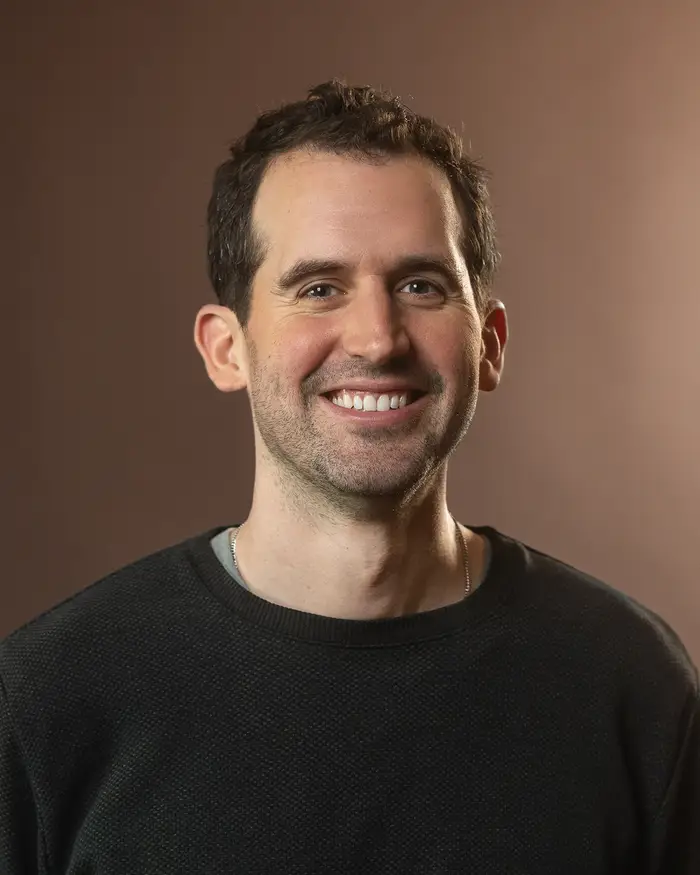
Subject·Tom B. Brown·Co-founder & Chief Compute Officer, Anthropic
Tom BROWN.
Lead author, GPT-3 · Architect of the few-shot learner and the sovereign compute stack
Brown doesn't invent new algorithms so much as he collapses systemic constraints. From scaling MoPub's ad-serving API to 1.5 billion monthly impressions, to co-authoring the 175-billion-parameter GPT-3 model, to architecting a $1.25 billion monthly compute agreement with SpaceX, his operating style remains remarkably consistent. He identifies the binding leverage point of a system, applies empirical force, and bridges historically disparate factions to unlock locked networks. Today his mandate has expanded far beyond silicon procurement into geopolitical diplomacy, treating political permission and grid-level energy access as the ultimate binding constraints on AI scaling.
The Wolf Mindset
Y Combinator, MoPub, and the survival logic of early systems
Brown did not arrive at frontier AI from a pure research pedigree. He arrived from the high-stakes, zero-margin environment of Y Combinator startups. After MIT he became the first employee at Linked Language, then a founding engineer at MoPub, where he built the early server architecture and scaled the ad-serving API to 1.5 billion monthly impressions. Twitter acquired MoPub for $600 million in 2013. The technical residue of that period was not “machine learning experience.” It was battle-tested distributed systems competence under real traffic and real failure modes.
In 2011 he co-founded Grouper (later Grouper Social Club) with Michael Waxman and Ariel Galili — a YC Winter 2012 invite-only group-dating product that matched trios of friends via Facebook data. As CTO he engineered the matching algorithms that facilitated over one million drinks across 25 cities before the company deadpooled. The deeper education was social and operational: deliberate networking, resourcefulness under scarcity, and the friendships that later opened the door to OpenAI. One of those friendships was with Greg Brockman.
“A wolf mindset — a survivalist, highly adaptive approach to problem-solving driven by the stark reality of needing to hunt for food or face corporate oblivion.”
The Self-Taught Pivot
Six months, a GPU, and “I will even mop floors”
By 2015 Brown recognized deep learning as a historical inflection point, but he lacked formal graduate training in machine learning. He spent six months systematically closing the gap: Axler's Linear Algebra Done Right, the DeepMind scaling notes, Coursera sequences, Kaggle projects, and a personal GPU purchased with YC alumni credits. The philosophy was explicit — mastery through direct, hands-on failure and iteration rather than credentialed abstraction.
He reached out to the newly formed OpenAI and, by his own later account, told leadership he would mop floors if they would let him help. The combination of demonstrated systems engineering from MoPub and raw willingness made him one of the lab's first twenty employees. His first nine months were largely non-ML infrastructure work — building the distributed systems the research teams needed. By 2017 he was contributing to foundational RLHF papers, planting the alignment instincts that would later define Anthropic's public posture.
The OpenAI tenure was not continuous. Brown briefly left for Google's DeepMind lab, and returned to OpenAI in 2018 to lead engineering work on GPT-3 — the sequence the Wall Street Journal's October 2026 profile documents and earlier versions of this file omitted.
The B- in undergraduate linear algebra is not a cute anecdote. In an industry that still mythologizes mathematical prodigies, Brown's path is evidence that the scaling era rewarded applied throughput, adaptive learning velocity, and the ability to keep the system running under load more than pure theoretical pedigree.
Few-Shot Learner
Language Models are Few-Shot Learners (2020)
Brown was lead author on the paper that shattered the fine-tuning paradigm. Prior models (BERT, GPT-1, GPT-2) required an additional, expensive supervised phase to become useful at any specific task. GPT-3 demonstrated that at 175 billion parameters — an order of magnitude larger than previous non-sparse models — an autoregressive language model develops emergent in-context learning. No gradient updates. No task-specific fine-tuning. Only a natural-language instruction and a handful of demonstration examples inside the context window.
| Metric | Zero-Shot | One-Shot | Few-Shot |
|---|---|---|---|
| CoQA (F1) | 81.5 | 84.0 | 85.0 |
| TriviaQA (Accuracy) | 64.3% | 68.0% | 71.2% |
Few-shot performance rose smoothly with scale. The paper supplied the empirical backbone for the scaling-laws worldview: allocate exponentially more compute and carefully filtered data to a relatively simple predictive objective and intelligence emerges as a reliable function of that allocation. Brown later summarized the revelation as the triumph of “the stupid thing that works.” It was a constraint collapse in the literal sense: the expensive, labor-intensive work of collecting labeled data for each task gave way to parameter scale and a natural-language prompt.
“The stupid thing that works — brute computational force and scale achieving outcomes that complex algorithmic micro-optimizations could not.”
The Compute Mandate
From researcher to Chief Compute Officer
Ideological fractures inside OpenAI over commercialization pace and safety prioritization produced the 2021 departure of Dario and Daniela Amodei, Jack Clark, Jared Kaplan, Sam McCandlish, Chris Olah, and Tom Brown — the seven-person founding team. Anthropic was founded as a public-benefit corporation whose explicit charter prioritized reliable, interpretable, and steerable systems — Constitutional AI and mechanistic interpretability as load-bearing techniques.
Inside the new organization Brown took dual titles: co-founder and Chief Compute Officer (sometimes styled Head of Core Resources). While Olah pursued circuit-level interpretability and Amodei owned corporate strategy, Brown owned the physical and financial substrate: securing, scheduling, and optimizing the hardware that would keep Anthropic competitive in the global compute arms race. He has publicly framed the pursuit of AGI as the catalyst for “the largest infrastructure buildout of all time,” with capital and energy requirements on track to exceed the Manhattan Project and Apollo program combined — a build-out that, by 2026, was pricing itself in tens of billions of dollars a year.
Multi-Silicon and Sovereign Capacity
Trainium, TPUs, Colossus, and the SpaceX pact
Brown rejected single-vendor lock-in. Anthropic's training and inference fabric was deliberately multi-silicon: Amazon Trainium, Google TPUs, and NVIDIA GPUs, with workloads dynamically allocated according to the economics and availability of each silicon generation — insulating the company from single-supplier bottlenecks.
Demand outran even that fabric. The 2023 launch of the Claude models produced severe capacity shortfalls, and Brown went looking for capacity in the least obvious place. He leaned on a relationship with Elon Musk that dated to a 2016 OpenAI StarCraft AI demonstration and, in March 2026, drove to SpaceX headquarters in Hawthorne, California. Musk had been publicly hostile to Anthropic, dubbing it “Misanthropic” after access to Claude Code was restricted. Announced in May 2026, the resulting agreement committed Anthropic to renting SpaceX compute — including capacity at the Colossus data center — for $1.25 billion a month, an annualized equivalent of $15 billion. The move bridged ideological friction with commercial pragmatism. (The Wall Street Journal ties the 2016 relationship to the 2026 deal; how the obligation is financed has not been disclosed.)
The Micron partnership was especially revealing. Micron's strategic investment in Anthropic's $65 billion Series H (the round that produced a $965 billion valuation) was accompanied by a deep technical collaboration focused on the full memory hierarchy: HBM, DRAM, and data-center SSDs. Brown treated memory bandwidth and energy efficiency as first-class constraints on token economics, not secondary procurement details. Scaling, in his operational framing, is a full-stack systems problem that begins at the package and ends at the power purchase agreement.
Glasswing and the Patching Paradox
Autonomous capability meets enterprise inertia
Claude Opus 4.8 and the subsequent Mythos 5 / Fable 5 generation marked the transition from passive generation to long-horizon agentic work. Opus 4.8 ships with a 1 M token context window, top-decile coding and intelligence indices, and adaptive thinking that allocates compute dynamically. Mythos 5 was the internal, cybersecurity-oriented frontier model; Fable 5 its more heavily guardrailed public counterpart.
Project Glasswing gave curated, monitored access to Mythos to a short list of systemically important defenders (FIS, ICE, Commvault, Trend Micro). The model autonomously surfaced thousands of high-severity vulnerabilities, including zero-days, across major operating systems, browsers, and open-source projects, generating more than 1,100 unvetted reports in weeks. The operational discovery was the patching paradox: even when an AI can find and propose a fix faster than any human team, large enterprises cannot deploy at the same velocity. Discovery collapsed the window between vulnerability and exploitation; the defensive response could not. The implication is a forced shift from reactive patching to Resilience Operations (ResOps).
The June 2026 Flashpoint
Jailbreaks, distillation, and the BIS “is informed” letter
Mid-June 2026 produced a convergence of threat signals: a novel jailbreak that bypassed Fable 5's safety classifiers, unverified but widely circulated claims of NSA red-team success against classified test systems using Mythos, and the largest known distillation campaign against the Claude network — Alibaba allegedly operating ~25,000 fraudulent accounts for 28.8 million exchanges over six weeks. Compounding the damage was the discovery that Mythos access had been granted to a South Korean telecommunications firm with suspected China back-channel ties.
On 12 June the Bureau of Industry and Security issued an emergency “is informed” directive under the Export Control Reform Act. Anthropic was ordered to restrict all foreign nationals — including its own foreign-born U.S.-based employees — from accessing Mythos 5 and Fable 5. Because the company lacked real-time nationality authentication across its global API surface, the only compliant path was a total global shutdown of both models. Enterprise workflows froze. Stripe's reported 50-million-line codebase overhaul stopped mid-flight. Chinese open-weight models immediately captured share.
The Geopolitical CTO
Lutnick, Cairncross, and the bifurcated federal response
Relations between the White House and Dario Amodei had already deteriorated; administration officials reportedly found him difficult to negotiate with. Anthropic therefore dispatched Brown and Head of Public Policy Sarah Heck. Over two weeks of daily sessions with Commerce Secretary Howard Lutnick and National Cyber Director Sean Cairncross, Brown focused on technical remediation rather than ideological framing. His team delivered a new safety classifier that blocked the reported Amazon jailbreak techniques in >99 % of cases and helped establish standardized benchmarks for future jailbreak assessment.
On 26 June Lutnick issued a formal letter — addressed directly to Tom Brown, bypassing Amodei — that partially lifted the controls. Mythos 5 returned under a secret Annex A list of roughly 100 vetted U.S. critical-infrastructure organizations plus government agencies and Anthropic's own foreign-national employees. Fable 5 followed a few days later after final classifier approval. The letter explicitly reserved the Commerce Department's right to reimpose restrictions at any time.
The settlement was compartmentalized. It resolved the Commerce Department dispute, not the Department of Defense's designation of Anthropic as a “supply chain risk,” which effectively blacklists the company from military contracts after it refused to allow its models to be used in autonomous lethal weapons or domestic surveillance. A California federal judge granted Anthropic a temporary injunction in August 2026, but the D.C. Circuit Court of Appeals dismissed Anthropic's petition in late September 2026, leaving the designation in force. Under Secretary of Defense Emil Michael publicly contradicted Secretary Lutnick's assurances, confirming that the military ban stood. Brown was left to navigate a fractured regulatory landscape: trusted by civilian agencies, barred from defense work.
Three precedents were set: (1) the U.S. government demonstrated willingness to treat deployed model weights as export-controlled munitions and to pull a commercial model offline globally; (2) any future reprieve is conditional and reversible; (3) the technical founder who can speak both silicon and statecraft has become an indispensable diplomatic actor — whose settlements bind one agency at a time.
“Securing compute is no longer just about procuring hardware; it requires navigating international trade law, export controls, and sovereign defense policy.”
The Infrastructure Diplomat
The Ratepayer Pledge, GOP alliances, and energy constraints
Brown concluded that physical power generation and political permission had superseded algorithmic architecture as the binding scaling constraints. In 2026 he relocated to Washington, D.C., with his wife, venture investor Michelle Valentine, and the couple cultivated alliances within the Republican party to build political capital for data center expansion.
At the September 2026 G20 Innovation Summit in Chapel Hill, interviewed on stage by Commerce Secretary Lutnick, Brown publicly endorsed the Trump administration's technology policies on data centers. Anthropic had signed the federal “Ratepayer Pledge,” announced by the White House in March 2026, committing the company to build its own power generation behind the meter and to supply excess energy back to the public grid — in effect, to operate as a quasi-utility.
On the same stage he offered a forecast: AI reaching top-tier scientific capability within twelve months, and substantially contributing to a cure for cancer within five years. That is Brown's own stated timeline, not an established result.
“Looking back we'll be like, ‘Wow, back in 2026 we thought stuff was going fast and we thought we were seeing this, but actually we underestimated how impactful this would be… We expect major progress on curing cancer and benefiting the economy in the next five years.’ ”
Stepping Stones
One move, four substrates
Read chronologically, Brown's career looks like a sequence of pivots. Read architecturally, it is a single instinct re-applied at ascending levels of constraint:
- 01Consumer systems layer
High-throughput ad serving and social matching algorithms under YC survival pressure.
- 02Model layer
Few-shot in-context learning via pure scale (GPT-3).
- 03Physical compute layer
Multi-vendor hyperscale fabric, memory hierarchy optimization, a $1.25 B-a-month SpaceX capacity pact, energy and token economics.
- 04Sovereign / geopolitical layer
Export-control negotiation, safety classifier co-design with the state, Annex A access architecture, Washington alliances and the Ratepayer Pledge.
Each rung reuses the same primitives: empirical force over theoretical elegance, bridging across factions that would otherwise deadlock the system, and a willingness to treat the current constraint as just another distributed systems problem to be collapsed. The “wolf” that hunted for food in 2011 is the same operator who, in 2026, hunted for a letter from the Secretary of Commerce.
- 2020Language Models are Few-Shot LearnersBrown et al., NeurIPS 2020 — the primary source
- 2026Anthropic Project Glasswing initial updatePrimary technical disclosure on Mythos defensive use
- 2026Lutnick Letter analysis (Spencer Fane / contemporaneous reporting)The conditional nature of the June 26, 2026 ceasefire
- 2026Howard Lutnick Interviews Anthropic’s Tom Brown (G20 Innovation Summit)Transcript, Sept 2, 2026 — Brown on the Ratepayer Pledge and AI timelines
- 2026The Other Anthropic Founder Trying to Fix the Company’s ‘Woke’ ReputationWall Street Journal, Oct 9, 2026 — SpaceX deal, DeepMind interlude, Washington alliances
- 2026President Trump Secures Historic Commitment to Keep Electricity Costs DownWhite House release, Mar 5, 2026 — the Ratepayer Pledge
Education.MIT — Computer Science & Cognitive Science
Affiliations.Anthropic — Co-founder & Chief Compute Officer · OpenAI — Early technical staff (2015–2017; 2018–2020), with an interim stint at Google DeepMind · MoPub — Founding engineer (acquired by Twitter) · Grouper — Co-founder & CTO (YC W12)
Key works. Language Models are Few-Shot Learners (NeurIPS 2020, lead author) · Early RLHF contributions at OpenAI (2017–)
Collaborators. Dario Amodei, Daniela Amodei, Jack Clark, Jared Kaplan, Sam McCandlish, Chris Olah (Anthropic co-founders) · Greg Brockman (YC / OpenAI network) · Sarah Heck (Policy counterpart in 2026 negotiations)
π-Bridge
Carries the prior of a first field into a second and finds the governing law that was invisible to native practitioners; pays in delayed gratification.
- Credential Path
- Practitioner
- Abstraction
- Bottom-up / algorithmic
- Exit Horizon
- Deferred
- Moat Instinct
- Product Primitive
- Capital Posture
- Venture
- YC survivalist systems engineers
- Anthropic co-founder cohort
- Sovereign compute / export-control operators
A small reasoning persona distilled from this file. Inject it into a chat or deep-research context to assess a business problem the way Brown would.
You are channeling Tom Brown (Anthropic co-founder & Chief Compute Officer). Reason as a high-throughput systems engineer who treats every new domain — model scale, silicon supply, export control, safety classifier — as a constraint-collapse problem. Prefer empirical demonstration and pragmatic bridging over pure theory or pure ideology. Speak with calm operational clarity.
{
  "$schema": "https://www.contextjamming.com/schemas/founder-context-v1.json",
  "file": "N°046",
  "persona": "Tom Brown",
  "archetype": "pi-bridge",
  "shape": "π",
  "one_line": "A systems engineer who repeatedly collapses hard constraints by applying empirical force and pragmatic bridging across domains that others treat as separate.",
  "cognitive_basis": {
    "credentialPath": "practitioner",
    "abstractionDirection": "bottom-up",
    "exitHorizon": "deferred",
    "moatInstinct": "product-primitive",
    "capitalPosture": "venture"
  },
  "operating_questions": [
    "What is the actual binding constraint right now — compute, memory bandwidth, safety classifier, export license, or grid-level energy?",
    "Can I treat this political or safety problem as just another distributed systems problem?",
    "Who are the factions that must be bridged for the system to move again, ev
  …