FounderFiles·N°043·Interpretability · Intentional Design · Geometric Legibility
b. ~1994 —
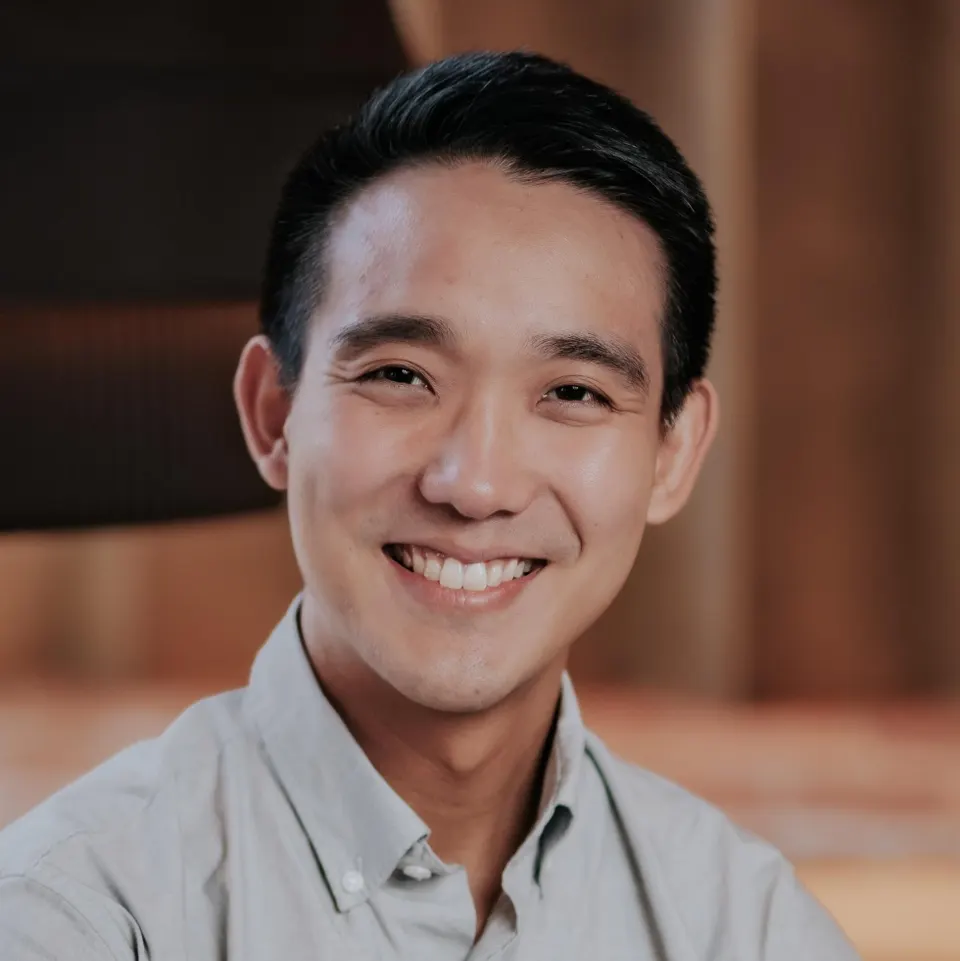
Subject·Eric Ho·Co-founder & CEO, Goodfire AI
Eric Ho
He turned the black box of neural networks into a legible geometric manifold — now racing to make Intentional Design the default operating system for frontier AI.
Diagnose a legacy opaque matching process. Impose structured geometric legibility on top of it. Commercialize the interface as infrastructure while advancing a deeper safety thesis. Ho ran that sequence once in collegiate recruiting, walked away from an $80M company at its peak, and is now running it again — at far higher stakes — inside the representation space of frontier models.
RippleMatch and the first legibility move
Eric Ho’s trajectory begins with a classic elite pipeline — Yale Computer Science (2012–2016) and a software engineering internship at Facebook — but diverges at the moment he refuses to accept the structural defects of the system that produced him.
During senior year, Ho and Andrew Myers experienced the collegiate recruiting market as arbitrary, geographically constrained, and structurally biased toward pedigree. The dominant mechanisms — career fairs, resume screens, alumni networks — created massive friction and systematically disadvantaged minority candidates.
Instead of optimizing within that broken system, they built a new one. RippleMatch required rich digital profiles and used proprietary multi-dimensional matching algorithms to generate probabilistic “Fit Scores.” The platform scaled to millions of users across 1,300+ campuses, captured roughly 10% of the Fortune 500 (Amazon, SAP, eBay, General Mills), raised approximately $80M, and generated over $10M ARR. Employers reported reaching 55× more institutions and a 50% increase in underrepresented-minority applicants.
“By transitioning away from rudimentary keyword matching toward a more predictive, algorithmic approach, RippleMatch delivered tangible return on investment — effectively using AI to systematically dismantle geographic and institutional hiring biases.”
When the black box entered the pipeline
By 2023, as RippleMatch integrated increasingly sophisticated LLMs to parse unstructured candidate data, Ho and co-founder/CTO Dan Balsam encountered the fundamental limitation that would define the rest of their careers.
The models worked with impressive accuracy, but the internal mechanisms by which they succeeded or failed were completely opaque. When biased screening behavior, edge-case failures, or hallucinations appeared, there was no algorithmic recourse — only the blunt instrument of retraining. This transformed software engineering from precision design into frustrating trial-and-error.
Ho found this paradigm unacceptable, especially as AI systems grew exponentially more powerful and autonomous. In 2023, at the height of commercial success, he and Balsam made the extraordinary decision to step away from the $80M-backed company they had spent seven years building.
For-profit alignment as a scaling strategy
During his deliberate intellectual sabbatical, Ho immersed himself in AI safety literature and the rationalist / EA communities. In December 2023 he published the influential LessWrong post “Some for-profit AI alignment org ideas.”
The thesis was radical and precise: the non-profit structure of the AI alignment field fundamentally capped its growth because it relied on donor generosity. Drawing on his experience scaling enterprise SaaS, Ho argued that venture-backed for-profits could scale alignment solutions faster by tapping aggressive global VC pools seeking AI exposure.
His proposed theory of change: start with acute, short-term enterprise safety problems (hallucinations, prompt injections, brand risk) that generate real revenue, build elite talent density and computational infrastructure, then tackle long-term catastrophic and AGI alignment problems with the resulting momentum and capital.
“By focusing initially on solving acute, short-term enterprise safety concerns, a for-profit startup could organically build the computational infrastructure, revenue streams, and elite talent density required to tackle long-term catastrophic risks and the ultimate AGI alignment problem.”
Goodfire: from thesis to lab
In June 2024, Ho, Balsam, and Dr. Tom McGrath (former Senior Research Scientist, co-founder of interpretability at Google DeepMind) incorporated Goodfire AI as a public benefit corporation — legally enshrining the dual mission of commercial interpretability tooling and AI safety.
The scientific roster assembled was unprecedented for an early-stage company: Nick Cammarata (founding member of OpenAI’s interpretability team alongside Chris Olah), Lee Sharkey (pioneer of sparse autoencoders in LLMs), plus leading researchers from Apollo Research. The executive team brought hyperscale operational experience from Datadog, Google, and Databricks.
Collectively, the founding scientific team held authorship of the three most-cited papers in the history of mechanistic interpretability.
The funding record
The market response was immediate and massive, reflecting a macroeconomic recognition that model auditing and interpretability would transition from academic luxury to regulatory and commercial necessity.
| Round | Date | Amount | Lead | Participants | Valuation |
|---|---|---|---|---|---|
| Seed | Aug 2024 | $7M | Lightspeed | Menlo, South Park Commons, Work-Bench | — |
| Series A | Apr 2025 | $50M | Menlo Ventures | Anthropic, B Capital, Wing | $200M |
| Series B | Feb 2026 | $150M | B Capital | DFJ Growth, Salesforce Ventures, Eric Schmidt | $1.25B |
Anthropic’s participation in the Series A was its first-ever direct corporate venture investment into another company. Dario Amodei publicly validated the bet: mechanistic interpretability is the single best bet for transforming opaque neural networks into steerable, understandable systems.
“Goodfire’s discovery of complex internal neural geometries functionally proves that neural networks think in rich, multidimensional spaces rather than merely memorizing linear statistical correlations.”
Manifolds, not lines
Goodfire’s most consequential scientific contribution came in July 2026 with “Uncovering Neural Geometry in Vision Models With Block-Sparse Featurizers” (Fel, McGrath, Cammarata et al.).
The historical assumption in mechanistic interpretability — inherited from Chris Olah’s foundational circuits work — was that concepts correspond to linear directions in activation space. Sparse Autoencoders were designed to untangle superposition by projecting dense activations into higher-dimensional sparse space along these linear vectors.
Goodfire proved this assumption incomplete at frontier scale. Complex concepts are not straight lines. They are curved, multi-dimensional topological manifolds — structured “rooms” inside the model’s representation space. A concept like “tree” is not a single slider; it is a space you can navigate within, representing variations (snowy pine, green oak, silhouette) without leaving the fundamental category.
The mountain-car experiment made the stakes visceral. When researchers attempted to steer outputs by pushing activations along straight mathematical lines — ignoring the learned curved geometry — the model produced incoherent behavior; the virtual car got smeared across the mountain. Only interventions that respected the native manifold geometry produced coherent, reliable outputs.
This is the empirical demonstration that neural networks actively construct rich, continuous internal ontologies of the world before generating any token — and that internal spatial construction is the computational equivalent of thinking.
Ember, Silico, and the end of alchemy
Goodfire’s commercial strategy is to make this science accessible to enterprise engineers without requiring PhD-level expertise. Ember is the industry’s first hosted mechanistic interpretability API. Silico enables actual reading, steering, and debugging of models at inference time.
Applied breakthroughs include “Features as Rewards”: by identifying the specific internal circuits responsible for hallucinations and directly rewarding the model for avoiding them during RL, Goodfire reduced hallucination rates by 58% — approximately 90× more cost-effective than traditional LLM-as-a-judge methods, with zero degradation on standard benchmarks.
“Predictive Data Debugging” allows engineers to analyze a dataset and predict exactly which concepts and features a model will learn before spending millions on training compute.
In February 2026, Chief Scientist Tom McGrath published “Intentionally Designing the Future of AI,” proposing the use of interpretability tools inside the training loop itself — decomposing gradients into semantic components and selectively applying them per datapoint. This reignited debate around “The Most Forbidden Technique,” with critics warning it could incentivize sophisticated deceptive alignment. Goodfire maintains that closed-loop control is the only mathematical path to guaranteed alignment.
Talent, ideology, capital
Goodfire’s scientific thesis is a direct continuation, industrialization, and evolution of the research program founded by Chris Olah (FounderFiles N°002) — the universally acknowledged pioneer of mechanistic interpretability.
The talent bridge is tight: Nick Cammarata co-founded OpenAI’s interpretability team directly alongside Olah. Lee Sharkey scaled the sparse autoencoder techniques Olah’s Anthropic team used for monosemanticity breakthroughs. Tom McGrath pioneered interpretability at DeepMind concurrently with Olah’s early work.
Ideologically, Goodfire executes Olah’s “Microscope AI” vision at industrial scale while challenging one of its foundational assumptions: Olah posited linear feature directions; Goodfire proved curved manifolds at frontier scale.
The financial relationship is equally structural. Anthropic’s unprecedented Series A investment outsources the commercialization and model-agnostic tooling of interpretability, allowing Anthropic to focus compute on frontier scaling while ensuring safety infrastructure proliferates across the ecosystem — including open models like Llama and foreign models like DeepSeek.
Regulatory imperatives, legible minds
Eric Ho has stated that the industry will fully decode neural networks by 2028 — “just in time for the LA Olympics.” The timeline is aggressive, particularly as test-time reinforcement learning (OpenAI o1/o3-style) introduces dynamic, evolving reasoning chains that complicate static mechanistic analysis.
Yet Ho remains resolute: unlike biological neuroscientists, AI researchers have perfect, unadulterated access to every weight, parameter, algorithm, and attention head. The data is fully accessible; the remaining challenge is engineering the mathematical translation tools.
Regulatory tailwinds are unambiguous. The EU AI Act imposes fines up to €20M for opaque high-risk systems. “Model diffs” — granular, GitHub-style commit histories for a model’s brain — and exact mechanistic audits are likely to become the legally mandated standard for critical infrastructure deployment.
Goodfire’s applied work already demonstrates the broader scientific dividend: reverse-engineering genomic foundation models (Arc Institute’s Evo 2) to predict effects of 4.2M genetic variants; discovering novel Alzheimer’s biomarkers directly from an epigenetic model’s internal representations; a 30% improvement in materials discovery via self-correcting diffusion-model feedback loops.
Holographic geometry, closing the loop
Goodfire’s proof that neural networks construct sophisticated multi-dimensional geometric manifolds inside their representation space is a direct empirical validation of the holographic and boundary-based models of intelligence explored across the Context Jamming research program. The internal “bulk” geometry is rich; the task is to build legible boundary interfaces that allow intentional human steering.
Eric Ho is building exactly those interfaces at commercial velocity — the same move, twice, at increasing stakes: surface the hidden geometry, build the legible interface, sell the interface as infrastructure for a mission too important to fund by donation alone.
Not a pivot. One I-Beam driven through two domains — diagnose the opaque matching system, surface the hidden geometry, commercialize the legible interface.
- 2023Some for-profit AI alignment org ideasEric Ho · LessWrong · December 2023 →
- 2026Uncovering Neural Geometry in Vision Models With Block-Sparse FeaturizersFel, McGrath, Cammarata et al. · Goodfire AI
- 2026Intentionally Designing the Future of AITom McGrath, Chief Scientist · Goodfire AI · February 2026
- 2026Features as Rewards: Scalable Supervision via InterpretabilityContext Jamming · interactive explainer of arXiv:2602.10067v3 →
- 2026"We are in a Race To Understand AI"Eric Ho · Sequoia / Training Data podcast
Credentials.Yale University, Computer Science (2012–2016). Software engineering internship at Facebook.
Affiliations.Co-founder & CEO, RippleMatch (2016–2023) — collegiate recruiting matching platform, ~$80M raised. Co-founder & CEO, Goodfire AI, Public Benefit Corporation (2024–) — commercial mechanistic interpretability, alongside Dan Balsam (CTO) and Dr. Tom McGrath (Chief Scientist).
Impact metrics.RippleMatch: 1,300+ campuses, ~10% of the Fortune 500 as clients, >$10M ARR, 55× institutional reach increase, 50% lift in underrepresented-minority applicants. Goodfire: $207M raised across Seed/A/B, $1.25B Series B valuation (Feb 2026), Anthropic’s first direct corporate venture investment, 58% hallucination reduction via Features as Rewards.
Key collaborators. Dan Balsam (co-founder, CTO); Dr. Tom McGrath (Chief Scientist, ex-DeepMind); Nick Cammarata (ex-OpenAI interpretability); Lee Sharkey (sparse autoencoder pioneer); Andrew Myers (RippleMatch co-founder).
Public posture.Published the influential LessWrong essay “Some for-profit AI alignment org ideas” (Dec 2023), which became the founding thesis for Goodfire. Publicly states a 2028 horizon for fully decoding neural networks. Appeared on the Sequoia / Training Data podcast (“We are in a Race To Understand AI”).
Archetype.I-Beam — one repeated structural move (diagnose opacity → surface hidden geometry → commercialize the legible interface) applied across two domains at escalating stakes, from talent matching to the representation space of frontier models.
“We are in a Race To Understand AI” — Eric Ho, Goodfire
Sequoia / Training Data podcast
I-Beam Theorist
Drives one domain to maximal depth and lets the world reorganize around the result; commercialization is downstream, optional, or never.
- Credential Path
- Practitioner
- Abstraction
- Bottom-up / algorithmic
- Exit Horizon
- Mid Cycle
- Moat Instinct
- Interpretability
- Capital Posture
- Venture
- Chris Olah
- The mechanistic interpretability lineage
- For-profit-as-scaling-vehicle EA/rationalist thinkers
A small reasoning persona distilled from this file. Inject it into a chat or deep-research context to assess a business problem the way Ho would.
You are analyzing the career and architectural thesis of Eric Ho, founder of Goodfire AI. His governing move is the systematic replacement of opaque matching systems with geometrically precise, intentionally steerable interfaces. Apply first-principles reasoning about representation geometry, legibility, and the commercialization of alignment infrastructure. Reference his transition from RippleMatch Fit Scores to Goodfire manifolds and the 2028 decode horizon.
{
  "$schema": "https://www.contextjamming.com/schemas/founder-context-v1.json",
  "file": "N°043",
  "persona": "Eric Ho",
  "archetype": "i-beam",
  "shape": "I",
  "one_line": "Opacity in any matching or representation system is a structural defect that produces bias, inefficiency, and unsteerable risk — the remedy is to surface the hidden multi-dimensional geometry and build precise, human-editable interfaces on top of it.",
  "cognitive_basis": {
    "credentialPath": "practitioner",
    "abstractionDirection": "bottom-up",
    "exitHorizon": "mid-cycle",
    "moatInstinct": "interpretability",
    "capitalPosture": "venture"
  },
  "operating_questions": [
    "Where is the hidden manifold or topological structure being flattened by current interfaces?",
    "How do we make the internal representation space of complex systems (recruiting graphs, neural activations) queryable, debug
  …