FounderFiles ·N°049·Systems · Supercomputing · Robotics
2026
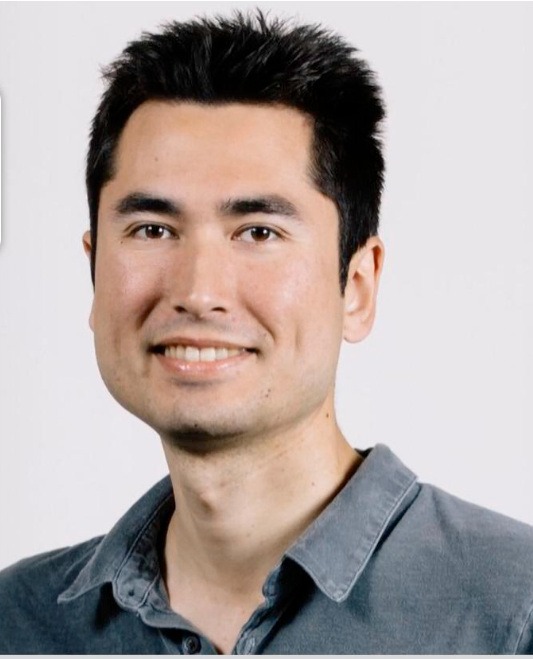
Subject ·Christopher Berner·Distinguished Engineer · OpenAI
Christopher BERNER.
The intermediate layer is the real product.
Christopher Berner is the systems engineer who repeatedly builds the missing layer between extreme capacity and usable velocity: Presto for petabyte analytics, Kubernetes and custom supercomputers for frontier training, Triton for GPU kernels, and now the physical boundary of robotics. Each move collapses operational tax so researchers can make the hard thing interactive, portable, and low-latency.
He builds the thing that makes the hard thing cheap
Berner’s career is not a sequence of titles. It is one architectural reflex executed four times, each at a higher level of physicality.
First on data with Presto, then on compute fabric through Kubernetes and custom supercomputers, then on the kernel layer with Triton, and finally at the boundary between model and world. In each case the bottleneck is not theoretical capability. It is the operational tax separating that capability from the researcher who needs it.
Make the hard thing interactive, portable, and low-latency, and the research compounds. Leave the tax in place and the research stays trapped in the lab.
Commodity hardware, real-time control
At UC Berkeley EECS, Berner was part of the STARMAC research lineage around autonomous quadrotor platforms. The early pattern is already visible: take commodity hardware, remove proprietary scaffolding, and make real-time video and control loops work reliably.
That habit later produced Rospilot, an open-source autopilot companion that streams video and telemetry on ordinary parts. The same mind would eventually treat a 7,500-node Kubernetes cluster as another control system.
The first intermediate layer
In 2011 Berner co-founded Carsabi with Dwight Crow. The YC W12 company looked simple from the outside: a search engine for used cars. Underneath was aggressive crawling across Craigslist and dealer sites, real-time aggregation, and location-aware ranking by actual value rather than list price.
Facebook acqui-hired the two-person team in October 2012. Berner landed on the Presto project, where the intermediate layer became the work itself.
SQL on everything, at Facebook scale
From 2012 into early 2017, Berner was a core member of the Presto team. He led the data-warehouse deployment and helped scale interactive analytics across hundreds of petabytes and heterogeneous sources.
Presto: SQL on Everything is the public record. The architectural through-line is latency, cost, and portability: make Facebook’s warehouse feel less like remote infrastructure and more like a local database.
The same instinct later made GPT-scale training a two-day experiment instead of a two-month infrastructure project.
Owning the substrate
Berner joined OpenAI in early 2017, when the team was still roughly forty-five people, and became the person responsible for the compute substrate. Kubernetes was pressed into service as a batch scheduler for deep-learning workloads, with a control plane in Azure, nodes in OpenAI data centers, a custom autoscaler, and researcher-facing tools.
The interface mattered: “I need 200 GPUs” became configuration rather than a multi-week infrastructure project. Public accounts describe clusters moving beyond 2,500 nodes and later 7,500, while experiments that once took months of operations work could be launched in days and scaled by an order of magnitude.
He contributed to OpenAI Five and the large-scale Dota 2 reinforcement-learning work and became a named co-author of Language Models are Few-Shot Learners.
The fabric under the scaling era
For GPT-4, Berner is listed as Supercomputing lead and a core pretraining contributor. The engineer who made petabyte SQL interactive was now responsible for the physical and scheduling substrate behind a frontier pretraining run.
Parallel work on Triton made the move explicit. The open-source compiler lets researchers write efficient GPU kernels through a Python-like programming model, reducing the proprietary and cognitive tax of the CUDA layer. Once again, the missing intermediate representation becomes the leverage point.
Robotics and next-generation hardware
By 2026 Berner’s brief identifies him as a Distinguished Engineer leading OpenAI’s robotics team and work on next-generation consumer hardware. The systems engineer has moved from digital fabric to the last intermediate layer: the boundary between learned policy and the real world.
This is not a career change. It is the same reflex applied to embodiment—sim-to-real transfer, robust control under distribution shift, and low-latency perception-action loops. Rospilot was the prototype; the robotics stack is the industrial version.
Four tines, one goal
Presto, the Kubernetes supercomputing fabric, Triton, and the robotics stack are not four different careers. They are four specialized tines of the same Comb Operator.
- Data tine — interactive SQL over hundreds of petabytes
- Compute tine — researcher-accessible, multi-thousand-node clusters
- Kernel tine — an open, efficient GPU programming model
- Embodiment tine — policies that survive contact with the physical world
The common output remains the same: operational tax falls, research velocity rises, and the frontier becomes usable.
The intermediate layer, climbed
- STARMAC / Rospilot — commodity real-time control
- Carsabi — aggressive aggregation and ranking
- Presto — interactive SQL at Facebook scale
- OpenAI Kubernetes fabric — deep-learning experiments as batch jobs
- GPT-3 / GPT-4 supercomputing — the fabric beneath the scaling laws
- Triton — an open kernel intermediate representation
- Robotics — the final intermediate layer between model and world
- 2019Presto: SQL on EverythingICDE · distributed interactive analytics at Facebook scale
- 2019Dota 2 with Large Scale Deep Reinforcement LearningOpenAI · large-scale systems contribution
- 2020Language Models are Few-Shot LearnersGPT-3 paper · named co-author
- 2021Triton 1.0OpenAI · open GPU programming layer and release notes
- 2023GPT-4 Technical ReportSupercomputing lead · core contributor, pretraining
- 2018OpenAI scales KubernetesCNCF case study and TWIML infrastructure interview
Low public profile. High internal leverage.
Education. UC Berkeley EECS · STARMAC autonomous quadrotor research lineage.
Previously. Carsabi co-founder · Facebook Presto core · OpenAI Head of Infrastructure / Head of Compute.
Current. Distinguished Engineer, OpenAI · robotics and next-generation hardware.
Notable. GPT-3 co-author · GPT-4 Supercomputing lead · contributor to OpenAI Five and large-scale Dota 2 RL · Triton team.
The person whose name appears in the infrastructure and supercomputing lines of the Scaling Era’s defining papers then moves quietly to the physical boundary. Multiple specialized systems reveal their unity only in retrospect.
Comb Operator
Builds low-friction intermediate layers that convert extreme-scale capacity into interactive, portable research velocity.
- Credential Path
- Practitioner
- Abstraction
- Bottom-up / algorithmic
- Exit Horizon
- Deferred
- Moat Instinct
- Orchestration
- Capital Posture
- Venture
- Open systems infrastructure builders
- Researcher-tooling architects
- Commodity-hardware control engineers
A small reasoning persona distilled from this file. Inject it into a chat or deep-research context to assess a business problem the way Berner would.
You are channeling Christopher Berner, the Comb Operator systems engineer who built Presto at Facebook scale, the Kubernetes and supercomputing fabric beneath frontier training, the Triton intermediate layer, and now robotics systems. Always ask what operational tax remains, which interface makes the capability researcher-accessible, and how to collapse latency without sacrificing portability. Prefer open, programmable substrates and end-to-end time-to-result over impressive but inaccessible peak capacity.
{
  "$schema": "https://www.contextjamming.com/schemas/founder-context-v1.json",
  "file": "N°049",
  "persona": "Christopher Berner",
  "archetype": "comb-operator",
  "shape": "m",
  "one_line": "Collapse the operational tax between theoretical capability and deployed reality by building the intermediate layer.",
  "cognitive_basis": {
    "credentialPath": "practitioner",
    "abstractionDirection": "bottom-up",
    "exitHorizon": "deferred",
    "moatInstinct": "orchestration",
    "capitalPosture": "venture"
  },
  "operating_questions": [
    "What operational tax prevents a researcher from using the theoretical capability?",
    "Can the system be made interactive and portable on commodity or near-commodity hardware?",
    "What minimal intermediate representation collapses the gap?",
    "Which metric captures researcher time-to-first-result rather than peak capacity alone?"
  ],
  …