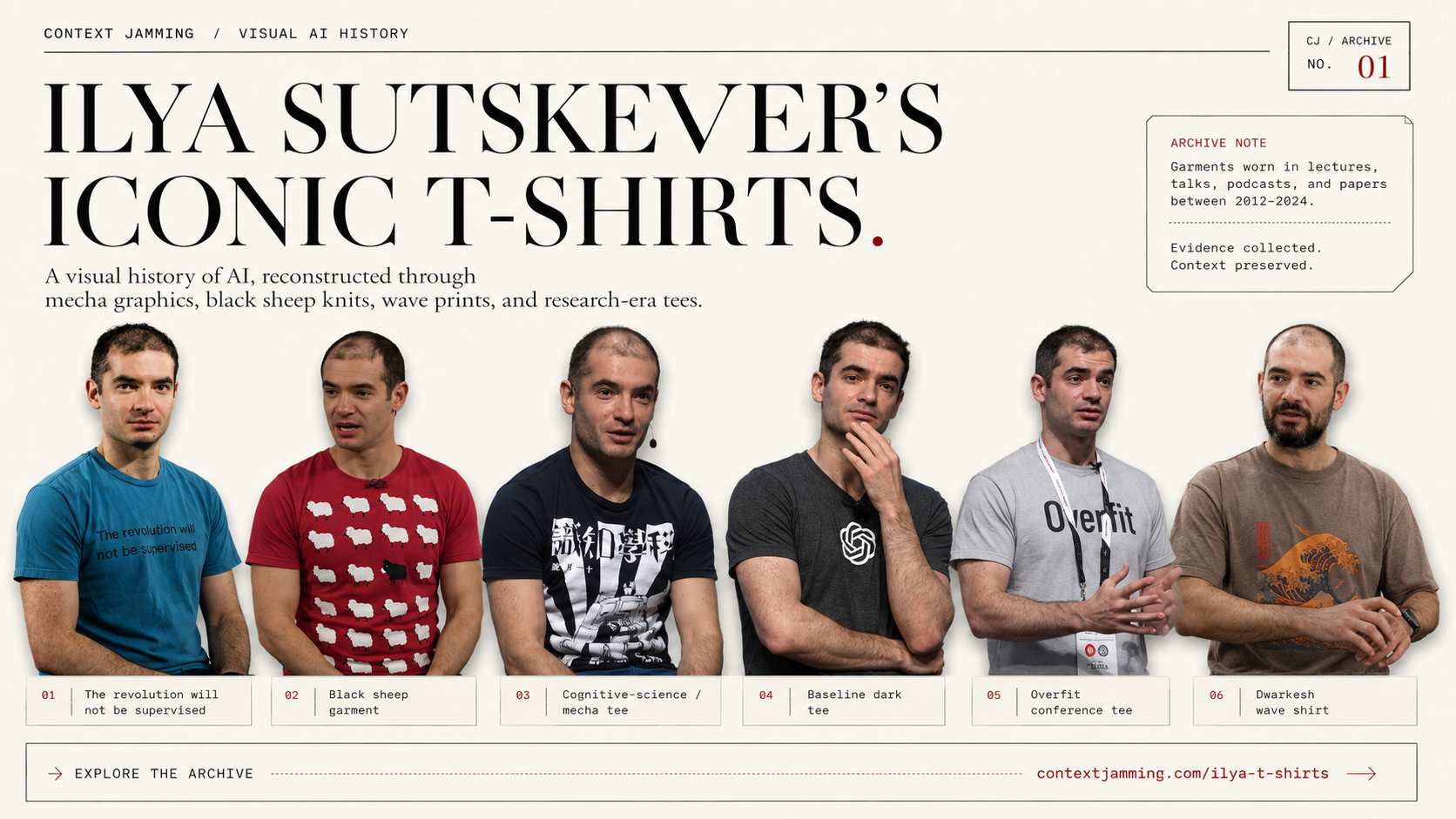
A visual history of artificial intelligence told through mecha, cognitive-science glyphs, black sheep, plain black crewnecks, and the garments worn while the future was being explained.
One primary public appearance per year is the default index. Years may carry an alternate or supplemental artifact when the evidence justifies it—as with the paired 2020, 2023, and 2025 files. A decade of AI history hiding in plain sight.
This is an independent visual and cultural archive. Interpretations concern visible garments and public contexts; they do not claim to explain Ilya Sutskever’s private intentions.
PROJECT BLUEPRINT / CONCEPT ARTIFACT — A visual index, not archival shirt evidence.
Files in collection
14
One primary appearance per year, plus paired alternates
Range
2016—2026
A decade of public appearances
Median confidence
93
Out of 100, scored per dossier
Video-backed
11/14
Primary footage with timestamped frames
Open gaps
3
Years left empty rather than filled by guess
Visual AI historyArchive 00100%
THE PREMISE / A PARALLEL INDEX
A joke-shaped interface with museum-grade sourcing
The history of modern AI is normally indexed by papers, laboratories, benchmark charts, scaling laws, and funding rounds. This archive indexes a parallel visual record: what one of deep learning’s defining researchers wore while explaining increasingly consequential ideas to the public.
THE JOKE
An annotated database of Ilya Sutskever’s T-shirts.
THE SERIOUS PART
A sourced chronology of AI history, research culture, visual semiotics, internet subcultures, fashion provenance, and the limits of interpretation.
COLLECTION / 2016—2026
The decade, with the gaps left in
Select a case to move from the contact sheet to its dossier. Filters combine; zero results means the requested evidence intersection does not exist in the current archive.
Story Mode foregrounds context and interpretation. Evidence Mode exposes timestamps, source tiers, provenance, uncertainty, and open questions without moving the surrounding page.
DOSSIER 01 / THE ORIGIN
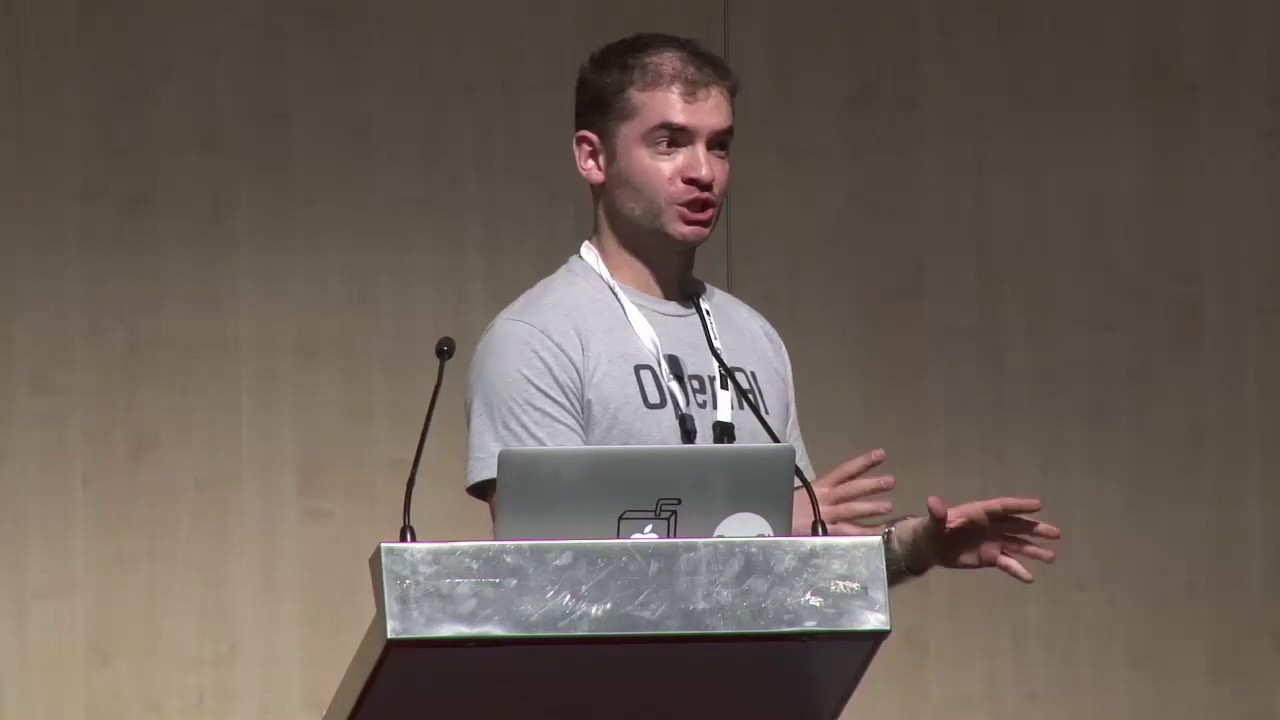
NIPS Symposium on Recurrent Neural Networks / December 8, 2016
2016
COLLECTION OBJECT
Meta Learning in the Universe
The origin file is institutional, not blank: a light-gray OpenAI tee at the RNN Symposium while the field still looked like an academic specialty.
Light-gray short-sleeved crewneck with a dark OpenAI wordmark and logo across the chest.
THE MOMENT
Deep learning was overtaking symbolic approaches, years before the Transformer rewrote natural-language processing.
THE INTERPRETATION
Early institutional branding is useful as a baseline for later plain and graphic phases; it does not establish private philosophy.
Open full story dossier
THE REFERENCE
Before AI conferences became global media spectacles, the shirt still carried laboratory affiliation. The image shows a light-gray OpenAI logo shirt rather than an unadorned dark crewneck.
ALTERNATE READING
Conference-issued or laboratory inventory clothing is a sufficient explanation for an OpenAI mark in 2016.
Event date
December 8, 2016
Classification
verified
Confidence
95/100
Image provenance
NIPS RNN Symposium / YouTube (archive still)
Proposed identification
OpenAI branded light-gray graphic tee
OCR / transcription
OpenAI wordmark is legible in the source still; exact product SKU is unresolved.
Alternative reading
Conference-issued or laboratory inventory clothing is a sufficient explanation for an OpenAI mark in 2016.
Last reviewed
July 30, 2026
Primary YouTube source and key-frame deep links are listed above the Story / Evidence panels.
Open evidence drawer and source list
THE EVIDENCE
Event, date, and OpenAI logo garment are supported by the RNN Symposium source video and its max-resolution still.
RESEARCH NOTES
Earlier seed text incorrectly described a plain dark crewneck; corrected after the YouTube maxres still was reviewed.
Before the rupture, the shirt and the institution were indistinguishable.
Verified98/100
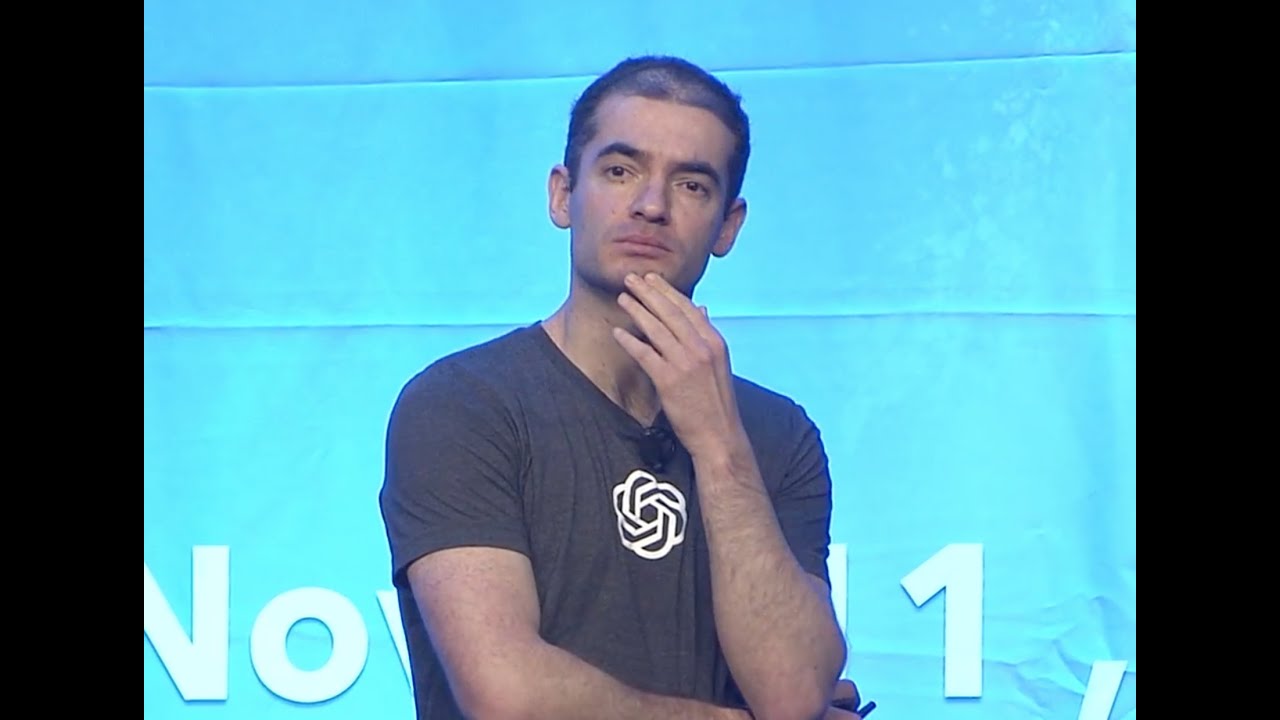
AI Frontiers / YouTube (archive still) / 17:37
THE GARMENT
Dark gray crewneck featuring the white OpenAI knot logo prominently on the chest. The mark is clearly identifiable despite lighting and video compression.
THE MOMENT
In 2018, Ilya Sutskever was not merely appearing as an independent researcher. He was publicly embodied as OpenAI: cofounder, research leader, and one of the institution’s most recognizable technical representatives during the period when scaling was becoming its defining thesis.
THE INTERPRETATION
This may be the least cryptic shirt in the archive. It functions as a uniform. The OpenAI logo collapses researcher and institution into a single public identity: Ilya as company man, carrying the brand while helping establish the technical worldview that would later transform—and fracture—the organization.
Open full story dossier
THE REFERENCE
“Before Ilya became a symbol of departure, he wore the institution directly over his heart.” This is not an ambiguous graphic tee. Ilya is wearing a dark gray OpenAI-branded crewneck during the company’s formative scaling era. The shirt reads less like personal expression and more like institutional identification: founder, researcher, and public representative visually aligned with the organization he helped build. Event: AI Frontiers 2018.
ALTERNATE READING
The garment may simply have been stock laboratory or event wardrobe rather than a deliberate identity statement; the logo identification remains independent of wearer intent.
Event date
November 9, 2018
Classification
verified
Confidence
98/100
Image provenance
AI Frontiers / YouTube (archive still)
Proposed identification
OpenAI logo shirt
OCR / transcription
None for the mark class. The white OpenAI knot logo is legible as a logo, not as abstract ornament or an unidentified neural-network motif.
Alternative reading
The garment may simply have been stock laboratory or event wardrobe rather than a deliberate identity statement; the logo identification remains independent of wearer intent.
Last reviewed
July 30, 2026
Primary YouTube source and key-frame deep links are listed above the Story / Evidence panels.
Open evidence drawer and source list
THE EVIDENCE
Image and garment visibility: verified. Graphic visibility: clear. Identification: OpenAI logo shirt (white OpenAI knot logo on dark gray crewneck). Evidence status: confirmed. Confidence 98/100 for logo identification from the stage still and source video. Exact commercial SKU remains open if product-level attribution is required.
RESEARCH NOTES
Editorial theme: institutional alignment / The Company Man.
Event, talk context, dark gray OpenAI logo crewneck, and shirt-frame timestamps
DOSSIER 04 / MAINSTAGE
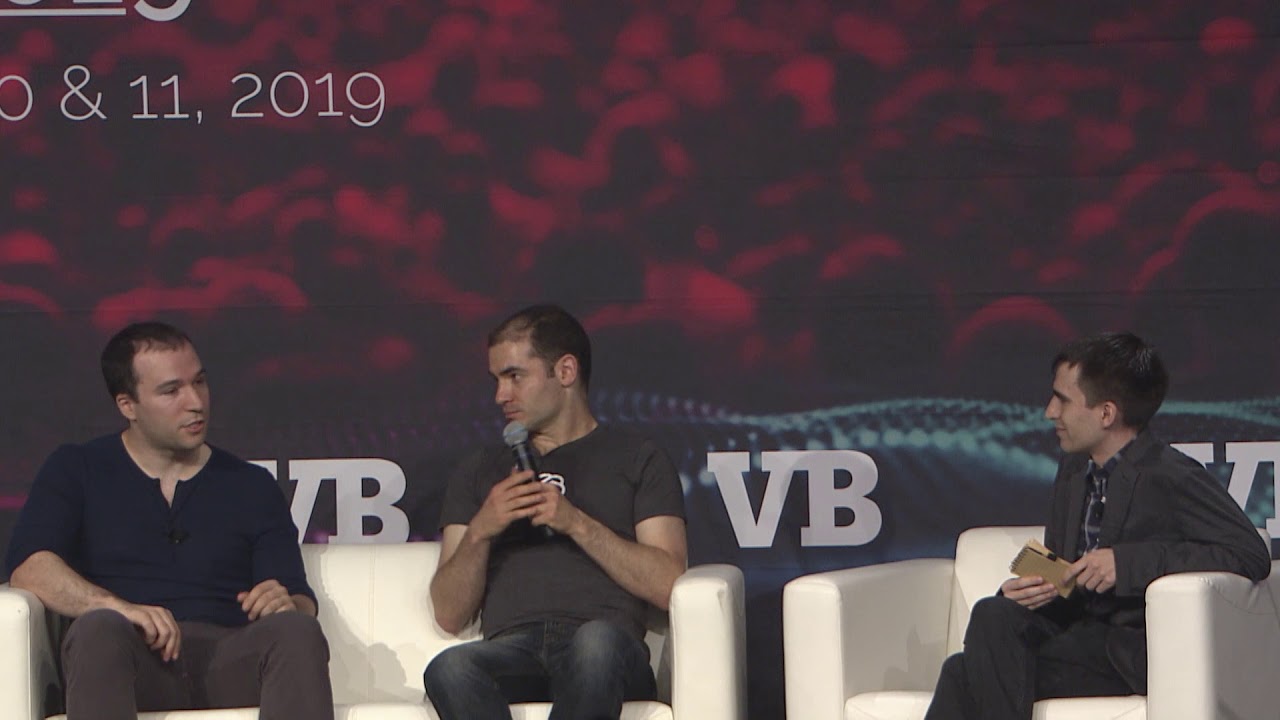
VentureBeat / July 11, 2019
2019
COLLECTION OBJECT
VB Transform Mainstage
A blank visual surface for a highly nonblank prediction: larger networks would acquire reasoning capabilities.
Verified95/100
VentureBeat / YouTube (archive still) / 05:10
THE GARMENT
Plain fitted black crewneck with no visible embellishment.
THE MOMENT
Sutskever and Greg Brockman discussed the transition from symbolic systems to neural reasoning as OpenAI changed institutional form.
THE INTERPRETATION
The plain dark layer supports an understated anti-executive presentation pattern in the archive’s plain-garment sample.
Open full story dossier
THE REFERENCE
On a commercial mainstage, the founders still looked closer to laboratory researchers than corporate presenters. A wide stage frame shows the full shirt and both participants.
ALTERNATE READING
A plain shirt is common clothing. The pattern belongs to the archive's sample, not necessarily to a deliberate strategy.
Event date
July 11, 2019
Classification
verified
Confidence
95/100
Image provenance
VentureBeat / YouTube (archive still)
Proposed identification
Unbranded black crewneck
OCR / transcription
None. No visible glyphs.
Alternative reading
A plain shirt is common clothing. The pattern belongs to the archive's sample, not necessarily to a deliberate strategy.
Last reviewed
July 30, 2026
Primary YouTube source and key-frame deep links are listed above the Story / Evidence panels.
Open evidence drawer and source list
THE EVIDENCE
The source footage and stage still directly support the event and plain-garment classification.
RESEARCH NOTES
The PDF's 100/100 visual claim is normalized to the brief's 95 score.
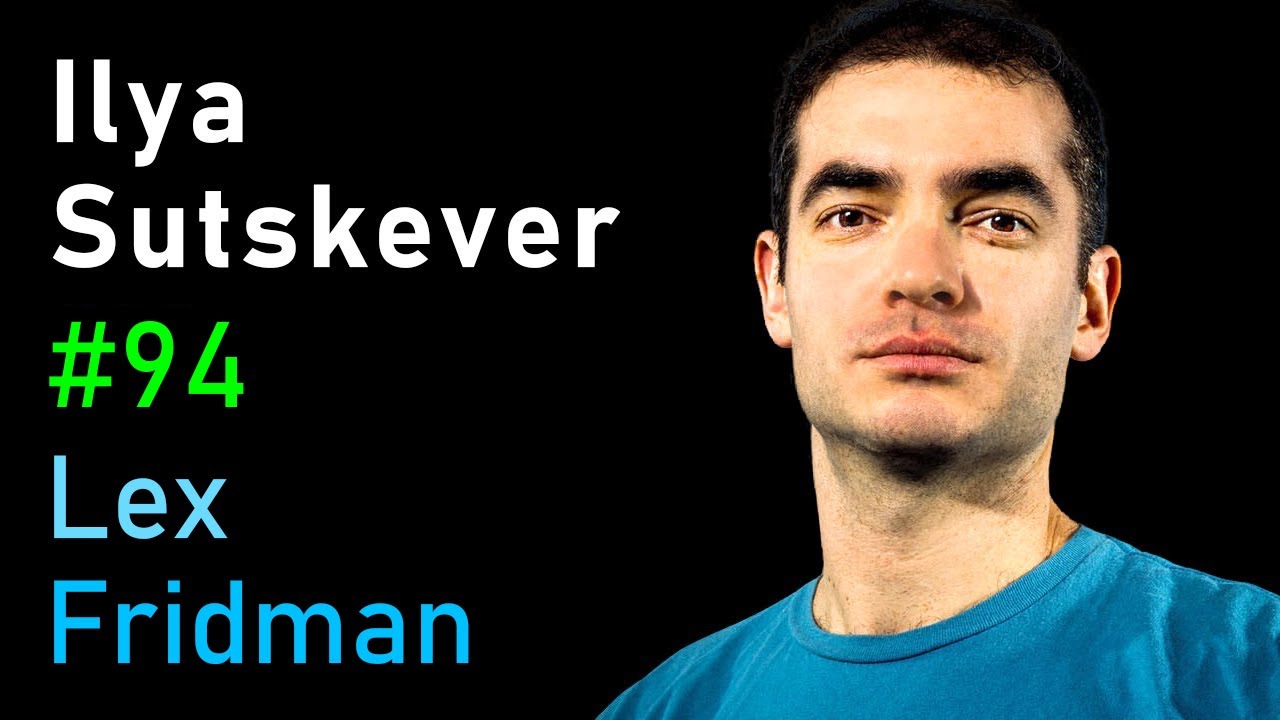
Plain blue short-sleeved T-shirt with a relaxed fit and no visible graphic.
THE MOMENT
A long-form conversation spanning neural-network history, compute, self-awareness, and the philosophy of intelligence.
THE INTERPRETATION
This appearance strengthens the archive-level pattern of utilitarian plain garments, with a corrected color call.
Open full story dossier
THE REFERENCE
The lack of a graphic keeps the image quiet while the conversation ranges from ImageNet to human existence. Promotional stills and footage indicate blue, not charcoal.
ALTERNATE READING
No claim is made about decision fatigue, anti-fashion, or private motivation. Thumbnail design can exaggerate color; the blue call is high confidence, not absolute.
No claim is made about decision fatigue, anti-fashion, or private motivation. Thumbnail design can exaggerate color; the blue call is high confidence, not absolute.
Last reviewed
July 30, 2026
Primary YouTube source and key-frame deep links are listed above the Story / Evidence panels.
Open evidence drawer and source list
THE EVIDENCE
Source video and promotional still support a plain blue shirt. Earlier seed text incorrectly labeled the garment charcoal.
RESEARCH NOTES
Preferred inspection timestamp: 02:23.
Still is a designed podcast thumbnail rather than a neutral frame grab; color and plain classification remain high confidence.
OpenAI / MIT Technology Review / 2020 / published February 17, 2020 (MIT Technology Review); capture date unresolved
2020
FEATURED CULTURAL ARTIFACT
OpenAI Research Group Portrait
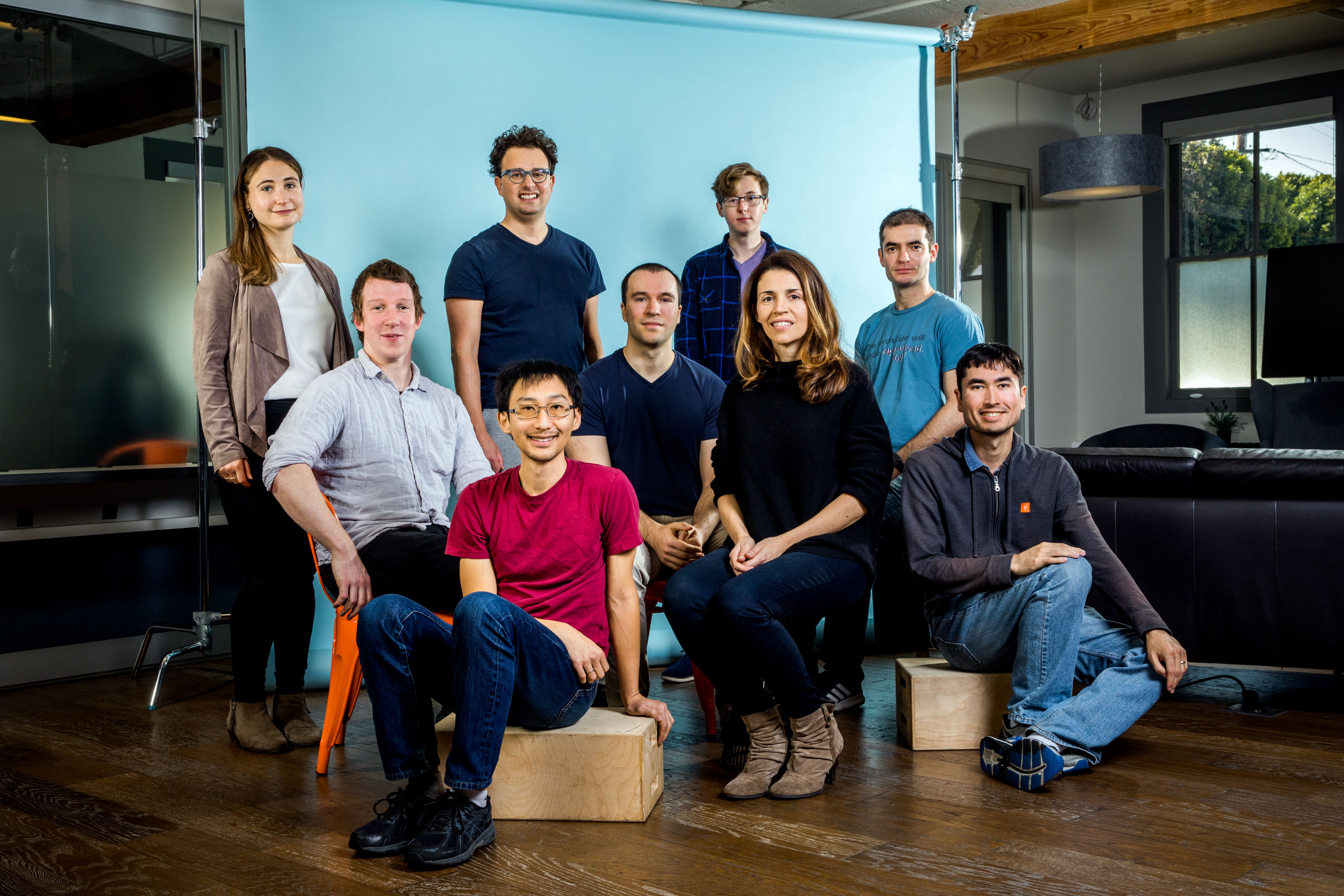
A research-team portrait in which the shirt says the quiet part of the scaling era out loud: “The revolution will not be supervised.”
High confidence95/100
Christie Hemm Klok / MIT Technology Review (Context Jamming archive mirror)
THE GARMENT
A faded light-blue cotton crewneck with dark cursive lettering across the chest. Unlike the plain charcoal podcast shirt documented elsewhere in 2020, this garment carries an explicit technical slogan.
THE MOMENT
A group portrait from OpenAI’s GPT-3-era research organization, photographed before the late-2020 departures that preceded Anthropic’s formation. The image is historically valuable as a pre-split laboratory record.
THE GLYPHS
The revolution will not be supervised.
A machine-learning parody of Gil Scott-Heron’s phrase, reframed around unsupervised and self-supervised learning.
THE INTERPRETATION
A plausible interpretation is that the slogan works as a technical manifesto: the next phase of machine intelligence would not depend primarily on hand-labeled examples, but on extracting structure from vast unlabeled corpora. The archive records the slogan and its historical context; wearer intent remains unknown.
Open full story dossier
THE REFERENCE
The image shows Ilya Sutskever standing at upper right among OpenAI research leadership and technical staff. The text appears to read “The revolution will not be supervised.” The phrase references Gil Scott-Heron’s “The Revolution Will Not Be Televised,” exchanging mass-media language for the technical distinction between supervised and unsupervised learning. This is a reading of the garment’s cultural meaning, not proof of the wearer’s private intention.
ALTERNATE READING
It may simply be a popular machine-learning joke shirt worn casually by a researcher working in the field it references.
Event date
2020 / published February 17, 2020 (MIT Technology Review); capture date unresolved
Classification
high confidence
Confidence
95/100
Image provenance
Christie Hemm Klok / MIT Technology Review (Context Jamming archive mirror)
Proposed identification
Machine-learning cultural parody graphic tee — descriptive working title only; exact manufacturer and product name unresolved
OCR / transcription
The transcription is visually high confidence from the group portrait; absolute certainty would require a higher-resolution chest crop or independent product documentation. The terminal period is preserved as it appears in the image.
Alternative reading
It may simply be a popular machine-learning joke shirt worn casually by a researcher working in the field it references.
Last reviewed
July 30, 2026
No video source for this record.
Open evidence drawer and source list
THE EVIDENCE
Image itself: verified (Christie Hemm Klok / MIT Technology Review publication context). Text transcription: high confidence, 95/100. Gil Scott-Heron title reference: high confidence, 95/100. Exact product manufacturer: unresolved. Exact product name: unresolved. Capture date: unresolved (publication dated February 17, 2020). Wearer intention: unknown. The R2 URL is an archive mirror, not the original publisher.
RESEARCH NOTES
Names listed only from the existing Context Jamming / Founder File caption (Amodei profiles), which cites Christie Hemm Klok and MIT Technology Review.
Do not identify additional people by visual inference alone.
Do not reproduce song lyrics; only the well-known title is referenced.
Exact shirt manufacturer and commercial product title remain open research questions.
Original publication context (February 17, 2020); photographer credit Christie Hemm Klok; team composition as captioned in Context Jamming Founder Files
Verified internal caption: left-to-right team names including Ilya Sutskever; photographer Christie Hemm Klok
DOSSIER 06 / MISSING YEAR
Archive gap / 2021
2021
COLLECTION OBJECT
No sufficiently documented artifact
No shirt is better than a fabricated shirt.
Unresolved0/100
+2021
IMAGE EVIDENCE PENDING
No sufficiently documented artifactSource frame or garment URL has not yet been added to the archive.Expected: Attributable public-appearance frame
THE GARMENT
No sufficiently documented artifact.
THE MOMENT
The research cutoff produced no source with a clean, attributable garment view for this calendar year.
THE INTERPRETATION
Absence here describes the archive, not Sutskever's activity or wardrobe.
Open full story dossier
THE REFERENCE
The empty year remains visible so the timeline describes the evidence base, not an artificially complete collection.
ALTERNATE READING
A qualifying public appearance may exist outside the current source corpus.
Event date
2021
Classification
unresolved
Confidence
0/100
Image provenance
placeholder
Proposed identification
Unresolved
OCR / transcription
Not applicable.
Alternative reading
A qualifying public appearance may exist outside the current source corpus.
Last reviewed
July 30, 2026
No video source for this record.
Open evidence drawer and source list
THE EVIDENCE
No primary image record met the inclusion threshold by the research cutoff.
RESEARCH NOTES
Open research question: locate attributable 2021 footage.
SOURCES
No qualifying primary source in the seed corpus.
DOSSIER 07 / RESTRAINT
Stanford HAI / August 23, 2022
2022
COLLECTION OBJECT
Stanford HAI Spring Conference
A restrained visual baseline during a charged conversation about the obligations attached to foundation models.
Verified90/100
Stanford HAI / YouTube (archive still) / 2:49:44
THE GARMENT
Plain dark blue or black unbranded shirt.
THE MOMENT
A debate about foundation models, data curation, and institutional responsibility months before ChatGPT's release.
THE INTERPRETATION
This is a high-confidence plain-dark appearance in the archive’s supported plain-garment sample.
Open full story dossier
THE REFERENCE
The casual research uniform remained intact as the ethical and political perimeter of AI widened around it. In the full conference recording, Sutskever is introduced near 2:49:28 with remarks around 2:49:44.
ALTERNATE READING
Lighting prevents a definitive black-versus-dark-blue color call.
Event date
August 23, 2022
Classification
verified
Confidence
90/100
Image provenance
Stanford HAI / YouTube (archive still)
Proposed identification
Unbranded dark crewneck
OCR / transcription
None. No visible glyphs.
Alternative reading
Lighting prevents a definitive black-versus-dark-blue color call.
Last reviewed
July 30, 2026
Primary YouTube source and key-frame deep links are listed above the Story / Evidence panels.
Open evidence drawer and source list
THE EVIDENCE
Event and plain-garment classification are verified; exact color and product are not. Earlier seed timestamps (10:15) did not point at Sutskever’s segment.
RESEARCH NOTES
Full conference video: A3C0KO-OTGI — inspect ~2:49:44.
Dedicated foundation-models session upload and still source
CASE FILE 01 / PRIMARY SELECTION
Khosla Ventures CEO Summit / May 23, 2023
2023
FEATURED CULTURAL ARTIFACT
What AI Is Making Possible
Discussing the unpredictable trajectory of AGI while wearing a retro-Japanese collision of cognitive science and mecha aesthetics.
High confidence90/100
EDRM still / Khosla Ventures conversation context (archive mirror)
THE GARMENT
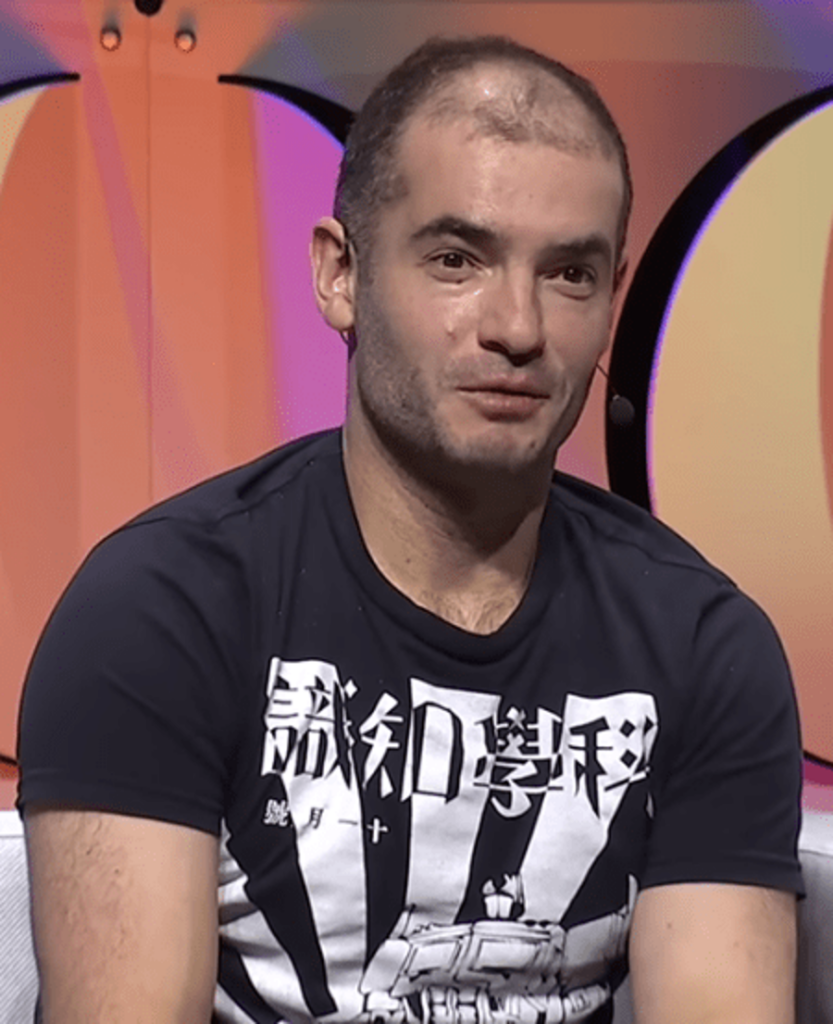
Black graphic T-shirt with large white East Asian typography and a central retro mecha illustration framed by radiating manga-style lines.
THE MOMENT
A post-GPT-4 conversation with Sven Strohband about AGI predictability, human learning, and an intelligence explosion.
THE GLYPHS
認知科学 / 創刊十一月
Cognitive Science / First issue November / Inaugural November Issue
THE INTERPRETATION
The design appears to collapse academic terminology and late-Showa science-fiction aesthetics. That collision is visible; wearer intent is unknown.
Open full story dossier
THE REFERENCE
The visual joke practically writes itself: an intelligence explosion explained beneath a robot labeled Cognitive Science. A high-resolution still shows most of the typography and robot graphic.
ALTERNATE READING
Gundam, Macross, and Optimus Prime are comparison leads, not identifications. The robot may be an original genre composite.
Event date
May 23, 2023
Classification
high confidence
Confidence
90/100
Image provenance
EDRM still / Khosla Ventures conversation context (archive mirror)
Proposed identification
Retro Japanese cognitive-science / mecha graphic; exact product, artist, and franchise unresolved
OCR / transcription
認知科学 is the strongest reading. 創刊十一月 is legible enough for a working translation, not a product attribution.
Alternative reading
Gundam, Macross, and Optimus Prime are comparison leads, not identifications. The robot may be an original genre composite.
Last reviewed
July 30, 2026
Primary YouTube source and key-frame deep links are listed above the Story / Evidence panels.
Open evidence drawer and source list
THE EVIDENCE
Glyph transcription is high confidence from the EDRM still. Product-level provenance remains unresolved. The correct original video ID is xym5f0XYlSc; earlier A2qe5OPLlmY / i0UyKsAEaNI leads were conflicting PDF citations and are retired as primary sources.
RESEARCH NOTES
Primary video resolved: xym5f0XYlSc.
Event page: Khosla Ventures — What AI Is Making Possible (May 23, 2023).
Primary still: EDRM RL1_B004 crop (chest-level typography and mecha).
No exact product name, artist, or franchise is verified.
High-resolution shirt typography and mecha graphic for transcription
CASE FILE 02 / ALTERNATE SELECTION
NVIDIA GTC / March 22, 2023
2023
FEATURED CULTURAL ARTIFACT
Fireside Chat with Jensen Huang
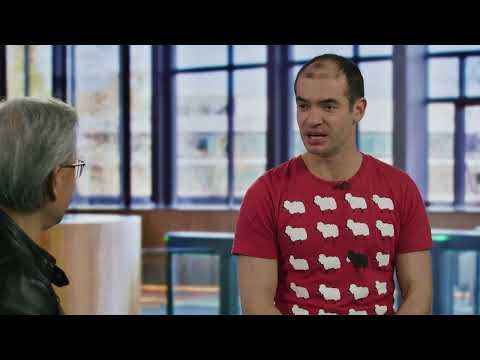
Across from Jensen Huang's black leather uniform, Sutskever wore one of fashion history's most recognizable symbols of nonconformity.
Verified98/100
NVIDIA / YouTube
THE GARMENT
Vivid red knit patterned with rows of white sheep and a single black sheep.
THE MOMENT
A landmark conversation about deep learning and scaling shortly after GPT-4, staged against Jensen Huang's black-leather executive uniform.
THE INTERPRETATION
The outsider metaphor is compelling. It is not proof of why Sutskever selected the garment.
Open full story dossier
THE REFERENCE
The red field, repeated white sheep, and one black sheep make the garment legible before a word of the interview is heard.
ALTERNATE READING
The choice may simply reflect taste, comfort, humor, or availability. The archive cannot adjudicate private intent.
Event date
March 22, 2023
Classification
verified
Confidence
98/100
Image provenance
NVIDIA / YouTube
Proposed identification
Warm & Wonderful Black Sheep design
OCR / transcription
None. The motif is pictorial and clearly visible.
Alternative reading
The choice may simply reflect taste, comfort, humor, or availability. The archive cannot adjudicate private intent.
Last reviewed
July 30, 2026
Primary YouTube source and key-frame deep links are listed above the Story / Evidence panels.
Open evidence drawer and source list
THE EVIDENCE
The design identification and its Warm & Wonderful / Diana history are well documented; the exact licensed product variant deserves continued product-level checking.
RESEARCH NOTES
The PDF says recorded March 2023 and published May 2023.
The brief supplies March 22, 2023 as the event date.
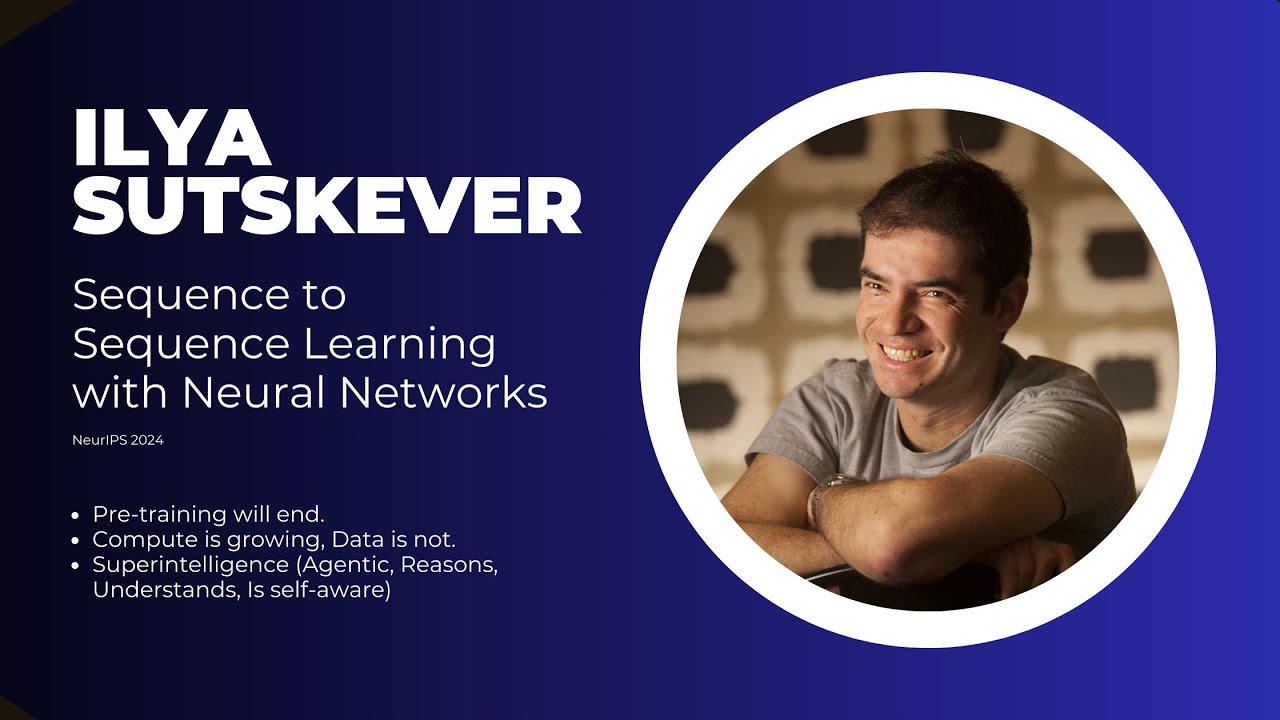
A pronounced silhouette change accompanies a talk about the end of pre-training and the beginning of a new institutional chapter.
Plausible70/100
NeurIPS / YouTube (archive still) / 01:20
THE GARMENT
Structured dark formal or semi-formal layer.
THE MOMENT
A retrospective on sequence-to-sequence learning, the limits of pre-training data, and Sutskever's first major academic era after founding SSI.
THE INTERPRETATION
The archive can document a presentation shift without claiming the garment caused or explains the institutional shift.
Open full story dossier
THE REFERENCE
The graphic shirt disappears; structure, cut, and dark formal layers take over on the NeurIPS stage.
ALTERNATE READING
Event formality, weather, or styling logistics are sufficient explanations.
Event date
December 13, 2024
Classification
plausible
Confidence
70/100
Image provenance
NeurIPS / YouTube (archive still)
Proposed identification
Unidentified dark suiting or premium outerwear
OCR / transcription
None. No visible glyphs.
Alternative reading
Event formality, weather, or styling logistics are sufficient explanations.
Last reviewed
July 30, 2026
Primary YouTube source and key-frame deep links are listed above the Story / Evidence panels.
Open evidence drawer and source list
THE EVIDENCE
The visual shift is clear in the stage still; exact garment category and product remain only plausible. Several reposts of the talk circulate; the award itself is officially documented by NeurIPS.
Personal style gives way to the inherited uniform of academic recognition.
Verified100/100
Open University of Israel / YouTube (archive still) / 00:15
THE GARMENT
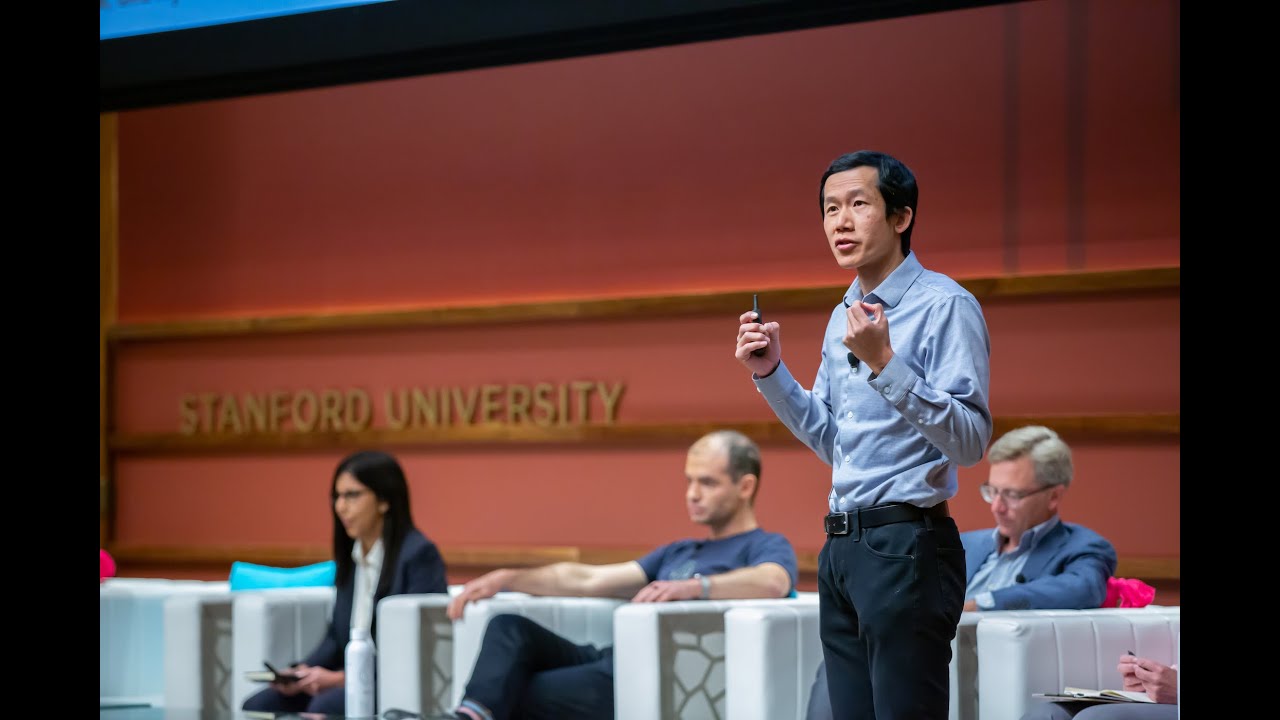
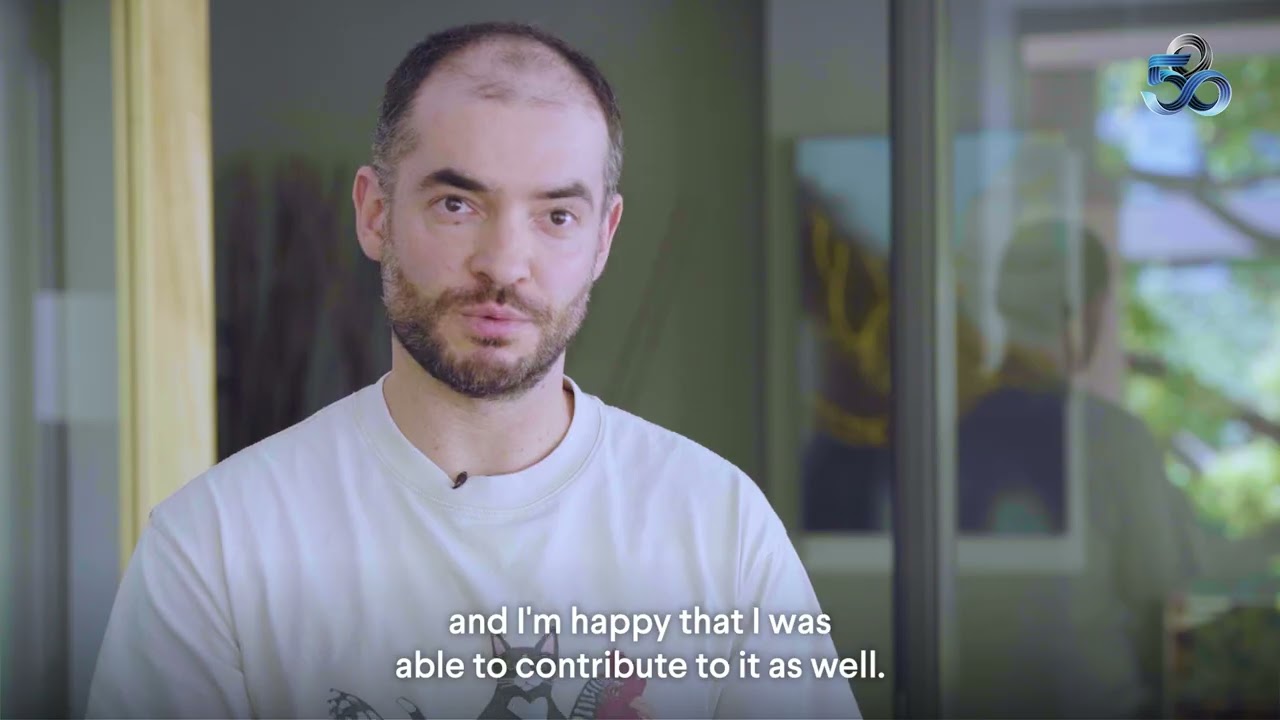
Formal academic regalia over dark formalwear.
THE MOMENT
An honorary-degree address about academia, learning, and the intelligence explosion at the Open University of Israel.
THE GLYPHS
Institutional crest
THE INTERPRETATION
The contrast with the 2023 graphic shirts is visually strong; the ceremony itself fully explains the clothing.
Open full story dossier
THE REFERENCE
One of two 2025 artifacts: institutional clothing wrapped around a speech about an uncertain technological future. This is the Open University of Israel, not the UK Open University.
ALTERNATE READING
Academic regalia is prescribed context, not an expressive wardrobe choice.
Event date
May 28, 2025
Classification
verified
Confidence
100/100
Image provenance
Open University of Israel / YouTube (archive still)
Proposed identification
Open University of Israel academic regalia
OCR / transcription
Institutional insignia is visible; detailed heraldic reading not attempted.
Alternative reading
Academic regalia is prescribed context, not an expressive wardrobe choice.
Last reviewed
July 30, 2026
Primary YouTube source and key-frame deep links are listed above the Story / Evidence panels.
Open evidence drawer and source list
THE EVIDENCE
The ceremony, speech, and regalia are directly documented. Ceremony date: May 28, 2025; video publication date may differ.
RESEARCH NOTES
Host corrected to The Open University of Israel.
Ceremony date: May 28, 2025 (Open University of Israel honorary degrees page).
Inspection timestamps: 00:15 and 03:45.
Confidence is 100 for garment class, not for every underlying formal layer.
2025A — institutional validation; see also 2025B Dwarkesh wave shirt.
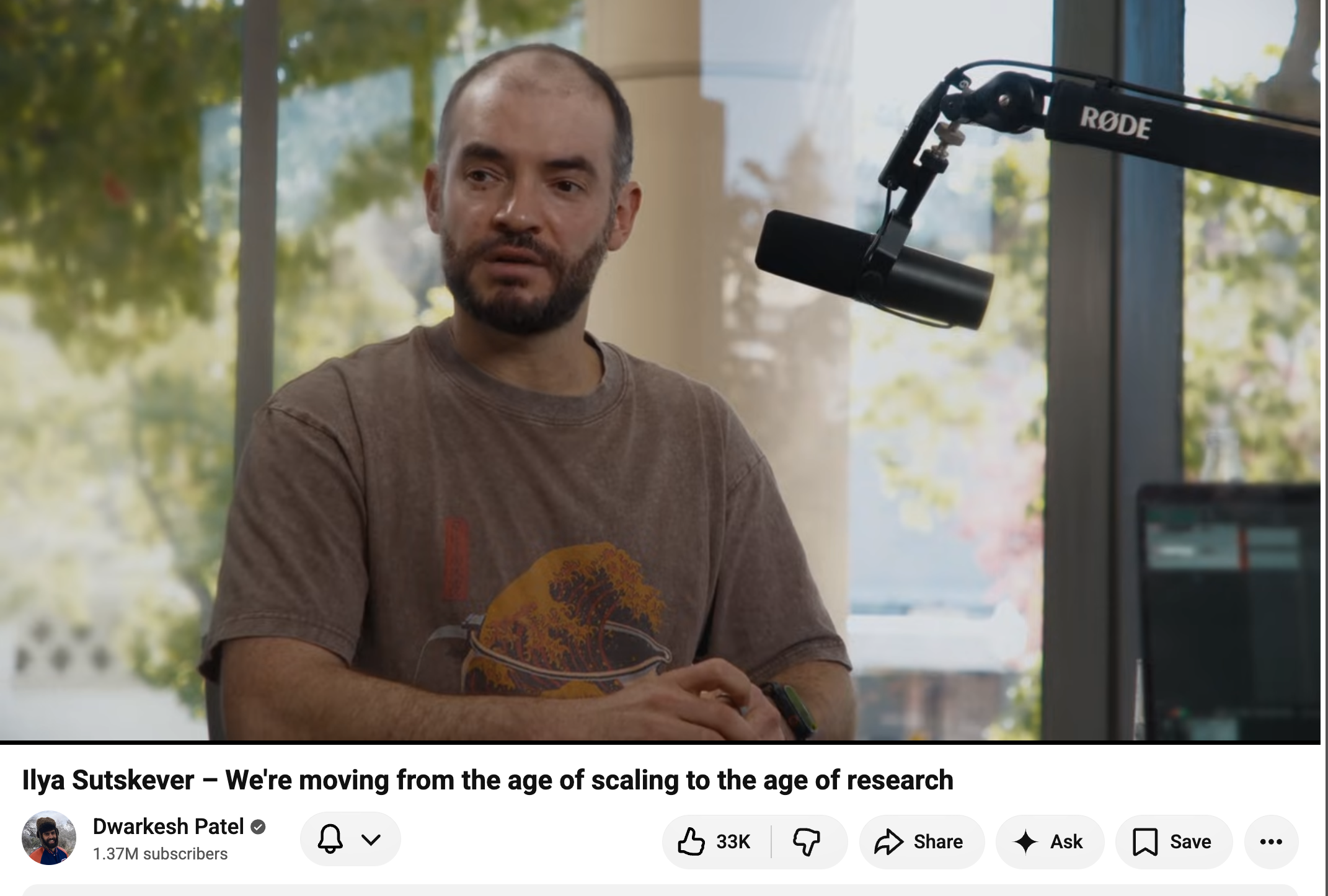
A washed brown or charcoal-brown short-sleeved cotton crewneck with a faded, vintage-print finish. The central design combines a large curling wave rendered in yellow, orange, red, and dark blue; Japanese ukiyo-e-inspired linework; an elliptical metallic or chrome-like frame surrounding the wave; a vertical red seal-like cartouche to the left; and a retro-futurist composition that mixes traditional Japanese print imagery with science-fiction or space-age visual language.
THE MOMENT
A major SSI-era interview examining the limits of pre-training and brute-force scaling, the need for improved generalization, and Sutskever’s argument that AI is returning to an age of research.
THE INTERPRETATION
The image creates an unusually apt visual coincidence: while Sutskever describes AI research as leaving the predictable scaling regime, the shirt depicts a wave breaking through a rigid retro-futurist frame. This is an editorial reading of the visible design and interview context—not evidence that the garment was selected to communicate that message.
Open full story dossier
THE REFERENCE
Declaring the end of the scaling era in a shirt where a Japanese wave appears to break through a retro-futurist frame. The official Dwarkesh page dates the episode November 25, 2025 and describes a discussion of SSI’s strategy, pre-training limits, model generalization, and how to ensure AGI goes well. The design appears to combine a Hokusai-derived wave motif with retro-futurist framing; it is not a direct reproduction of Katsushika Hokusai’s “Under the Wave off Kanagawa.”
ALTERNATE READING
It may simply be a visually distinctive Japanese-wave graphic tee worn casually, with no intended relationship to the interview topic.
Hokusai-derived Japanese wave motif combined with retro-futurist framing — exact manufacturer, artist, product name, and licensed collaboration unresolved
OCR / transcription
No readable commercial product text is established from the available still. The red cartouche reads as seal-like ornament rather than transcribable Latin product lettering.
Alternative reading
It may simply be a visually distinctive Japanese-wave graphic tee worn casually, with no intended relationship to the interview topic.
Last reviewed
July 30, 2026
Primary YouTube source and key-frame deep links are listed above the Story / Evidence panels.
Open evidence drawer and source list
THE EVIDENCE
Image and garment visibility: verified (100). Base color and graphic composition: verified (95). Hokusai-derived visual reference: high confidence (90). Exact product or manufacturer: unresolved (0). Exact meaning of the oval frame: unresolved (25). Connection between shirt and interview theme: plausible (75). Wearer intent: unknown. Frame timestamp for the supplied screenshot remains unresolved pending frame-level verification against the source video.
Official episode page: https://www.dwarkesh.com/p/ilya-sutskever-2 — dated November 25, 2025.
Exact video timestamp for the archive screenshot: unresolved; do not invent a frame time.
Possible Maison AGI provenance — unverified. Maison AGI’s Relic of Thought collection features original artwork by Ilya Sutskever, but no authoritative product page has yet been matched to this specific wave design.
Do not identify the elliptical frame as a UFO, spaceship, portal, or specific machine without further evidence.
Visible garment composition, wave motif, elliptical frame, and interview setting
DOSSIER 12 / RESEARCH CUTOFF
Archive gap / Through July 30, 2026
2026
COLLECTION OBJECT
No sufficiently documented visual evidence
The collection ends with an open file, not a guessed object.
Unresolved0/100
+2026
IMAGE EVIDENCE PENDING
No sufficiently documented visual evidenceSource frame or garment URL has not yet been added to the archive.Expected: Attributable 2026 public-appearance frame
THE GARMENT
No sufficiently documented visual evidence.
THE MOMENT
The research cutoff arrived without an attributable public frame that met the archive's inclusion threshold.
THE INTERPRETATION
Nothing about this gap should be read as a claim about Sutskever's public activity.
Open full story dossier
THE REFERENCE
A living archive should advertise the edge of its knowledge. 2026 is that edge.
ALTERNATE READING
Qualifying evidence may emerge after the cutoff or sit outside the present corpus.
Event date
Through July 30, 2026
Classification
unresolved
Confidence
0/100
Image provenance
placeholder
Proposed identification
Unresolved
OCR / transcription
Not applicable.
Alternative reading
Qualifying evidence may emerge after the cutoff or sit outside the present corpus.
Last reviewed
July 30, 2026
No video source for this record.
Open evidence drawer and source list
THE EVIDENCE
No qualifying source image in the seed research as of July 29, 2026.
RESEARCH NOTES
Research remains open.
SOURCES
No qualifying primary source in the seed corpus.
RESEARCH METHOD / FIVE STAGES
Absurd premise. Forensic workflow.
The archive treats the PDF as a seed corpus, not infallible ground truth. Conflicting URLs, dates, and product identifications remain visible until stronger evidence resolves them.
01SOURCE
Find the original conference, podcast, keynote, or interview.
02FREEZE
Capture multiple clean frames and determine whether footage is mirrored.
03DECODE
Transcribe glyphs, identify references, and test product matches.
04CONTEXTUALIZE
Connect the garment to the historical moment without pretending to know private intent.
05PUBLISH
Expose timestamps, sources, alternate readings, image provenance, and confidence scores.
PATTERN ANALYSIS / SAMPLE SIZE VISIBLE
What repeats—and what only looks unforgettable
A single vivid example is a case, not a trend. Every pattern below carries its documented sample count.
3 supported examples
Understated plain presentation
2019 / 2020A / 2022
Repeated plain garments establish a strong utilitarian presentation pattern. The label describes presentation, not private motive. 2016 is institutional OpenAI branding, not a plain baseline.
4 documented examples
Institutional and technical text
2016 / 2018 / 2020B / 2023A
OpenAI wordmark (2016), OpenAI knot logo (2018), “The revolution will not be supervised” (2020B), and 認知科学 (2023A) put institution or discipline on cotton. Exact product SKUs remain open where unresolved.
1 confirmed example
Company / institutional apparel
2018 / AI Frontiers
The Company Man: a dark gray OpenAI logo crewneck worn as public institutional identification during the scaling-era formative years.
1 documented example
Robotics and retro futurism
2023A / Khosla
A single mecha garment is culturally vivid, but one case is not a recurring wardrobe pattern.
1 high-confidence example
Ukiyo-e wave remixes
2025B / Dwarkesh
A Hokusai-derived wave enclosed by a retro-futurist oval frame. Product manufacturer remains unresolved; interview-theme coincidence is editorial, not intent.
1 verified example
Outsider imagery
2023B / NVIDIA GTC
The black-sheep motif is unmistakable. Its metaphorical force does not establish wearer intent.
1 high-confidence example
Scientific and cognitive terminology
2023A / Khosla
認知科学 makes the discipline itself part of the graphic field. Product provenance remains open.
COMPANION DISPATCHCONTEXT JAMMING ON SUBSTACK
The same method, pointed at a live story
The Sentence That Survived
The SSI compute story, audited line by line: which figures were actually disclosed, which attributions Sutskever never made, and what is left standing once the unsourced parts are removed.
The garments are the visual index. The research trajectory—from sequence-to-sequence learning and the scaling hypothesis to Safe Superintelligence—is documented in the full Context Jamming Founder File.
Have a verified source image or product identification? This archive is designed to be updated as stronger evidence emerges. Parts of this page answer to the keyboard.