FounderFiles·N°072·Full Duplex
2018 —
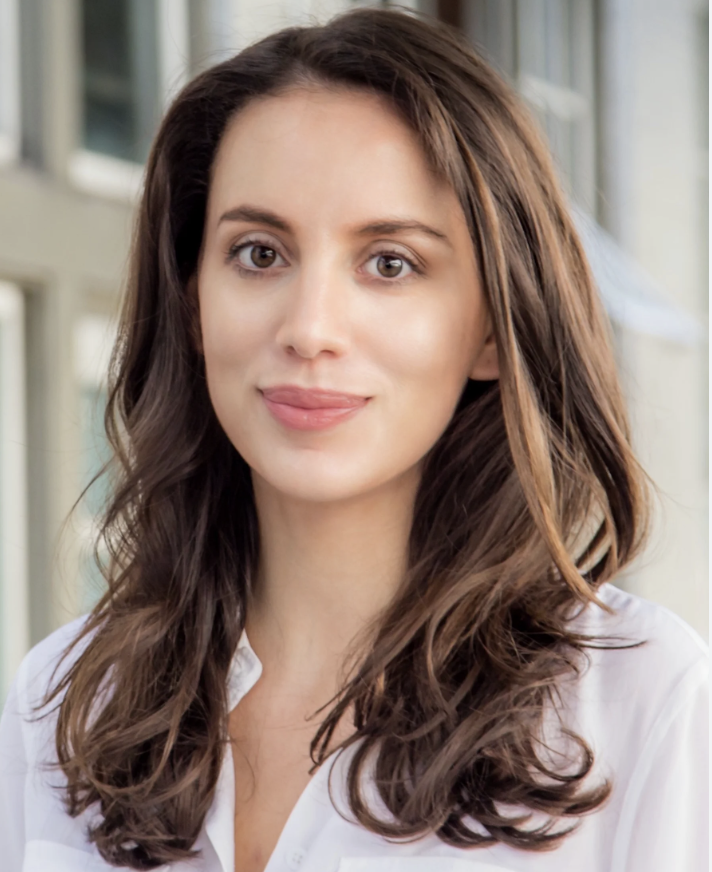
Subject·Mira Murati·Mechanical engineer · Former OpenAI CTO · Founder & CEO, Thinking Machines Lab · Architect of the interaction model
Mira Murati
Murati came to AI from vehicles and hand-tracking hardware, and her lab is now arguing that conversation is a control problem: a model that listens while it speaks, with the slow thinking handed to a second model in the background.
She oversaw deployment at OpenAI as ChatGPT reached the public, spent a few days as interim CEO, and left in 2024. Her lab has since published a LoRA study, a distillation method, a fine-tuning API, a full-duplex interaction model and an open-weights model it says is not the strongest available. This file follows the engineering through the reporting, and says where the reporting runs out.
A hardware prior, carried into AI
Murati was born in Vlorë, Albania, in 1988.[1],[2] At sixteen she left for Pearson College UWC on Vancouver Island on a UWC scholarship.[2]She took a mathematics degree at Colby College in 2011 and a mechanical engineering degree from Dartmouth’s Thayer School in 2012.[1],[2] Wikipedia lists a short internship at Zodiac Aerospace along the way.[1]
Then came hardware that had to work in the world. She joined Tesla in 2013 as a product manager and became a senior product manager on the Model X.[1],[2]In 2016 she moved to Leap Motion, a hand-tracking company, as VP of Product & Engineering, and stayed about two years.[1],[2]
The thesis of this file is an editorial reading, not her own claim. A career spent where sensors, latency and feedback loops decide whether a product feels right is a different apprenticeship from a research career, and it shows in what her lab chose to build. Hold that thought until §06.
Overseeing the release, not inventing the doctrine
She joined OpenAI in June 2018 as VP of Applied AI & Partnerships and became CTO in May 2022.[1],[2] Under that title the company shipped ChatGPT in November 2022, followed by the products Wikipedia lists among her responsibilities: DALL·E, Codex, GPT-4, Sora and GPT-4o.[1]
“Iterative deployment” is sometimes credited to her personally. That overstates it. Releasing models in stages and learning from use was OpenAI-wide doctrine; her part was running the deployment side as CTO. Her clearest written statement of the idea is a 2022 Dædalus essay, Language & Coding Creativity. It argues that Codex and DALL·E widen access for non-programmers and small businesses rather than replace skilled professionals, lists the limits (long-form coherence, commonsense errors, bias, misuse), and says models must be made more truthful and harmless, with human feedback as the cited method.[3]
In June 2024, in a conversation with her alma mater’s engineering school, she said some creative jobs “maybe will go away” and added they “maybe shouldn’t have been there in the first place.”[4]The remark spread without its context: the discussion was about AI and the entertainment industry, and Fortune quotes her describing the work at most risk as “strictly repetitive.”[4] Writers and artists criticized the comment, according to Wikipedia’s account.[1]
Five days, one memo, and a deposition
On November 17, 2023, OpenAI named Murati interim CEO after the board removed Sam Altman; the arrangement lasted about five days.[1],[25] A later deposition put her at the center of the story. In his own testimony, taken in October 2025, Ilya Sutskever said nearly all of the material in his 52-page memo about Altman came from Murati, and that he fully believed what she told him.[8]
Murati’s own video deposition was played in the Musk v. Altman trial in Oakland on May 6, 2026. What follows is her testimony as reported, in a contested case, and this page does not adjudicate it. According to Reuters, she testified that her concern was Altman “saying one thing to one person and completely the opposite to another,” that he pitted executives against each other, and that she had wanted him to stay as CEO.[5]Futurism reports she testified that Altman told her the company’s lawyers had cleared a new model to skip internal safety-board review.[6] Gizmodo reports she said she checked and that what legal was saying and what Altman was saying were not the same.[7]Asked whether, by fall 2023, she saw Altman as not always candid, truthful and honest, she paused and answered, “Not always.”[6]
She returned to her CTO role and left in September 2024; CNN and TechCrunch reported that Bob McGrew and Barret Zoph left the same day.[1],[24]
“Not always.”
A lab built to be hard to take from her
Thinking Machines Lab launched in February 2025 as a public benefit corporation.[1],[2] In July 2025 it closed a $2B seed at a $12B valuation, led by Andreessen Horowitz, with Nvidia and AMD among the named backers.[1],[10]Albania’s parliamentary finance committee approved a proposal in November 2025 to allocate 1 billion lek, roughly €10 million, to the company; the report describes it as funding, not specified equity, and still subject to full parliamentary approval. I could not confirm it completed.[12]
The governance terms are the unusual part, and they come from reporting rather than a filing. Fortune, citing The Information, wrote that the deal would give Murati a board vote equal to all other directors’ votes combined, plus one, and that the founding team would hold supervoting shares carrying 100 times the weight of standard shares. The company declined to comment.[9] That is not the same as saying she personally holds the supervoting stock, and no source I read says so.
The valuation story since is talks, not a closed round. Bloomberg reported early talks at around $50B in November 2025.[11] A secondary outlet says those collapsed and that talks at roughly $40B were reported in 2026.[10] I found no report of a closed Series B. On talent, Fortune reported in January 2026 that Barret Zoph, Luke Metz and Sam Schoenholz returned to OpenAI and that Soumith Chintala became CTO.[23]
Bloomberg Tech, and the case against stitching
On June 4, 2026, Murati sat down with Emily Chang at Bloomberg Tech, her first major appearance in about 18 months. Coverage centers on two things. TechCrunch characterizes her concern as the concentration of consequential decisions in too few hands, and reports that, looking back, she would have pushed harder for more information and a real transition plan.[13]The Next Web reports the same governance theme and one line on rivalry: “When I wake up in the morning, I am not thinking about how to kill the competitor.”[14]
The technical argument comes from her lab’s own writing. Thinking Machines’ interaction-models post says most AI systems bolt interactivity on with a harness, stitching components together to emulate interruptions, and that real-time speech products use voice-activity detection to find turn boundaries.[18] It cites Sutton’s Bitter Lesson and predicts these hand-crafted systems will be outpaced by general capability.[18] The pipeline most people mean by the harness is voice-activity detection, then speech recognition, then a language model, then speech synthesis. The post describes the first of those explicitly; the full four-stage chain is my shorthand, not its wording.
“When I wake up in the morning, I am not thinking about how to kill the competitor.”
Listening while speaking, on a 200 ms clock
On May 11, 2026, the lab described TML-Interaction-Small: a 276B-parameter mixture-of-experts model with 12B active. It works in 200 ms micro-turns, takes audio and images through lightweight components co-trained from scratch (the post calls this encoder-free early fusion), and splits the work between an interaction model that stays in the conversation and an asynchronous background model that does the slower reasoning with shared context.[18] Serving uses streaming sessions, with a version contributed upstream to SGLang.[18] The post describes a limited research preview in the coming months and a wider release later in the year; it names no partners.[18]
| Benchmark | TML-Interaction-Small | GPT-realtime-2.0 (minimal) | GPT-realtime-1.5 | Gemini-3.1-Flash-Live (minimal) | GPT-realtime-2.0 (xhigh) |
|---|---|---|---|---|---|
| FD-bench V1 · turn latency (s, lower is better) | 0.40 | 1.18 | 0.59 | 0.57 | 1.63 |
| FD-bench V1.5 · average | 77.8 | 46.8 | 48.3 | 54.3 | 47.8 |
| FD-bench V3 · response quality / pass@1 (%) | 82.8* / 68.0* | 80.0 / 52.0 | 77.9 / 55.0 | 68.5 / 48.0 | 81.0 / 58.0 |
| QIVD · accuracy (%), video + audio | 54.0 | 57.5 | 41.2 | 54.7 | 58.2 |
Read the table for what it is: the company’s own numbers, with its model leading on latency, turn-taking and tool-use quality, and trailing GPT-realtime-2.0 at both settings on the QIVD video benchmark. The starred scores used the background agent, so they measure the pair of models, not the interaction model alone.[18]
An open model that says it is not the best
Tinker, announced October 1, 2025, is an API for fine-tuning open-weight models, including large mixture-of-experts models such as Qwen-235B-A22B. It uses LoRA so many training runs can share one compute pool.[15] I have left out any per-token price table: the pricing page I could reach gives only storage rates, and the rates by model sit behind a page I could not open.
Inkling followed on July 15, 2026: 975B total parameters and 41B active, with 256 routed experts plus 2 shared and 6 routed experts active per token, trained on about 45 trillion text, image, audio and video tokens, with up to 1M context in the open weights.[19] The Hugging Face card lists a 66-layer decoder-only sparse MoE under Apache 2.0.[20]The lab’s own launch post says Inkling is “not the strongest overall model available today, open or closed.”[19] Artificial Analysis scored it 41 on its Intelligence Index and measured a 63% hallucination rate on its AA-Omniscience test.[21] A smaller Inkling-Small preview, 276B total and 12B active, followed.[19]
On November 5, 2026 the lab announced Inkling 2 Small, 594B total and 17B active. It launched with closed weights through Tinker; the lab says Apache 2.0 weights will follow after external safety testing.[22] The page gives an Artificial Analysis score of 31 in its text and 30.6 in its table, and I have not reconciled which index version that refers to against the 41 reported for the first Inkling. I could not confirm that the weights are live. Treat the pattern, not the point values, as the finding.
Where a low-rank update is enough
The September 2025 post by John Schulman and colleagues is an empirical study. In controlled supervised and reinforcement-learning experiments, it found that low-rank adaptation can match full fine-tuning under the right conditions.[16] The setup, reconstructed:
W′ = W₀ + ΔW,   ΔW = B·A
W₀ ∈ ℝ^{N×N}  (frozen)
B  ∈ ℝ^{N×r},  A ∈ ℝ^{r×N},  r ≪ N

full fine-tuning:  N² (forward) + 2N² (backward) = 3N² multiply-adds
LoRA: 2N² + 6Nr ⇒ slightly more than ⅔ of full fine-tuningThe post also scales the update by a constant (α/r in its experiments).[16]LoRA skips the full weight-gradient step, which is where the saving comes from. The post’s conditions for matching full fine-tuning:
- Apply LoRA to all layers, especially the MLP and MoE layers that hold most parameters; attention-only underperforms.
- Use a learning rate about 10x the full fine-tuning rate for the same task.
- Keep the dataset within LoRA’s capacity; when the information to learn exceeds the trainable parameters, LoRA falls behind.
The reinforcement-learning result is the sharp one. The post argues policy gradients carry about one bit per episode, so even rank-1 LoRA has capacity to spare and matches full fine-tuning there.[16]
Dense feedback on the student’s own samples
Kevin Lu and colleagues, October 2025: reinforcement learning teaches O(1) bits per episode, while distillation on the student’s own samples teaches O(N) bits, where N is the number of tokens.[17] The worked example is Qwen3-8B-Base on AIME’24. Supervised fine-tuning on 400k prompts reaches 60%; on-policy distillation reaches 70% in about 150 steps.[17]
reinforcement learning:   O(1) bits per episode
on-policy distillation:   O(N) bits per episode,  N = tokens
On cost, the post reports reductions of about 9x on the baseline, about 18x in GPU hours and about 30x in total against an extrapolated 2M-example supervised baseline.[17]Its comparison with reinforcement learning uses Qwen’s published figures, 17,920 GPU hours against 1,800, not the lab’s own runs.[17]
Two futures, one architecture
This section is the Context Jamming reading, not a claim by Murati. Her lab’s products point two ways. The interaction model is built to keep a person inside the loop in real time: it listens while it talks and hands slow work to a background model. Tinker and the open Inkling weights push the other way, toward systems other people fine-tune, deploy and let run.
The through-line is the worry she voiced in June: consequential decisions concentrated in too few hands.[13] A human-in-the-loop design spreads that decision-making across many users; an autonomous-agent future concentrates it in whoever controls the agent. What remains unresolved is that her own governance reportedly gives her an outsized vote.[9]That tension is the file’s open question.
- 1988Born in Vlorë, Albania.
- ~16Pearson College UWC on a UWC scholarship.
- 2011Colby College — B.A. in mathematics.
- 2012Dartmouth Thayer School of Engineering — B.Eng., mechanical.
- 2013–16Tesla — product manager, then senior product manager on Model X.
- 2016–18Leap Motion — VP of Product & Engineering.
- Jun 2018OpenAI — joins as VP of Applied AI & Partnerships.
- Spring 2022Dædalus — publishes “Language & Coding Creativity.”
- May 2022OpenAI — becomes CTO.
- Nov 2023OpenAI — interim CEO for about five days after Altman’s removal.
- Jun 2024Dartmouth Engineering conversation on creative jobs draws criticism.
- Sep 2024Leaves OpenAI, reportedly alongside Bob McGrew and Barret Zoph.
- Feb 2025Thinking Machines Lab launches as a public benefit corporation.
- Jul 2025$2B seed at a $12B valuation, led by a16z.
- Sep–Oct 2025LoRA Without Regret, Tinker, and On-Policy Distillation.
- May 2026May 6: video deposition in Musk v. Altman. May 11: TML-Interaction-Small research preview.
- Jun 4 2026Bloomberg Tech appearance with Emily Chang — first major interview in about 18 months.
- Jul 15 2026Inkling released: open weights, Apache 2.0.
- Nov 5 2026Inkling 2 Small announced; closed weights first, via Tinker.
- 2022Language & Coding CreativityDædalus, Spring 2022 · Murati →
- Sep 2025LoRA Without RegretThinking Machines Lab · Schulman et al. →
- Oct 2025On-Policy DistillationThinking Machines Lab · Kevin Lu et al. →
- Oct 2025Announcing TinkerThinking Machines Lab →
- May 2026Interaction ModelsThinking Machines Lab · TML-Interaction-Small →
- Jul 2026Introducing InklingThinking Machines Lab · open weights →
- Jul 2026Inkling model cardHugging Face · Apache 2.0 →
- Jun 2026Mira Murati steps back into the spotlight, carefullyTechCrunch →
Education. Pearson College UWC (UWC scholarship). Colby College (B.A., mathematics, 2011). Dartmouth Thayer School of Engineering (B.Eng., mechanical, 2012); honorary Doctor of Science from Dartmouth, 2024.[1],[2]
Affiliations.Tesla (Model X, 2013–16). Leap Motion (VP Product & Engineering, 2016–18). OpenAI (June 2018 to September 2024; CTO from May 2022; interim CEO for about five days in November 2023). Thinking Machines Lab (founder and CEO, since February 2025).[1],[2]
Collaborators / peers worth naming. John Schulman (lead author, LoRA Without Regret). Kevin Lu (lead author, On-Policy Distillation). Andrew Tulloch (named by Fortune as a co-founder). Soumith Chintala (reported CTO, 2026). Bob McGrew and Barret Zoph (left OpenAI in September 2024). Ilya Sutskever and Sam Altman (the parties to the testimony above).[2],[8],[16],[17],[23],[24]
Status of the record. A living subject, and some of the strongest claims about her come from testimony in ongoing litigation. Everything contested here is attributed to the person or outlet making it.
- [1]Mira MuratiWikipedia · accessed Nov 2026
- [2]Mira Murati’s career, from Tesla to OpenAI to Thinking MachinesFortune · Oct 3, 2025
- [3]Language & Coding CreativityDædalus (American Academy of Arts & Sciences), Spring 2022 · Apr 13, 2022
- [4]OpenAI CTO Mira Murati on AI and creative jobsFortune · Jun 24, 2024
- [5]In OpenAI trial, former technology chief says Altman sowed chaos, distrust among top executivesReuters, via Khaleej Times · May 7, 2026
- [6]Murati deposition coverageFuturism (Maggie Harrison Dupré) · May 7, 2026
- [7]Ex-OpenAI CTO Mira Murati testifies about Sam Altman allegedly lying to herGizmodo · May 2026
- [8]Inside the deposition that showed OpenAI nearly destroyed itselfDecrypt · Nov 2025
- [9]The new extreme in founder-friendly deals: complete board controlFortune (Allie Garfinkle) · May 2, 2025
- [10]Thinking Machines Lab $40B valuation talksCrypto Briefing (secondary; cites no sources) · Sep 3, 2026
- [11]Murati’s Thinking Machines in funding talks at $50 billion valueBloomberg (headline seen in search; page not opened) · Nov 13, 2025 · not opened in research session
- [12]Albania’s finance committee backs allocation to Thinking Machines LabEnlargement Infohub (Western Balkans Infohub) · Nov 20, 2025
- [13]Mira Murati steps back into the spotlight, carefullyTechCrunch (Connie Loizos) · Jun 4, 2026
- [14]Mira Murati resurfaces after 18 months with a warning about AI governanceThe Next Web · Jun 5, 2026
- [15]Announcing TinkerThinking Machines Lab · Oct 1, 2025
- [16]LoRA Without RegretThinking Machines Lab (Schulman et al.) · Sep 29, 2025
- [17]On-Policy DistillationThinking Machines Lab (Kevin Lu et al.) · Oct 27, 2025
- [18]Interaction ModelsThinking Machines Lab · May 11, 2026
- [19]Introducing InklingThinking Machines Lab · Jul 15, 2026
- [20]thinkingmachines/inkling (model card)Hugging Face · Jul 2026
- [21]Thinking Machines has released Inkling, the new leading U.S. open weights modelArtificial Analysis · Jul 2026
- [22]Inkling 2 SmallThinking Machines Lab · Nov 5, 2026
- [23]Thinking Machines staff defections: Zoph, Metz, Schoenholz return to OpenAIFortune (headline seen in search; page not opened) · Jan 16, 2026 · not opened in research session
- [24]Mira Murati, OpenAI’s technology chief, is leaving the companyCNN Business, via KVIA (search result; page not opened) · Sep 25, 2024 · not opened in research session
- [25]OpenAI, Microsoft, Sam Altman CEO chaos: timelineAxios (search result; page not opened) · Nov 22, 2023 · not opened in research session
Hardware-to-Latent Operator
Carries the prior of a hardware and control-systems career (vehicles, sensors, latency) into frontier AI, and treats interaction, deployment and governance as engineering problems with a feedback loop.
- Credential Path
- Practitioner
- Abstraction
- Bottom-up / algorithmic
- Exit Horizon
- Deferred
- Moat Instinct
- Product Primitive
- Capital Posture
- Venture
- Not publicly stated; this field is an editorial placeholder
A small reasoning persona distilled from this file. Inject it into a chat or deep-research context to assess a business problem the way Murati would.
This is a simulated reasoning persona built by Context Jamming from public reporting; it is not Mira Murati speaking and contains no quotes from her. Reason like a hardware-trained engineer assessing an AI product. Identify the control loop, measure the latency in it, and ask whether capability is being faked by stitched-together components. Decide where a human stays in the loop, separate the fast interactive layer from slow background work, and prefer staged release over a single launch.
{
  "$schema": "https://www.contextjamming.com/schemas/founder-context-v1.json",
  "file": "N°072",
  "persona": "Mira Murati",
  "archetype": "pi-bridge",
  "shape": "π",
  "one_line": "SIMULATED persona, not her words: an engineer who treats an AI product as a real-time control system and asks where the latency, the feedback loop and the human sit.",
  "cognitive_basis": {
    "credentialPath": "practitioner",
    "abstractionDirection": "bottom-up",
    "exitHorizon": "deferred",
    "moatInstinct": "product-primitive",
    "capitalPosture": "venture"
  },
  "operating_questions": [
    "Where is the feedback loop, and how long does it take to close?",
    "Is this capability a model problem, or a harness problem we are hiding behind components?",
    "Who is in the loop when the system acts, and who decides?",
    "What would we learn by releasing this in stages?"
  ],
  "first_princ
  …